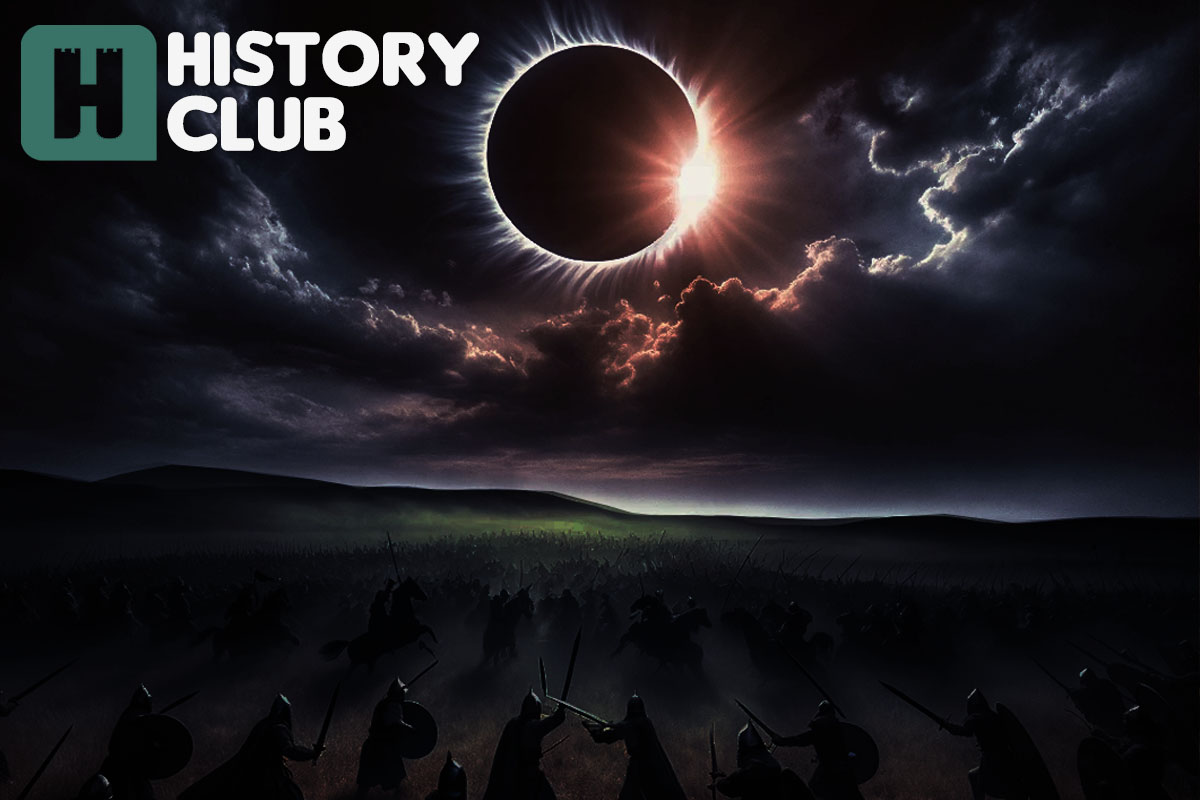
Imagine entering the newly opened Colosseum and finding water where the sand-covered arena should be. Below the stands, animals move through the flooded space, and men fight from specially prepared vessels. At least, that is the scene described by one ancient historian.
Ancient Roman writers indicate that aquatic spectacles were staged during the Colosseum’s earliest years. These performances are commonly described as naumachiae—mock naval battles created for public entertainment.
Table of Contents
Yet the popular image of full-sized warships sailing around a vast lake inside the Colosseum may be more dramatic than the surviving evidence allows. The arena was relatively confined; its flooding system had not been completely reconstructed, and some ancient descriptions may refer to a separate purpose-built basin rather than the amphitheater itself.
So, did the Romans really flood the Colosseum for naval battles?
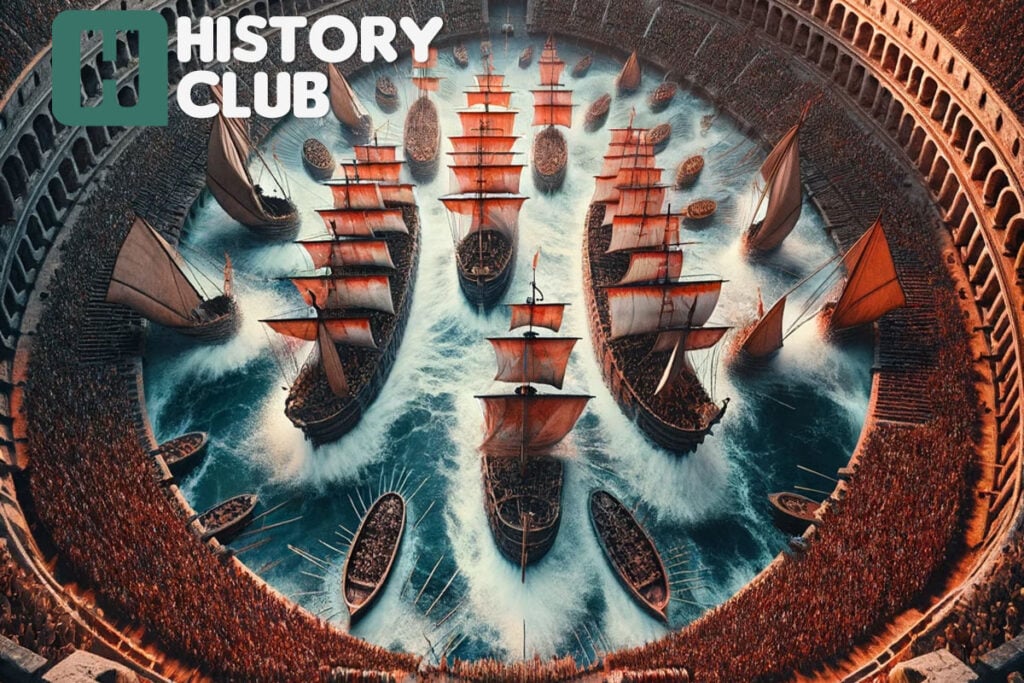
The evidence suggests that they probably held some form of water spectacle there. Exactly what the audience saw, how much water filled the arena, and what kinds of ships were used remain subjects of debate.
Quick Answer
Ancient writers say the Romans flooded the early Colosseum and staged a fight involving ships. However, the famous battle with 3,000 combatants took place in a larger purpose-built basin elsewhere in Rome. Historians still do not know exactly how the Colosseum was flooded, how deep the water was, or what kinds of vessels entered the arena.
What Was a Roman Naumachia?
A naumachia was a staged naval engagement performed as mass entertainment. The word came from the Greek term for a sea battle, although the Romans used it to describe both the spectacle and, in some cases, the specially constructed basin in which it took place.
These performances could be enormous. Ships were divided into opposing fleets representing famous maritime powers, and the combatants reenacted historical or legendary conflicts.
Participants might be dressed as Greeks, Persians, Egyptians, Rhodians, Sicilians, Athenians, or Syracusans.
Unlike a harmless theatrical performance, a Roman naumachia could involve real weapons, condemned prisoners, and genuine deaths. The spectacle combined naval warfare, public execution, historical reenactment, and imperial propaganda.
The tradition began well before the Colosseum was built. In 46 BCE, Julius Caesar ordered a basin excavated on the Campus Martius and filled it with water for a naval spectacle involving ships and prisoners. Ancient accounts describe vessels with multiple banks of oars taking part in the display.
Later emperors staged increasingly elaborate versions. Augustus constructed a large artificial basin for naval performances, while Claudius held a spectacular battle on Fucine Lake. These events were generally better suited to large fleets than the restricted space inside an amphitheater.
Did Naval Battles Really Take Place in the Colosseum?
Ancient sources say yes. What historians cannot confirm is exactly how the Colosseum was flooded or how closely these spectacles resembled true naval battles.
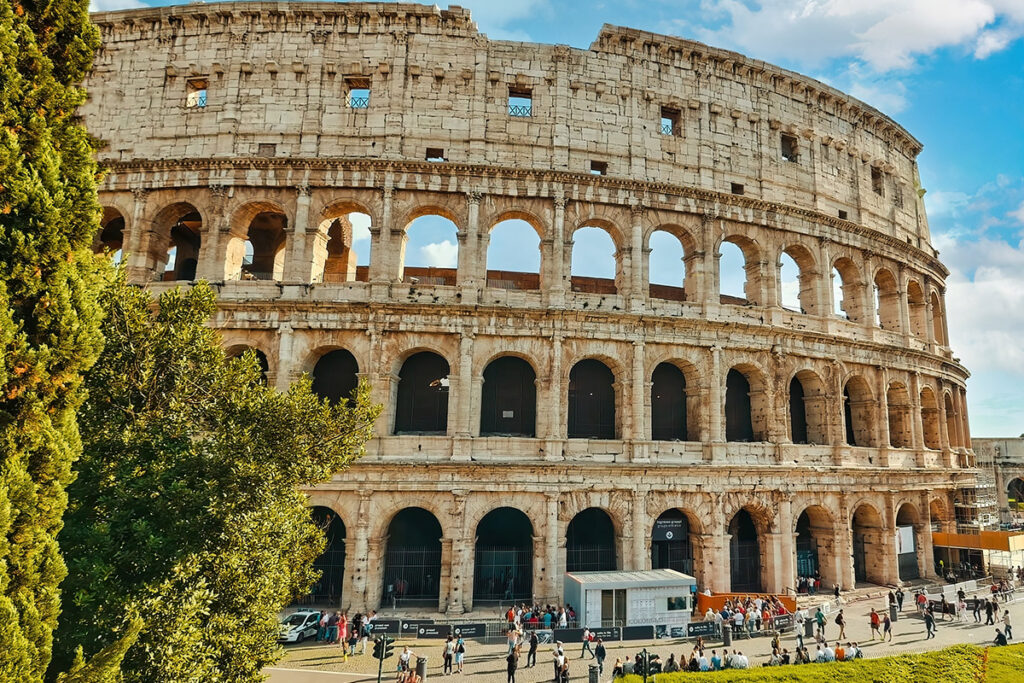
The Colosseum, originally called the Flavian Amphitheater, opened under Emperor Titus in 80 CE. Its inaugural celebrations lasted 100 days and included gladiatorial contests, animal hunts, and aquatic displays.
Two Roman historians provide most of the written evidence.
- Suetonius, writing several decades after the games, says Titus staged a mock sea battle in an artificial basin previously built by Emperor Augustus. He does not place that particular battle inside the Colosseum.
- Cassius Dio, writing more than a century after the event, gives a different and more detailed account. He says Titus filled the newly opened Colosseum with water, brought in animals trained to perform in it, and staged a fight between people aboard ships. The combatants represented the Corcyreans and Corinthians, two rival groups from the ancient Greek world.
Dio then describes a second, much larger naval spectacle held at Augustus’s purpose-built basin elsewhere in Rome. That event reportedly involved 3,000 men representing the Athenians and Syracusans. The fighters battled from ships, landed on an artificial island, and attacked a temporary wall.
In his account of Titus’s inaugural games, Cassius Dio describes the amphitheater being filled with water and fighters battling aboard the ships as Corcyreans and Corinthians.
Two Naval Spectacles, Two Different Venues
| Venue | What Dio reports |
|---|---|
| Flavian Amphitheater | A flooded arena, trained animals, and a ship battle between “Corcyreans” and “Corinthians” |
| Augustus’s basin | A three-day program culminating in a 3,000-man battle between “Athenians” and “Syracusans” |
That distinction matters. The famous battle involving 3,000 combatants did not take place inside the Colosseum, according to Dio’s account. It occurred at a larger venue designed for aquatic spectacles.
There is also evidence that water spectacles continued after Titus’s reign. Suetonius reports that Titus’s brother and successor, Emperor Domitian, later staged a naval battle “in the amphitheater.” He does not describe the ships, the number of fighters, the water depth, or the flooding system.
Neither account is contemporary engineering documentation. Suetonius wrote decades after the inaugural games, while Cassius Dio was born long after Titus’s reign and described the event more than a century later. Their reports are important, but archaeology cannot confirm every detail.
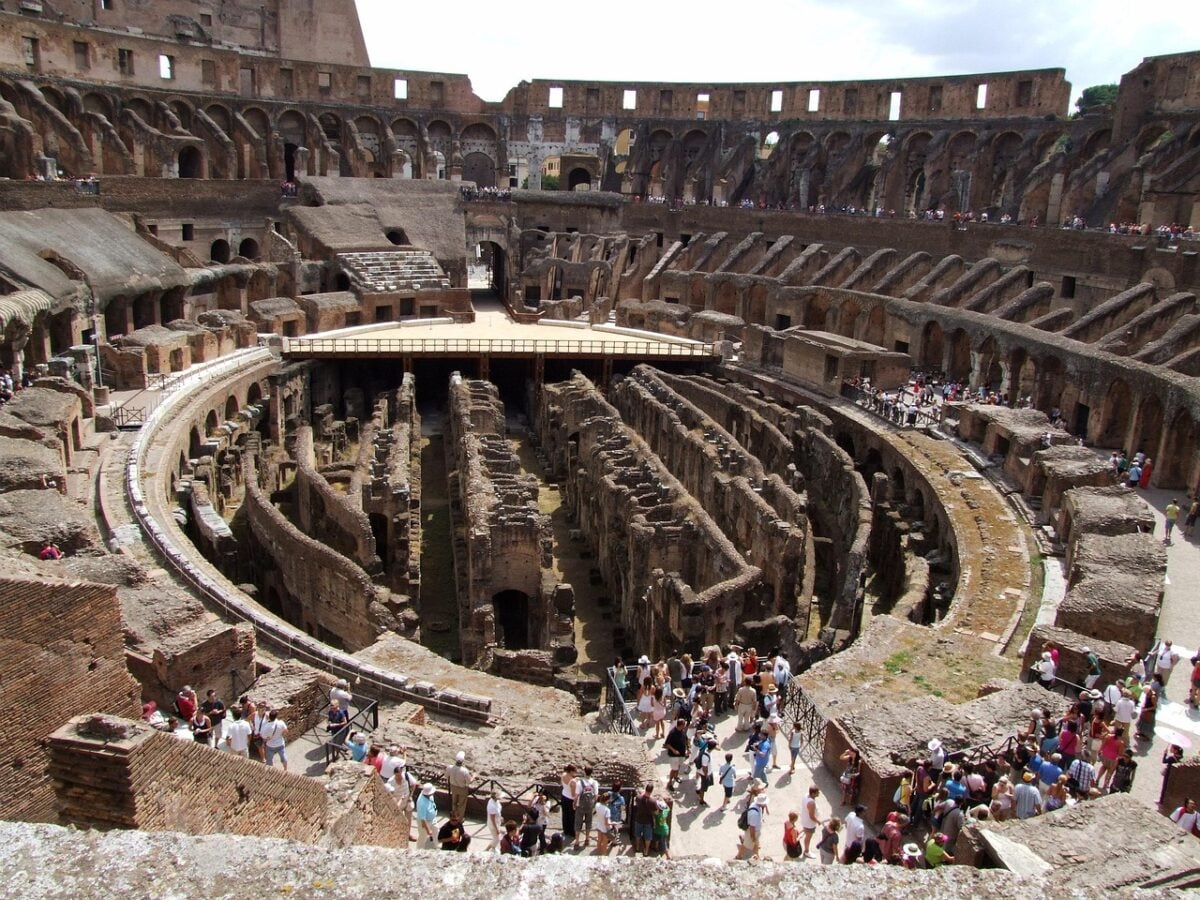
The Colosseum’s official archaeological park accepts that naval spectacles took place during the building’s early years. At that time, the arena did not yet have the elaborate permanent masonry hypogeum visible beneath it today. Once that underground network of corridors, lifts, cages, and machinery was developed, flooding the arena would have become impractical.
The most reasonable conclusion is that the early Colosseum could hold shallow water displays and some form of ship combat. Rome’s largest naval reenactments, however, required purpose-built basins with far more room. The Romans may have turned the Colosseum into a temporary pool, but they did not transform it into the vast inland sea often imagined today.
Colosseum Naval Battles: Myth vs. Evidence
Modern depictions often show the Colosseum filled with deep water, enormous warships, and thousands of fighters. Ancient accounts support a more restrained version of the story.
| Popular Claim | What the Evidence Supports |
|---|---|
| Full-sized warships sailed inside the Colosseum. | Cassius Dio reports a battle involving ships, but no surviving source records their size or design. The confined arena makes conventional seagoing warships unlikely. |
| The water was five feet deep. | No ancient source gives a confirmed water depth. The arena may have held only enough water to float shallow-draft vessels. |
| The arena held four million gallons of water. | This is a modern estimate based on assumed dimensions and water depth, not an ancient measurement or confirmed archaeological finding. |
| Three thousand men fought inside the Colosseum. | Dio places the 3,000-man battle in Emperor Augustus’s larger purpose-built basin elsewhere in Rome. |
| Naval battles were held in the Colosseum for centuries. | Water spectacles appear to have been limited to the building’s early years, before the permanent underground complex was developed. |
| Archaeologists have discovered the flooding system. | No complete flooding mechanism has been identified. Researchers still debate how water entered the arena, how it was contained, and how it was drained. |
The ancient accounts tell us what spectators reportedly saw, but not how Roman engineers transformed the arena into a temporary pool.
How Could the Romans Flood the Colosseum?
Roman engineers were highly skilled at moving and controlling water. Aqueducts, pipes, drains, reservoirs, and sewers supplied Rome and carried water throughout the city.
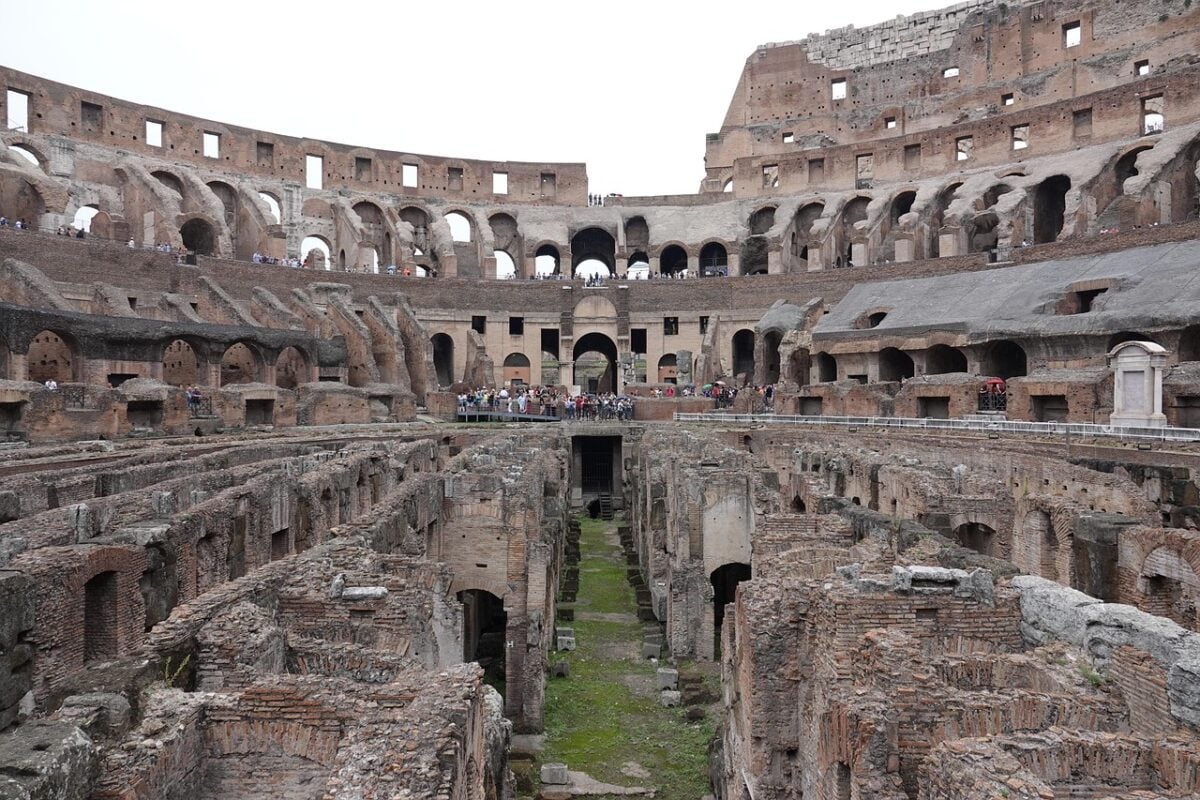
The early Colosseum also lacked the permanent masonry hypogeum visible beneath the arena today. Its simpler arrangement of wooden flooring and temporary structures may have allowed the arena to be converted into a shallow pool.
Water could have been directed into the building through temporary pipes or channels, while waterproof mortar or another lining helped contain it. Existing drains may then have carried the water away after the spectacle.
These methods were within Roman engineering capabilities, but no complete flooding system has been found. Archaeologists cannot confirm which water source was used, how the arena was sealed, or how quickly it could be filled and drained.
What Kind of Ships Could Fit?
The arena measured approximately 83 by 48 meters, or 272 by 157 feet. That made it nearly as wide as an American football field but about 27 meters shorter when the end zones are included. Even without permanent underground structures, there was little room for full-sized warships to turn, accelerate, or fight as they would at sea.
Smaller, shallow-draft vessels built specifically for the spectacle are more plausible. Decorative prows, shields, sails, and shortened rows of oars could have made them resemble warships when viewed from the stands.
No confirmed remains of the Colosseum’s ships have survived. Their size, design, and method of construction must therefore be reconstructed from the physical limits of the arena and from descriptions of Roman water spectacles elsewhere.
Who Fought in the Naval Battles?
The participants in Roman naumachiae were known as naumachiarii.
Known naumachiae often used condemned prisoners and captives. Some battles caused heavy casualties, although ancient accounts rarely explain the participants’ sentences, training, or chances of survival in detail. Ancient accounts of other naumachiae show that emperors sometimes assembled thousands of participants and divided them into opposing national or historical fleets.
The men may have received some training in rowing, formation, and weapons use before appearing before the crowd.
Maintaining even a simplified naval engagement would have required coordination. The performers had to move the vessels, recognize signals, and follow the basic sequence of the reenactment.
But the outcome was not always purely theatrical.
Weapons could be genuine, and death was part of the entertainment. Some combatants may have survived through victory, imperial mercy, or the intervention of the crowd, but many were forced into a spectacle from which they were not expected to return.
This violence was central to the event’s political meaning. By ordering men from across the empire to reenact historic battles for the Roman public, the emperor presented himself as master of war, water, nature, and human life.
What a Colosseum Naval Battle May Have Looked Like
A naval battle inside the Colosseum would have looked very different from combat at sea. The water may have been shallow, and the confined arena offered little room for ships to turn or gain speed.
Cassius Dio says the fighters represented the Corcyreans and Corinthians. Costumes, shields, banners, and decorated vessels may have helped the audience identify the opposing sides.
The ships were likely smaller than conventional warships, with the action focused on missiles, boarding, and hand-to-hand combat. Beyond that, the details remain unknown. No surviving account records the water’s depth, the number of ships, or how the battle was staged.
Why the Colosseum Stopped Hosting Water Shows
Water spectacles appear to have belonged mainly to the Colosseum’s early phase.
Under Domitian, the temporary wooden substructures beneath the arena were transformed into a permanent masonry complex now called the hypogeum. This underground network included corridors, holding areas, trapdoors, lifts, and machinery used to bring people, animals, and scenery into the arena.
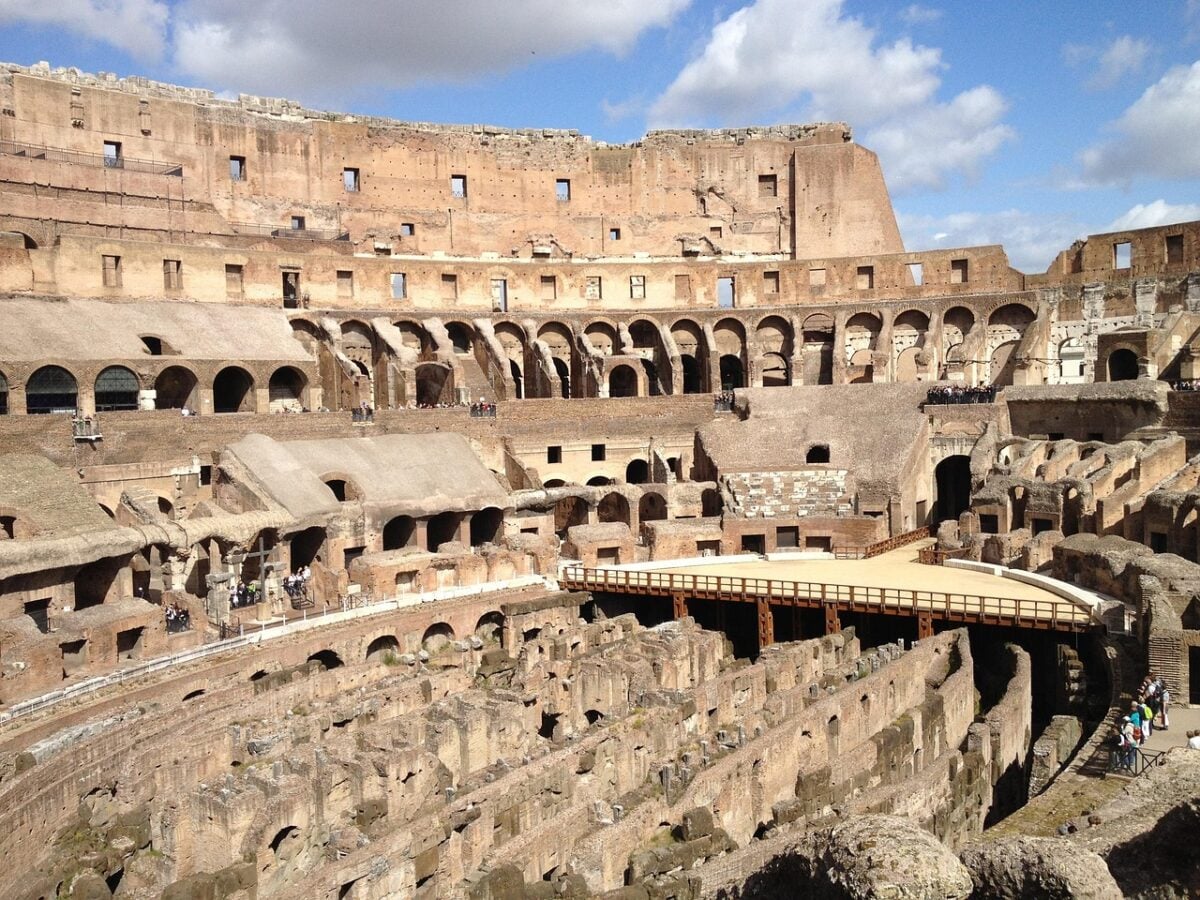
The system made increasingly elaborate gladiatorial and animal spectacles possible. It also made large-scale flooding impractical.
The official archaeological park states that the masonry reconstruction replaced the earlier wooden underground levels and that water shows were no longer held after this change.
Once the hypogeum was established, flooding the arena would have risked damaging equipment, weakening structures, and filling the underground workspaces. The Colosseum had become a more sophisticated theatrical machine, but one less suited to transformation into a temporary pool.
Emperors who wished to stage major naval engagements could still use purpose-built basins, lakes, or other venues with more space and fewer structural limitations.
What We Know and What Remains a Mystery
Nearly 2,000 years later, historians can separate some of the evidence from the more dramatic modern legends. The ancient accounts support the basic story, but they leave many practical questions unanswered.
What the Evidence Supports
- Cassius Dio describes the Colosseum being filled with water during its inaugural celebrations under Emperor Titus in 80 CE.
- Dio also reports a battle between fighters aboard ships inside the flooded arena.
- Suetonius says Emperor Domitian later staged another naval battle in an amphitheater.
- The famous battle involving 3,000 men took place in Augustus’s larger purpose-built basin, not inside the Colosseum.
- Once the Colosseum gained its permanent underground network of corridors, lifts, cages, and machinery, flooding the arena was no longer practical.
What Remains Unknown
- Where the water came from and how it entered the arena
- How the Colosseum was waterproofed and drained
- How deep the water was
- How long did flooding and draining take
- How many ships and fighters participated
- What the vessels looked like or how freely they moved
- How closely the performance resembled a real naval battle
The Romans probably did transform the early Colosseum into a temporary aquatic arena. The spectacle was likely smaller and more controlled than modern depictions suggest, but flooding the arena and staging combat aboard ships would still have been an extraordinary achievement.
The Colosseum’s naval battles survive at the boundary between history and legend. Ancient testimony indicates that something extraordinary happened there—but the precise scale and machinery of the spectacle remain among the building’s most fascinating mysteries.
Questions About the Colosseum’s Naval Battles
The surviving evidence answers the biggest question, but many details about these aquatic spectacles remain uncertain.
How Deep Was the Water in the Colosseum?
No surviving ancient source records the water’s depth. It may have been relatively shallow, especially if the Romans used small, specially built vessels rather than conventional warships.
How Long Did It Take to Flood the Colosseum?
We do not know. Claims that the arena could be filled within a specific number of hours are modern estimates, not details recorded by ancient writers or confirmed through archaeology.
Did Ships Sink During the Battles?
Ancient accounts do not mention ships sinking inside the Colosseum. Vessels may have been damaged, boarded, or overturned, but no remains from these spectacles have been found.
Did Everyone Have to Fight to the Death?
Roman naumachiae involved real weapons and could be deadly. Condemned prisoners and captives were often forced to participate, but ancient accounts do not establish that every fighter had to die or explain what happened to those who survived.
Where Did the Battle With 3,000 Fighters Take Place?
Cassius Dio places the 3,000-man battle in a large artificial basin built by Emperor Augustus, not inside the Colosseum. The fighters represented the Athenians and Syracusans and reportedly battled aboard ships before landing on an artificial island and attacking a temporary fortification.
Still Curious About the Colosseum’s Naval Battles?
Ask your question in the comments. There are plenty of mysteries still floating around this astonishing Roman spectacle.
Explore More of Ancient Rome
The Colosseum’s flooded arena was only one part of Rome’s dramatic and often brutal history. Continue exploring the empire with these stories:
- How Dangerous Was the Front Row of the Colosseum?: Discover what spectators near the arena faced when wild animals, gladiators, and flying weapons came uncomfortably close.
- Did Commodus’s Reign End Rome’s Golden Age?: Explore how the emperor famous for his obsession with gladiatorial combat affected Rome’s stability and reputation.
- The Worst Roman Emperors in History: Meet the rulers remembered for cruelty, disastrous decisions, and some truly spectacular abuses of power.
From dangerous seats to dangerous emperors, ancient Rome rarely struggled to put on a show.
Could You Imagine Watching a Naval Battle in the Colosseum?
Would you have wanted a seat for this spectacle, or stayed safely outside? Share your thoughts in the comments.