Imagine trying to prevent pregnancy 3,000 years ago, without a pharmacy, reliable contraceptives, or a clear understanding of how conception worked. What would you reach for?
Egyptian medical texts mentioned honey, acacia, and even crocodile dung, though historians still debate how some of these ingredients were used. The Greeks and Romans prized silphium, a plant whose reputation as an ancient contraceptive remains disputed. People turned to herbs, oils, and homemade barriers, hoping to prevent a pregnancy with whatever knowledge and materials they had.
Table of Contents
Some attempts bear a resemblance to later contraceptive methods. Others rested on mistaken beliefs or involved dangerous substances. And finding a remedy in an ancient text doesn’t mean it worked.
Birth control in ancient times leaves us with plenty of unusual accounts and a harder question: did any of it actually prevent pregnancy? The surviving evidence helps separate what people hoped would work from what we can reasonably believe today.
Birth Control In Antiquity
Ancient medical writers offered plenty of advice about avoiding pregnancy. Agreeing on what worked was another matter.
Some recommended substances intended to block semen. Others prescribed drinks, protective charms, or movements after intercourse. The reasoning depended on how the writer believed conception happened, and even respected physicians could get that badly wrong.
There was also a difference between preventing conception, bringing on a missed period, and ending a pregnancy. Ancient descriptions do not always let us tell which outcome a remedy was meant to achieve. That makes the history harder to untangle than a simple list of early contraceptives might suggest.
What About The Women Who Used These Methods?
We hear from the physicians who wrote down their recommendations far more clearly than from the women expected to follow them. What did a woman try after an earlier remedy failed? Who gave her advice, and how much choice did she have?
The surviving prescriptions rarely answer those questions. They preserve what medical writers recommended, while leaving much of the conversation between women, partners, and caregivers out of reach.
Historian John M. Riddle argued that women possessed more knowledge of herbal contraception than surviving medical texts reveal, passing information among themselves. Other scholars have challenged how much we can conclude about those remedies’ effectiveness and widespread use. The disagreement raises a difficult question: how do we recover knowledge that may rarely have been written down without treating the gaps as proof?
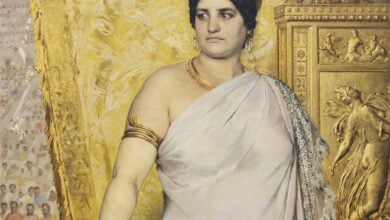
Even famous women’s private lives often reach us through other people’s accounts. The stories surrounding Empress Messalina show how difficult it can be to separate a Roman woman’s life from the gossip that followed her.
Ancient Egypt
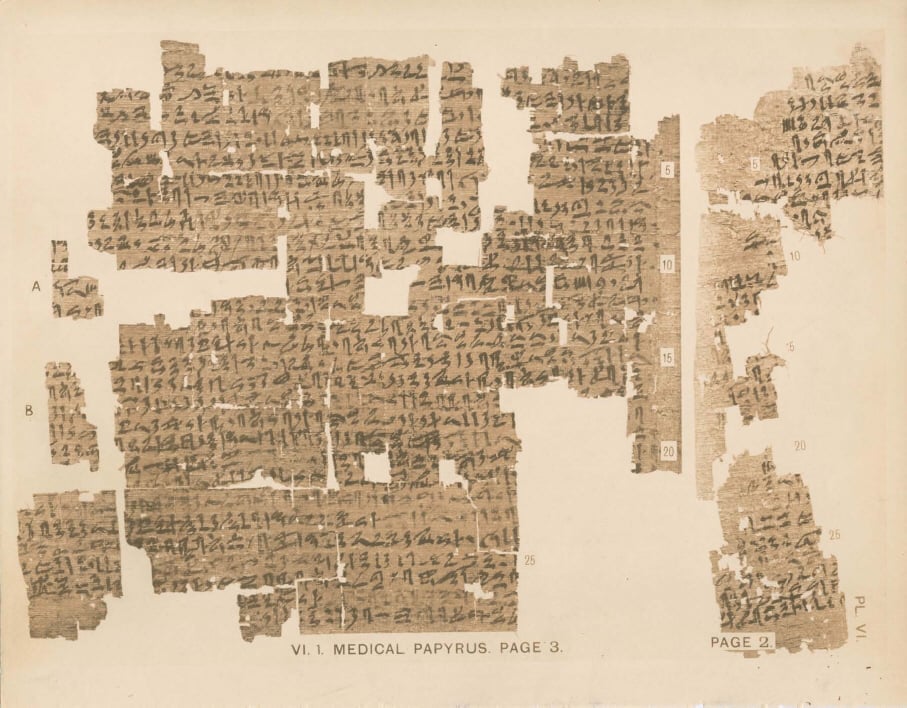
The Egyptians left some of the earliest surviving written references to attempts at preventing pregnancy. Two medical documents, the Kahun Gynecological Papyrus from around 1850 BCE and the Ebers Papyrus from around 1550 BCE, preserve details of those efforts.
The most notorious ingredient is crocodile dung.
It appears in a damaged passage of the Kahun papyrus, but the familiar story of women inserting it as a contraceptive is not the only interpretation. Some scholars suggest the instructions could describe burning it for fumigation. The surviving wording leaves room for disagreement. Claims that it worked because of its acidity go much further than the evidence allows.
The Ebers Papyrus provides a clearer example of a preparation placed inside the vagina: plant material including acacia and dates, combined with honey and applied with a fiber support. This is generally described as a pessary, a substance or device inserted vaginally.
The resemblance to later barrier methods is understandable. But a similar idea does not establish similar protection. We have a record of the prescription, not a reliable measure of how well it prevented pregnancy.
These documents are remarkable enough without treating them as proof that Egyptian physicians had solved contraception. Nearly four millennia later, we can still read what they proposed.
For Egypt’s ruling families, having a child could also carry political weight. Centuries after these medical papyri were written, the relationship between Julius Caesar and Cleopatra would produce Caesarion, a son whose parentage became part of a much larger struggle for power.
Ancient Greece And Rome
Even Aristotle had advice about preventing pregnancy. His recommendations included applying cedar oil to the female genitals before intercourse. It was one of several attempts to stop conception by placing a substance where semen would enter.
Other advice came with extraordinary promises. A text in the Hippocratic collection recommended drinking a preparation containing misy, usually interpreted as a copper-bearing mineral, to prevent pregnancy for a year. The prescription survives; evidence that it delivered that protection does not.
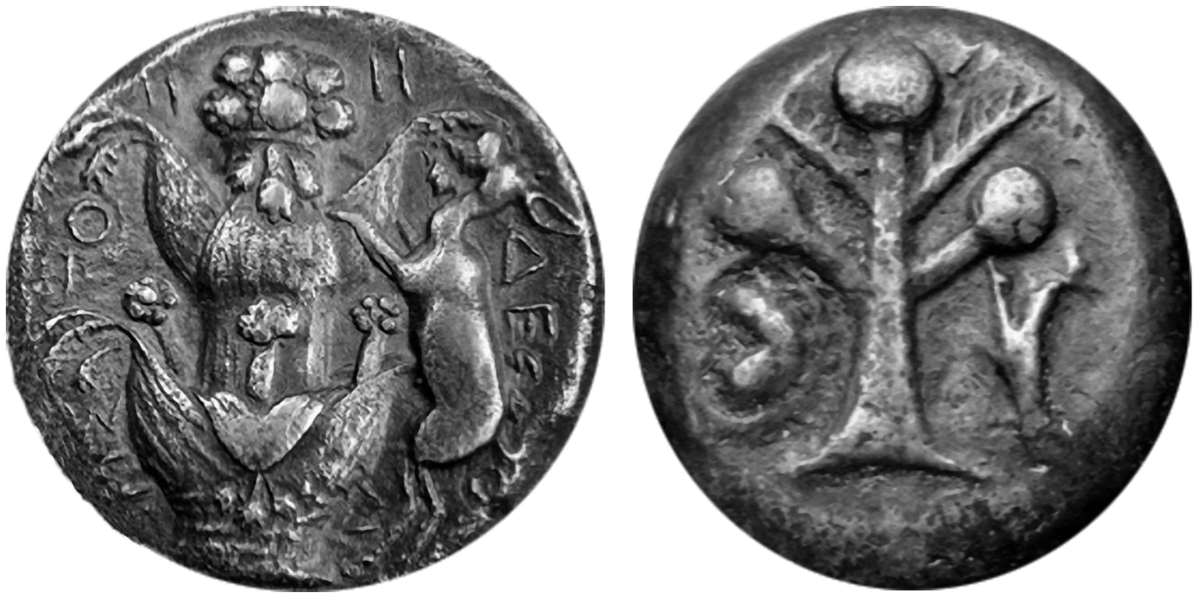
Silphium: A Plant With A Disputed Reputation
Silphium grew near Cyrene, in present-day Libya, and became valuable enough to appear on the city’s coins. Ancient writers prized it as a food and medicinal ingredient. Today, it is frequently described as the ancient world’s answer to the birth control pill.
That comparison is much too confident.
The plant’s identity remains uncertain, and scholars disagree about the evidence for its contraceptive use. Some later accounts may concern a substitute plant rather than the original Cyrene silphium. A recent scholarly review challenges the familiar contraceptive interpretation altogether.
The mystery is worth keeping. The claim that Greeks and Romans possessed a dependable herbal contraceptive is not established.
Soranus: Practical Ideas And Mistaken Advice
Soranus of Ephesus, a Greek physician working during the Roman imperial period, discussed contraception in his work Gynecology. He distinguished preventing conception from ending an existing pregnancy and described wool and various substances intended to obstruct the passage of semen.
Some of that sounds recognizably like an attempt at a barrier method. Yet his advice also included sneezing after intercourse, which shows how practical observation could sit alongside mistaken ideas in the same medical text.
Soranus took the subject seriously. That did not make all his recommendations effective.
Ancient Claim vs. Surviving Evidence
- Crocodile dung: Mentioned in an Egyptian medical text, but exactly how it was intended to be used remains disputed.
- Silphium: Often described as an ancient contraceptive, although its identity and the evidence for that use are uncertain.
- Wool barriers: Described by ancient medical writers, but we cannot establish how reliably they prevented pregnancy.
China
China’s history of fertility control needs a careful timeline. Accounts often gather remedies from widely separated centuries and label the whole collection “ancient Chinese birth control.”
One frequently cited physician, Sun Simiao, actually wrote in the seventh century CE, during the Tang dynasty. His medical collection included prescriptions concerned with preventing further childbearing, alongside extensive advice about pregnancy and women’s health. These belong to a later period than the Egyptian papyri or classical Greek writings.

Historical Chinese medicine also used powerful mineral substances, including mercury. Their place in a medical tradition should not be mistaken for evidence of safety. Physicians worked within theories about the body that could make a poisonous substance seem like an appropriate treatment.
The surviving prescriptions show an interest in controlling fertility. They cannot tell us, on their own, how commonly a particular remedy was used or whether it reliably prevented pregnancy.
India
Indian writings also preserve attempts to prevent conception, although the examples span ancient and medieval traditions. Medical works and texts about sexuality contain different prescriptions, making the source and date of each remedy important.
A historical review identifies preparations containing palasha seeds and honey, as well as other plant-based mixtures intended for contraceptive use. It also records ritual practices, including wearing a plant root around the waist. The proposed methods ranged from attempts at a physical effect to protection based on belief.
These details should not all be attributed to the Kama Sutra. They come from several works, and assigning them to one famous title hides the variety of the sources.

Nor does a written prescription establish that contraception was openly accepted throughout Indian society. It tells us that someone recorded the idea. How families understood it, whether women could choose to use it, and what happened afterward are much harder questions to answer.
The Americas: Clues In Moche Pottery
On Peru’s northern coast, Moche potters created vessels depicting childbirth, nursing, and sexual activity. Some show non-vaginal intercourse, occasionally with an infant beside the couple.
Researchers have suggested that these scenes could reflect attempts to avoid another pregnancy while a child was still breastfeeding. But that reading is disputed. Other interpretations connect the imagery with ancestry, fertility, and the movement of life between generations.
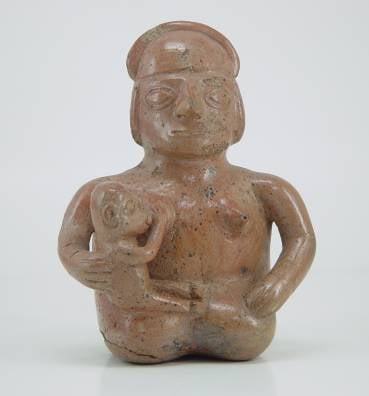
Unlike a medical prescription, a pot cannot explain its intended message. These objects offer a rare view of intimate life in the precolonial Americas, but they do not establish how commonly people practiced contraception or why they chose particular sexual behaviors.
Other Ways People Tried To Avoid Pregnancy
Not every attempt involved a plant or a prescription. Avoiding intercourse, interrupting it, or choosing particular days offered ways to try to prevent pregnancy without preparing a remedy.
Abstinence And Withdrawal
Ancient physicians understood that avoiding intercourse prevented conception, although they disagreed about what abstinence meant for a woman’s health. Soranus defended it against claims that women needed sex to remain healthy. Even this seemingly straightforward subject became a medical argument.
Withdrawal also appears in historical discussions of fertility control, but its use in ancient Greece and Rome is difficult to reconstruct. Scholars disagree about how widespread it was, and the surviving references do not justify treating it as a universal practice. Unlike many preparations described in medical texts, it also required the male partner’s cooperation.
Trying To Identify Fertile Days
Timing offered another possibility. If conception was more likely at certain points in the menstrual cycle, avoiding intercourse on those days might prevent pregnancy.

The difficulty was identifying them.
Hippocratic writings placed the most fertile time just before or after menstruation, based on the belief that the womb was then open to receive semen. That was a mistaken explanation of fertility. Someone using it to work out which days were “safe” could end up relying on the wrong part of the cycle.
These attempts show that ancient thinking about contraception went beyond unusual ingredients. People also considered timing and sexual behavior, but their decisions depended on an understanding of reproduction that was still incomplete.
Did Ancient Birth Control Actually Work?
For most of the remedies described here, we cannot establish how reliably they prevented pregnancy. Ancient texts preserve prescriptions, but they do not give us the kind of evidence needed to calculate a failure rate. A writer’s promise of a year without pregnancy is a claim, not a measured result.
Some preparations may have offered a physical barrier or contained substances that affected sperm. That possibility deserves investigation, but it does not prove that a particular mixture provided dependable protection. Likewise, an effect found in laboratory animals cannot tell us whether an ancient herbal preparation worked safely in people. Other recommendations, such as sneezing after intercourse, offered no effective protection.
Even the people using these methods would have struggled to judge the results. A woman might go months without becoming pregnant for reasons unrelated to a remedy, giving an ineffective treatment a convincing reputation. The surviving accounts show how seriously people pursued control over pregnancy, and how difficult it was to know whether their efforts had made a difference.
More History Worth A Closer Look
Pregnancy prevention wasn’t the only medical challenge that prompted some unsettling experiments. Our look at failed cures for the plague explores what people tried when they faced a disease they couldn’t explain.
And if the uncertain story of silphium caught your attention, explore these historical myths that are still widely believed. A memorable account can survive long after its evidence starts to unravel.
Which Ancient Method Surprised You Most?
Was there a remedy you’d heard of before, or one that made you do a double take? Share your thoughts or leave a historical birth control question you’d like us to investigate in the comments.