Imagine two ancient armies locked in battle when, without warning, the Sun begins to disappear.
According to the Greek historian Herodotus, that is what happened during the Battle of the Eclipse, also known as the Battle of Halys, fought between the Medes and the Lydians in the 6th century BC. As daylight suddenly turned to darkness, both armies reportedly stopped fighting, interpreting the eclipse as a divine warning.
Table of Contents
Historians traditionally connect the battle to the total solar eclipse of May 28, 585 BC, making it one of the most famous encounters of the ancient world. Herodotus made the story even more remarkable by claiming that the Greek thinker Thales of Miletus had predicted the eclipse.
But how much of the story is historical fact? Did an eclipse really bring the Battle of Halys to an immediate halt, and could Thales actually have predicted it centuries before modern astronomy?
The answers reveal why the Battle of the Eclipse remains one of history’s most fascinating intersections of warfare, astronomy, diplomacy, and legend.
What Was the Battle of the Eclipse?
The Battle of the Eclipse was an encounter between the kingdoms of Lydia and Media during a prolonged war for influence in ancient Anatolia. According to Herodotus, the two powers had been fighting for five years with neither able to achieve a decisive victory.
During a battle in the sixth year, something extraordinary happened: day suddenly appeared to turn into night.
The Lydians and Medes stopped fighting and became eager to make peace. The conflict was eventually settled through negotiations and reinforced by a marriage between the two royal families.
Historians commonly link the event to the solar eclipse of May 28, 585 BC, although they continue to debate key details, including the battle’s precise location and whether Thales could genuinely have predicted the eclipse.
Historians traditionally associate the encounter with the Halys River—today known as the Kızılırmak in Turkey—which gives the battle its other common name: the Battle of Halys.
Who Were the Medes and Lydians?
To understand why the Battle of the Eclipse mattered, it helps to understand the two powers competing for influence in the region.
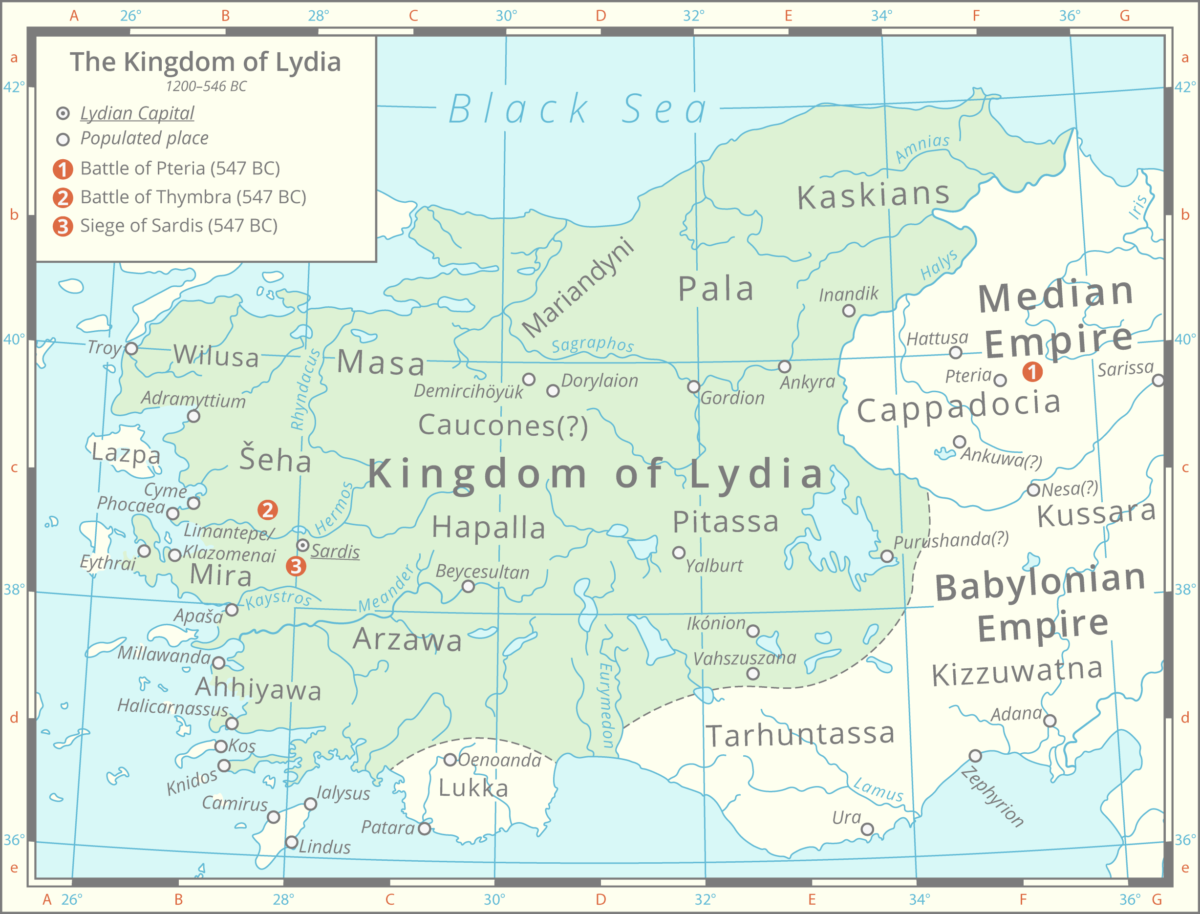
The Lydian Kingdom occupied western Anatolia, in what is now western Turkey. Its capital was Sardis, and by the 7th and 6th centuries BC Lydia had become one of the most powerful kingdoms in Asia Minor.
At the time of the war described by Herodotus, Lydia was ruled by Alyattes, father of the better-known King Croesus. Under Alyattes and his predecessors, Lydian influence expanded across much of western Anatolia.
To the east was the Median kingdom, centered largely in what is now western and northwestern Iran. The Medes emerged as a major regional power during the decline of the Assyrian Empire and, alongside the Babylonians, played an important role in the destruction of Assyrian power in the late 7th century BC.
Herodotus identifies the Median ruler involved in the war with Lydia as Cyaxares.
With Lydia expanding eastward and Median influence reaching westward, the two kingdoms eventually found themselves competing within the same broad region of Anatolia.
The Halys River lay between these expanding spheres of influence, which helps explain why it later became so closely associated with the conflict.
Why Did Lydia and Media Go to War?
The original cause of the war is more complicated than a straightforward territorial dispute.
Herodotus tells a dramatic—and gruesome—story involving a group of Scythians who had entered the service of the Median king Cyaxares.
According to his account, Cyaxares sent the Scythians out hunting. When they returned empty-handed, the king treated them harshly. In revenge, the Scythians killed one of the boys entrusted to their care, prepared his flesh as though it were game from the hunt, and served it to Cyaxares.
They then fled west and sought protection from Alyattes of Lydia.
Cyaxares demanded that Alyattes surrender the fugitives. When the Lydian king refused, war followed.
Herodotus therefore presents the refusal to hand over the Scythians as the immediate trigger for the conflict.
There was probably a wider geopolitical context as well. Lydia and Media were two expanding powers whose interests increasingly overlapped in Anatolia. Competition for territory, influence, strategic routes, and control of neighboring peoples would have provided fertile ground for conflict.
It is important, however, to distinguish this broader historical interpretation from Herodotus’ specific explanation. The ancient historian places the Scythian dispute at the center of his story rather than describing the war simply as a fight over territory.
Herodotus’ Account of the Battle
Our principal ancient source for the event is Herodotus’ account of the war between Lydia and Media, written more than a century after the battle.
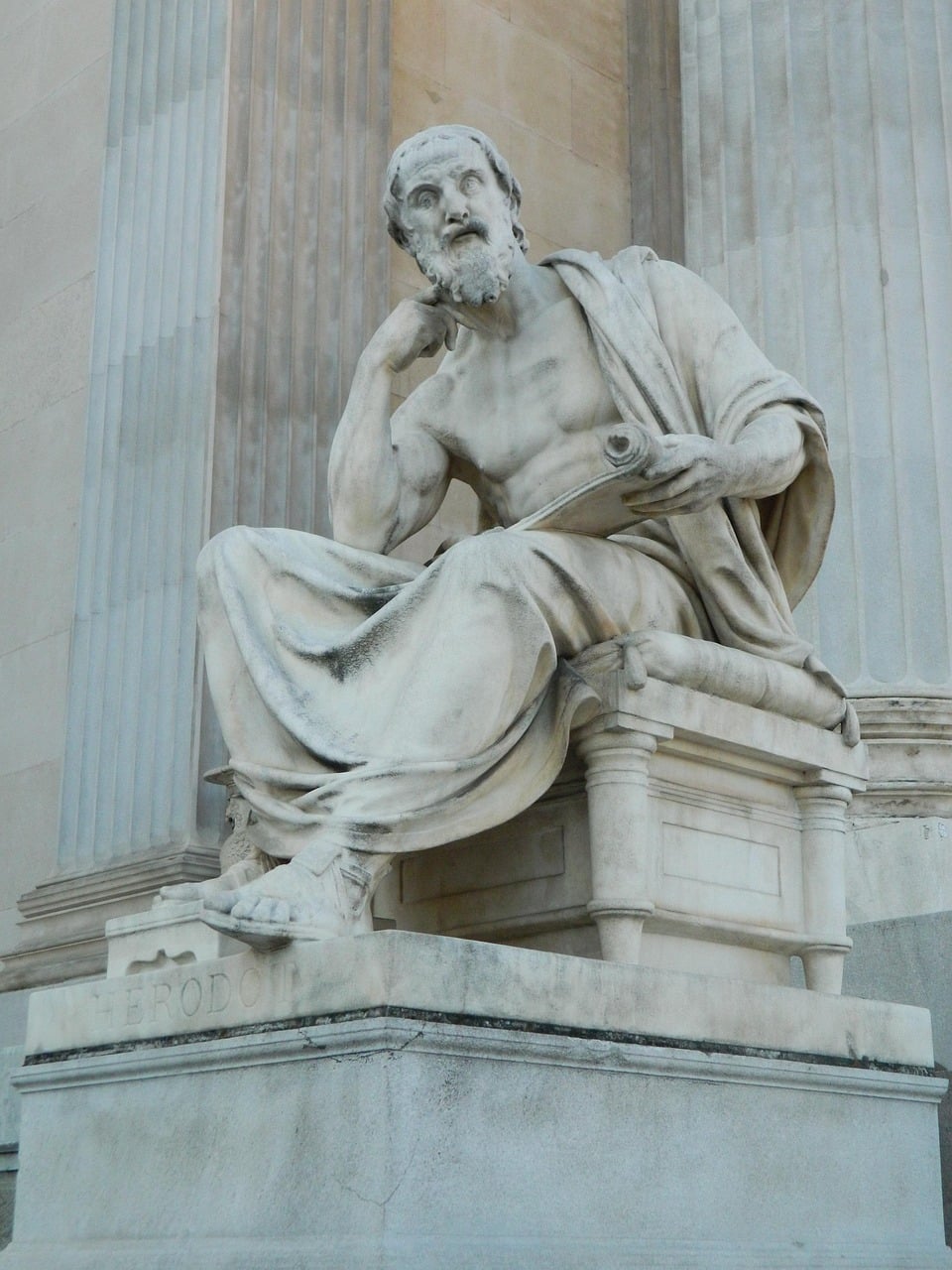
According to Herodotus, the war between Alyattes and Cyaxares continued for five years.
The fighting was remarkably balanced. Sometimes the Medes defeated the Lydians; on other occasions the Lydians defeated the Medes. Herodotus even mentions that the two sides once fought a battle at night.
Then, during an encounter in the sixth year, the war’s course changed.
As the armies fought, Herodotus says that day suddenly became night.
Both sides stopped fighting.
For people living in the ancient world, a dramatic celestial event could carry profound religious significance. The sudden darkening of the sky in the middle of a battle would have been an extraordinary and potentially terrifying occurrence.
Rather than continue the conflict, the Lydians and Medes became eager to make peace.
It is this moment that gave the encounter its modern name: the Battle of the Eclipse.
The Solar Eclipse of May 28, 585 BC
Modern astronomers have calculated that a major solar eclipse occurred on May 28, 585 BC, and historians have traditionally linked it to the event described by Herodotus.
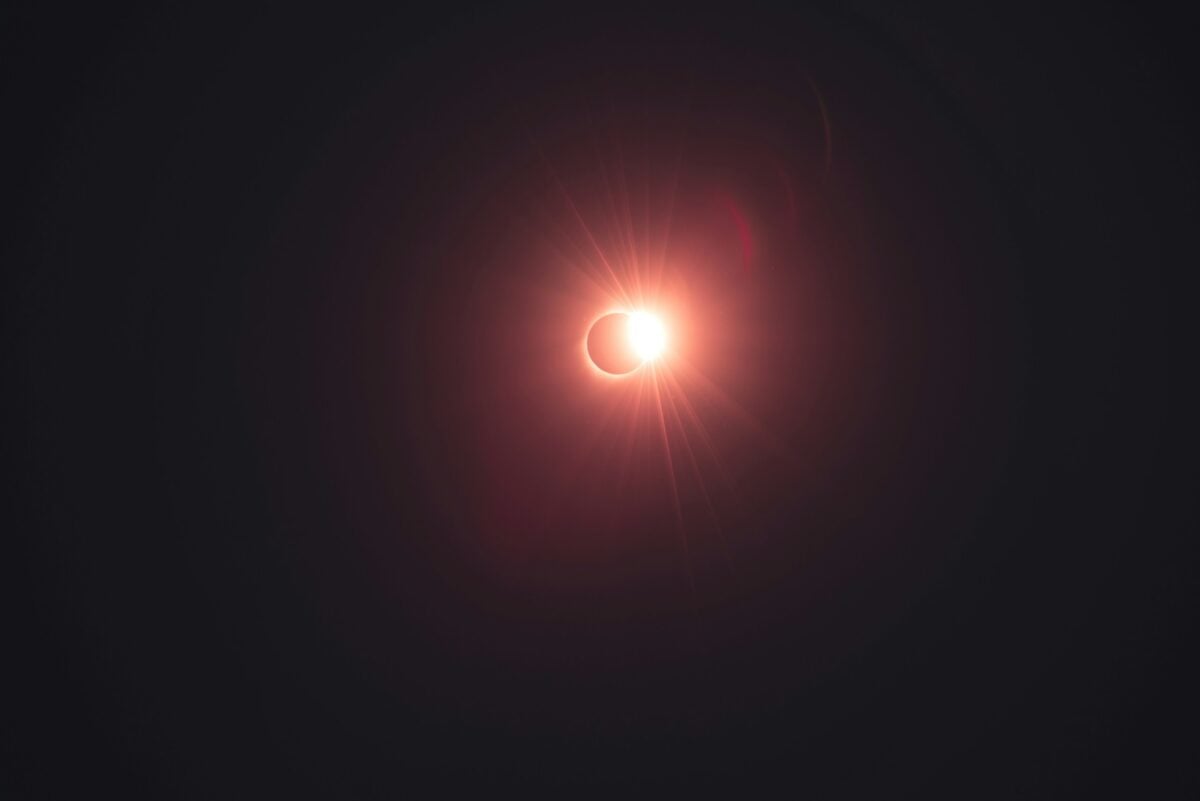
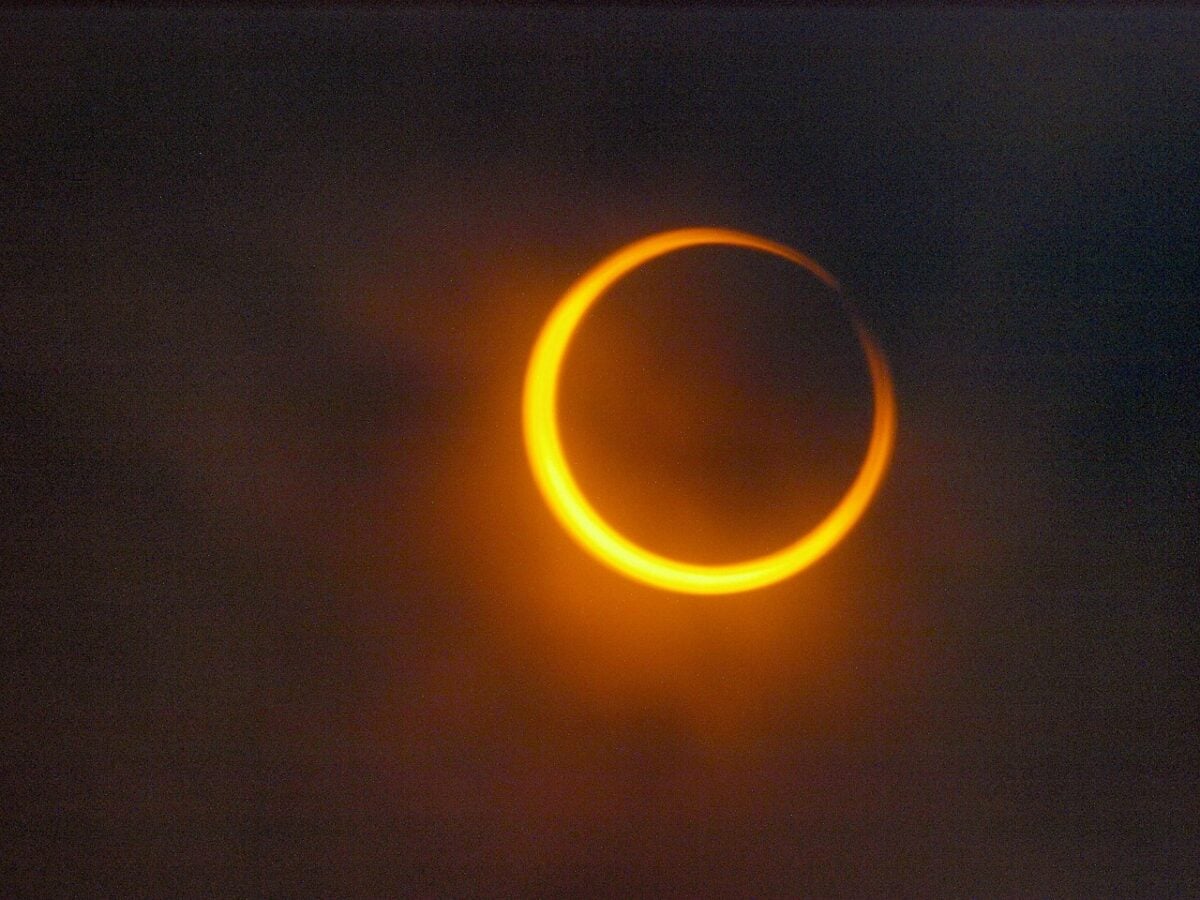
During a solar eclipse, the Moon passes between Earth and the Sun, blocking some or all of the Sun’s visible disk. Within the path of a total eclipse, daylight can fade dramatically in a matter of minutes.
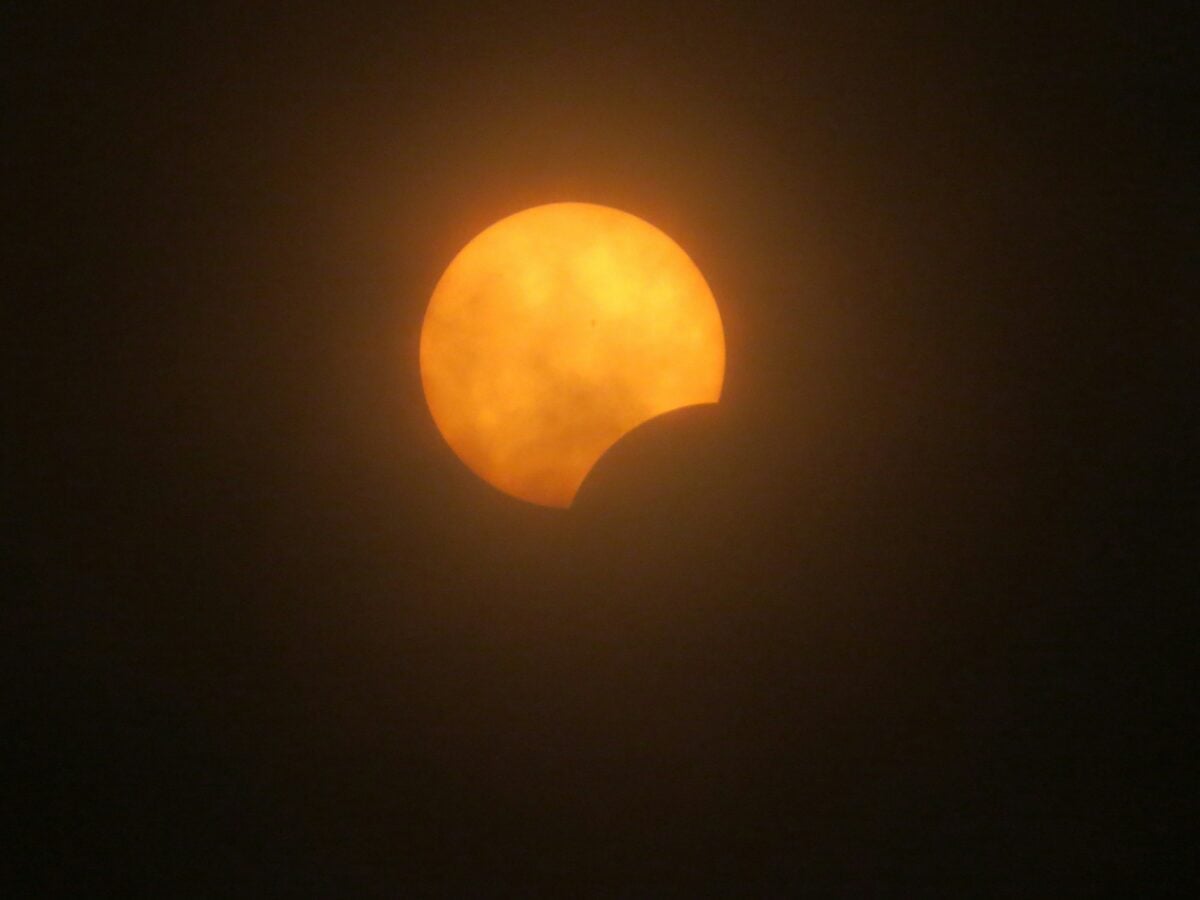
That makes Herodotus’ description of the day apparently becoming night immediately recognizable to modern readers as an eclipse.
Astronomical studies have shown that the eclipse of May 28, 585 BC was capable of producing a dramatic loss of daylight across parts of Asia Minor. This is one reason the date has become the leading candidate for Herodotus’ event.
It also creates an unusual link between astronomy and ancient chronology.
Historians cannot assign a precise date to many events from the 6th century BC. If the eclipse of May 28, 585 BC really interrupted the battle described by Herodotus, it gives them an exceptionally precise astronomical marker for an event that took place more than 2,600 years ago.
There is, however, an important qualification: identifying the eclipse does not automatically prove that every detail of Herodotus’ story happened exactly as later generations understood it.
And one detail in particular has generated centuries of debate.
Did Thales Really Predict the Eclipse?
Herodotus makes an astonishing claim.
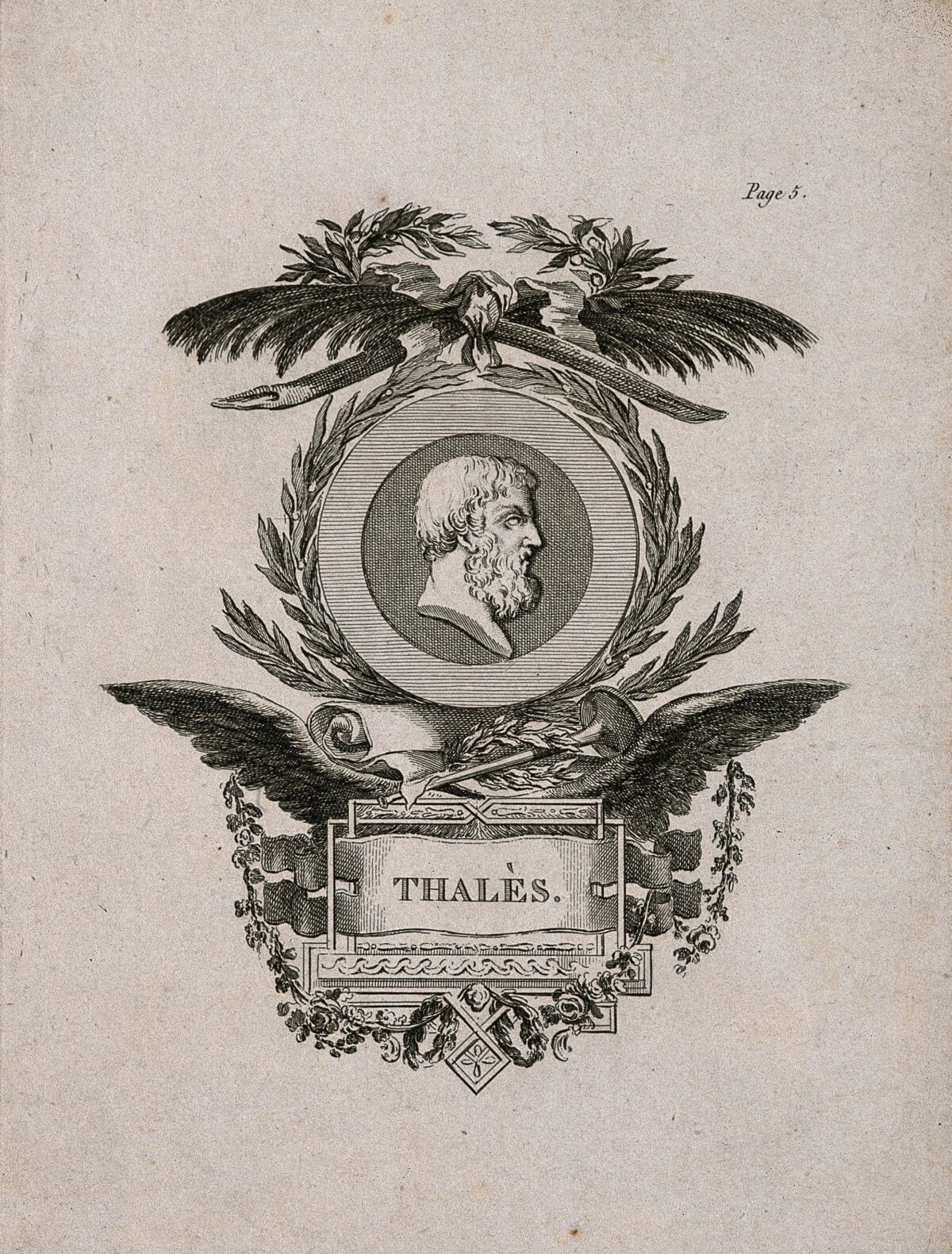
He says Thales of Miletus had foretold the loss of daylight to the Ionians, identifying the period in which it would occur.
Thales was one of the earliest figures in Greek philosophy and natural inquiry. Later tradition credited him with achievements in mathematics, astronomy, and philosophy, making the supposed eclipse prediction one of the most celebrated stories associated with him.
But did Thales really predict the solar eclipse of May 28, 585 BC?
Credit: Wellcome Library, London. Wellcome Images
im****@*********ac.uk
http://wellcomeimages.org
See page for author, CC BY 4.0, via Wikimedia Commons
That remains controversial.
Predicting a solar eclipse is considerably more difficult than recognizing that eclipses occur in cycles. Even if ancient astronomers possessed records of previous eclipses, predicting exactly where a solar eclipse would be visible requires knowledge that was not available in Thales’ era.
Some scholars have therefore questioned whether Thales could have predicted the event in anything like the modern sense of the word.
Others have suggested that he may have recognized an eclipse cycle or announced a broad period during which an eclipse was possible. Herodotus himself does not say that Thales predicted the precise location, hour, or even necessarily the exact day in the way a modern astronomer could.
The safest conclusion is therefore that Herodotus reports a prediction by Thales, but exactly what Thales predicted—and how he could have done it—remains uncertain.
That uncertainty makes the story more interesting rather than less. The Battle of the Eclipse sits at the boundary between recorded history, ancient scientific knowledge, and later interpretation.
Why Did the Eclipse Stop the Battle?
To a modern observer, a solar eclipse is a predictable astronomical event.
To soldiers fighting more than 2,600 years ago, the experience could have meant something very different.
Across the ancient world, unusual celestial phenomena were frequently interpreted as omens connected with kings, warfare, divine favor, and political events. An unexpected darkening of the Sun during battle could therefore have been understood as a warning that continuing the fight risked defying the gods. In Mesopotamian religion, celestial phenomena were observed and interpreted alongside other signs that were believed to reveal divine intentions.
Herodotus says that when the Lydians and Medes saw day turn to night, they ceased fighting and became even more eager to make peace.
The timing could hardly have been more dramatic.
Neither side had managed to dominate the war. Five years of fighting had produced victories and defeats for both kingdoms without resolving the conflict.
The eclipse therefore arrived during what appears to have been a military stalemate.
Whether the armies immediately interpreted the phenomenon in precisely the same way cannot be proven. But within Herodotus’ narrative, the eclipse provided the extraordinary event that finally broke the cycle of warfare.
What armies had failed to settle with weapons, darkness helped push toward diplomacy.
Fear of the Sky
That reaction may seem strange today, but spectacular events in the sky continued to frighten people long after the ancient world. During the Great Leonid Meteor Storm of 1833, some witnesses awoke to a sky filled with falling stars and initially feared something catastrophic was happening.
How the Medes and Lydians Made Peace
The end of the fighting did not depend on the eclipse alone.
Herodotus says two outside figures helped reconcile the kingdoms: Syennesis of Cilicia and Labynetus of Babylon.
Their involvement suggests that ending the war mattered beyond Lydia and Media. Both kingdoms were major regional powers, and continued conflict in Anatolia could affect the interests of neighboring states.
The peace settlement also followed a familiar pattern in ancient diplomacy.
Herodotus explains that the Lydians and Medes made both a treaty and an alliance. The agreement was reinforced not simply by promises but by joining the two royal families through marriage.
For kingdoms built around dynastic rule, a marriage alliance could transform former enemies into relatives and give both sides a powerful reason to preserve the peace.
The Marriage of Aryenis and Astyages
The diplomatic agreement was sealed by the marriage of Aryenis, daughter of the Lydian king Alyattes, to Astyages, son of the Median king Cyaxares.
This was much more than a family wedding.
Royal marriages were important diplomatic tools in the ancient world. They could strengthen alliances, legitimize agreements, and create personal bonds between ruling dynasties.
In this case, the marriage linked the royal houses of Lydia and Media after years of warfare.
The alliance would also have consequences for later history.
Astyages eventually became king of Media. Through his marriage to Aryenis, he was connected directly to the Lydian royal house. This relationship helps explain the later family connection between Astyages and Croesus, the famous Lydian king who succeeded Alyattes.
The eclipse may have stopped a battle, but the marriage alliance was intended to make the peace last.
Did the Halys River Become the New Border?
The Battle of the Eclipse is often described as ending with an agreement that made the Halys River the official border between Lydia and Media.
Modern scholarship has questioned whether the Halys was formally established as the new frontier by the peace agreement, with one detailed study of the Lydo-Median treaty and Halys border highlighting the uncertainty surrounding this traditional interpretation.
Herodotus elsewhere treats the Halys as an important geographical boundary. The river, known today as the Kızılırmak, runs through central Anatolia before emptying into the Black Sea.
Later in his account, the Halys plays a major role in the story of Croesus and his war against Cyrus the Great.
However, Herodotus does not explicitly say in his account of the eclipse battle that the peace treaty established the Halys as the new border.
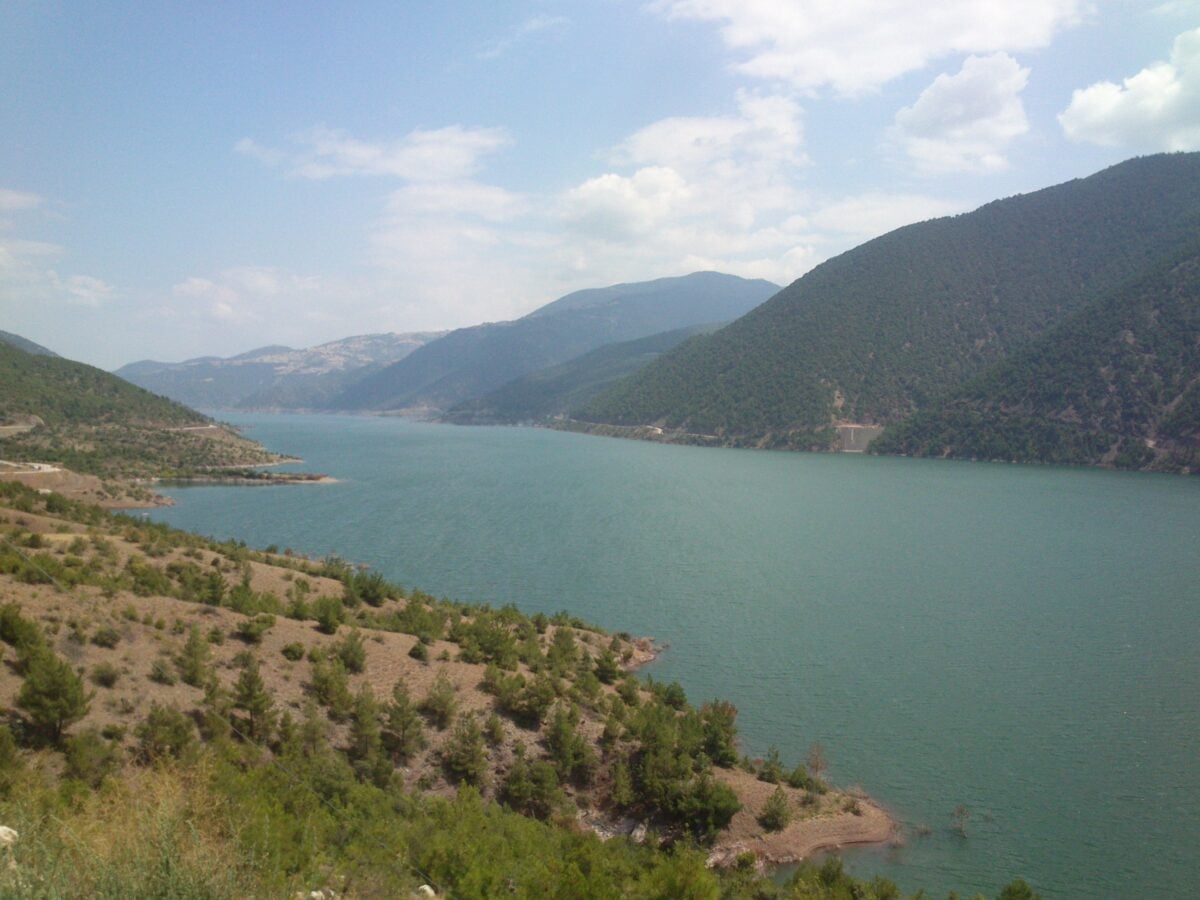
Modern scholars have consequently debated whether the river was formally chosen as part of the Lydo-Median treaty or whether later historians have inferred too much from Herodotus’ descriptions of the region.
The distinction matters.
It is reasonable to describe the Halys as an important boundary associated with the Lydian and Median spheres of influence. It is less certain that representatives simply sat down after the Battle of Halys and drew a new international frontier along the river.
Where Did the Battle of the Eclipse Take Place?
Despite its alternative name, the precise location of the Battle of Halys is surprisingly uncertain.
The encounter is traditionally associated with the Halys River in Anatolia, which is why the names Battle of Halys and Battle of the Eclipse are often used interchangeably.
But Herodotus does not actually give a precise battlefield location when describing the eclipse.
That creates a problem for historians attempting to reconstruct the event.
The location matters partly because it affects how researchers calculate what the eclipse would have looked like to the soldiers. A total eclipse produces dramatically different conditions depending on where an observer stands relative to its path.
Scholars have therefore used a combination of ancient geography, political boundaries, Herodotus’ narrative, and astronomical calculations to suggest possible locations.
No archaeological discovery has identified a battlefield that can definitively be connected with the event.
For that reason, it is safest to say that the battle took place somewhere in Anatolia during the Lydo-Median war and is traditionally associated with the region of the Halys River, rather than claiming that its exact location is known.
How Certain Is the Date of the Battle?
May 28, 585 BC is by far the most famous date associated with the Battle of the Eclipse.
It is also one of the reasons the battle has attracted so much attention.
Astronomers can calculate eclipses backward in time, allowing researchers to identify solar eclipses that would have been visible in the ancient world. The eclipse of May 28, 585 BC fits the traditional chronology particularly well and could have produced the dramatic phenomenon associated with Herodotus’ account.
Ancient chronological traditions also support a date around this period.
But there is an important difference between saying an eclipse occurred on May 28, 585 BC and proving beyond doubt that Herodotus’ battle occurred during that eclipse.
The first is an astronomical calculation. The second depends on interpreting a historical source written generations after the event.
Researchers have proposed alternative interpretations and dates, while questions surrounding Median chronology and Thales’ supposed prediction have added further uncertainty.
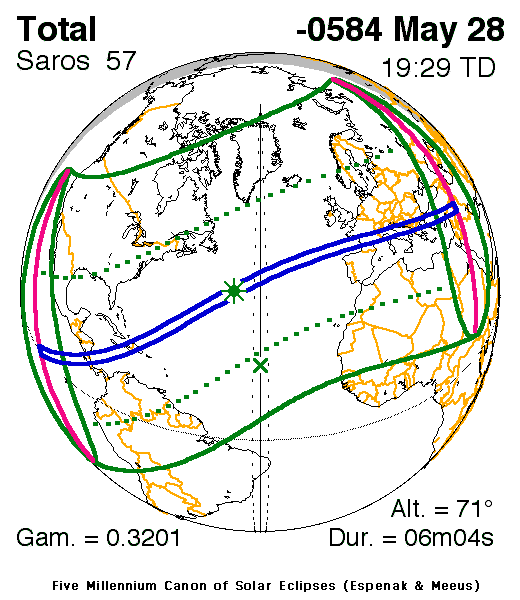
Nevertheless, the May 28, 585 BC eclipse remains the most widely associated candidate for the event.
So rather than saying the Battle of the Eclipse can be dated with absolute certainty, a more accurate conclusion is:
If Herodotus’ account describes the eclipse of May 28, 585 BC, then the battle can be tied to one of the most precise dates available for an event of the ancient world.
Why the Battle of the Eclipse Matters
The Battle of the Eclipse occupies a remarkable place in history because several different worlds meet within a single story.
- It is a story of warfare, with two expanding kingdoms competing for power in Anatolia.
- It is a story of diplomacy, in which years of conflict ended with negotiations and a dynastic marriage rather than the destruction of one side.
- It is a story of astronomy, because a celestial event may provide an unusually precise chronological marker for something that happened more than two and a half millennia ago.
- And it is a story about the beginnings of scientific thought, thanks to Herodotus’ extraordinary claim that Thales had predicted the loss of daylight.
Perhaps most importantly, the Battle of Halys demonstrates the difficulty—and fascination—of reconstructing ancient history.
We have Herodotus’ compelling narrative. We have astronomical calculations confirming that a major eclipse occurred in 585 BC. But questions remain about the battlefield, the peace settlement, the Halys frontier, and Thales’ prediction.
That combination of evidence and uncertainty is exactly what makes the Battle of the Eclipse so compelling.
More than 2,600 years later, historians are still trying to determine what happened on the day the Sun went dark, and two armies reportedly put down their weapons.
The Battle of Halys is also a reminder of how geography and the natural world could shape ancient warfare—a theme seen centuries later in Hannibal’s extraordinary crossing of the Alps.
Frequently Asked Questions
The Battle of the Eclipse—or Battle of Halys—still raises plenty of questions more than 2,600 years later. From whether Thales really predicted the eclipse to where the battle actually took place, some parts of the story remain surprisingly uncertain.
Below are answers to some of the most common questions about the battle, the eclipse, and its aftermath. Have a question we haven’t covered? Leave it in the comments below, and we’ll do our best to answer it.
When was the Battle of the Eclipse?
The Battle of the Eclipse is traditionally dated to May 28, 585 BC, when a major solar eclipse occurred over parts of Asia Minor. The identification is widely accepted as the leading explanation for the event described by Herodotus, although some details of the chronology remain debated.
What was the Battle of Halys?
The Battle of Halys is another name commonly used for the Battle of the Eclipse, an encounter between the Lydians and Medes during their war in the early 6th century BC. It is traditionally associated with the region of the Halys River in Anatolia.
Who fought in the Battle of the Eclipse?
The battle was fought between Lydia, ruled by Alyattes, and Media, which Herodotus says was ruled by Cyaxares.
Why is it called the Battle of the Eclipse?
According to Herodotus, the fighting stopped when daylight suddenly turned to darkness. The phenomenon is generally associated with a solar eclipse, giving the encounter its modern name.
Did a solar eclipse really stop a war?
Herodotus reports that the Lydians and Medes stopped fighting after the sudden loss of daylight and became eager to make peace. While an eclipse in 585 BC is astronomically established, historians cannot independently verify every detail of Herodotus’ account.
Did Thales predict the eclipse?
Herodotus says that Thales of Miletus foretold the loss of daylight, but historians debate what this prediction involved and whether Thales possessed the knowledge necessary to predict a solar eclipse accurately.
How long did the war between Lydia and Media last?
According to Herodotus, Lydia and Media fought for five years, with the famous eclipse battle occurring during an encounter in the sixth year.
Where was the Battle of the Eclipse fought?
The exact battlefield is unknown. The battle is traditionally associated with the Halys River region of Anatolia, giving rise to the alternative name Battle of Halys, but Herodotus does not provide a precise location.
What is the Halys River called today?
The ancient Halys River is the modern Kızılırmak River in Turkey.
How did the war between Lydia and Media end?
After the eclipse interrupted the fighting, peace negotiations followed. Herodotus says the settlement was mediated by Syennesis of Cilicia and Labynetus of Babylon and reinforced by the marriage of Aryenis, daughter of Alyattes, to Astyages, son of Cyaxares.
When the Sun Changed History
The Battle of the Eclipse remains one of the most remarkable stories of the ancient world. After years of inconclusive warfare, the sudden disappearance of daylight reportedly stopped the fighting and helped push Lydia and Media toward peace.
More than 2,600 years later, the Battle of Halys still raises unanswered questions. We know a major eclipse occurred in 585 BC, but the exact battlefield, the role of the Halys River, and what Thales truly predicted remain open to debate.
That mix of history, astronomy, and uncertainty is exactly what makes the story so enduring.
More From the Ancient World
The Battle of Halys was only one episode in a region shaped by powerful kingdoms, unusual battles, and dramatic encounters with the natural world.
You can also read how Queen Zenobia built an empire that challenged Rome, or follow the story of Queen Teuta of Illyria and her confrontation with the Roman Republic.
For another extraordinary military episode from Asia Minor, discover the extraordinary story of Pontus using “mad honey” against Roman soldiers.
There are plenty more strange and overlooked moments like these throughout our ancient history stories.
What Do You Think Happened at the Battle of Halys?
Did an eclipse really stop two armies in their tracks—and do you think Thales could have predicted it?
Share your thoughts in the comments below. And if there’s another ancient mystery, battle, or historical event you’d like us to investigate, let us know. It might become our next story.