Ancient Rome had no shortage of scandalous rulers, ambitious politicians, or spectacularly disastrous marriages. But even by Roman standards, Empress Messalina’s story is something else. Ancient writers claimed she snuck out of the imperial palace to work in a brothel, challenged a prostitute to an outrageous competition, and manipulated powerful men to get whatever she wanted. But even these shocking allegations paled in comparison to the scandal that ultimately cost her life.
In 48 CE, while her husband, Emperor Claudius, was away from Rome, Messalina reportedly married another man. Not secretly exchanging vows in some secluded villa, but taking part in a wedding ceremony with enough witnesses to make the whole affair astonishingly reckless. Her new husband was a prominent Roman senator, and Claudius was very much alive.
Table of Contents
Was this the boldest political gamble in Roman history, an affair that spiraled spectacularly out of control, or something later historians twisted into an even more scandalous story? Nearly 2,000 years later, Messalina remains one of Rome’s most notorious women. But once you dig into the ancient sources, the line between her actual misdeeds and the gossip surrounding them becomes surprisingly difficult to untangle.
From Roman Aristocrat to Empress
Before Messalina became infamous for her alleged affairs and political scheming, she was a young woman born into one of Rome’s most influential families. Her privileged background placed her close to the imperial household, but even she could hardly have anticipated how dramatically her fortunes would change.
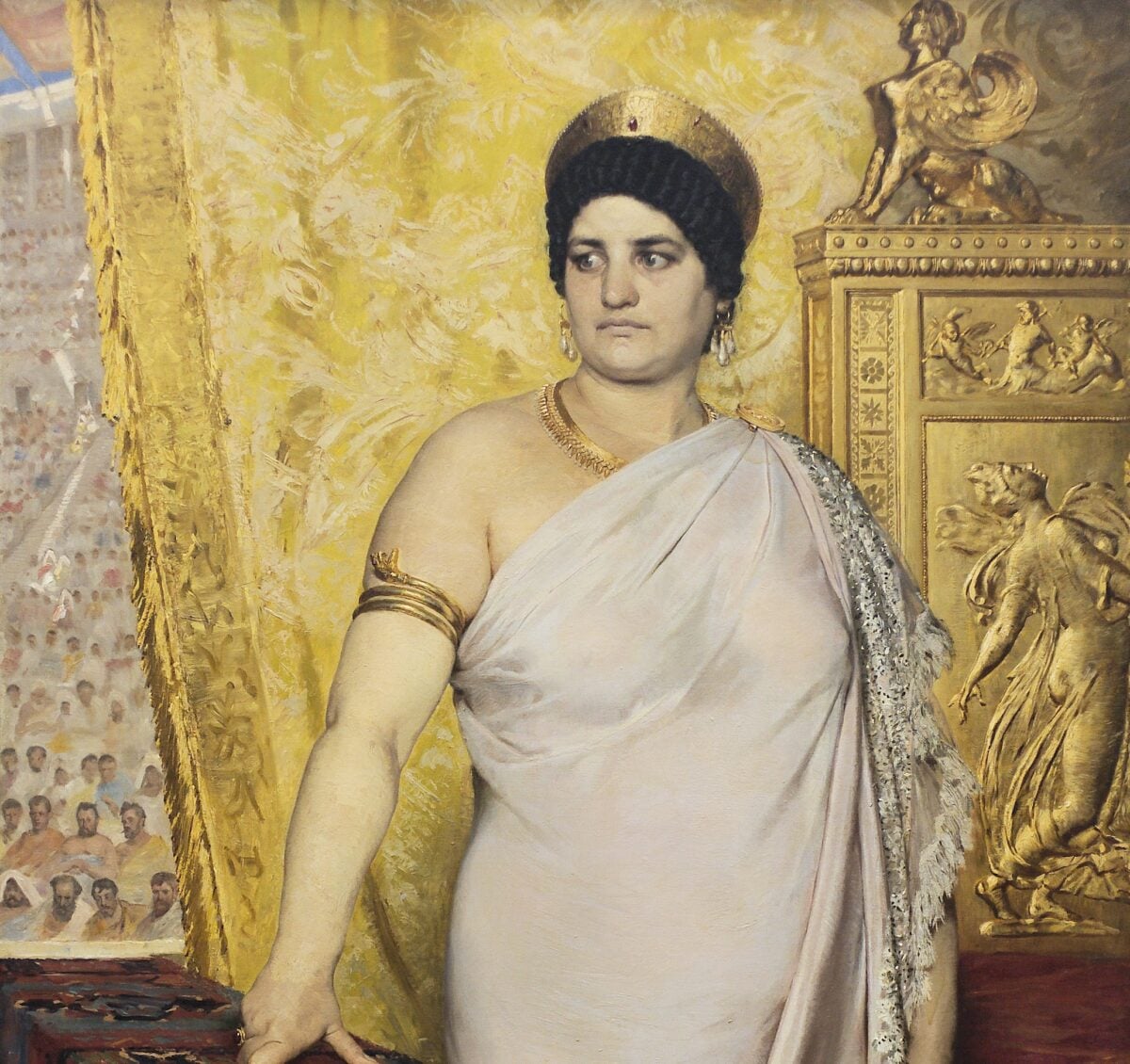
Valeria Messalina belonged to Rome’s powerful aristocracy, with family connections that reached back to Emperor Augustus. Very little reliable information survives about her childhood or education. Like other young women of her standing, she likely received an education suited to life among the Roman elite, although we cannot say exactly what she studied or how she spent her early years.
She married Claudius around 39 or 40 CE, when he was approximately 50 years old. Messalina was considerably younger, though her exact age remains uncertain. At the time, Claudius was not considered a particularly likely candidate for the imperial throne. Ancient writers frequently portrayed him as physically awkward, prone to speech difficulties, and overshadowed by his more charismatic relatives.
Claudius had survived the turbulent reigns of Augustus’s successors largely by remaining outside the center of political power.
That changed dramatically in 41 CE when conspirators assassinated his nephew, Emperor Caligula, whose reign had sparked countless accusations of outrageous behavior and political intrigue.
Members of the Praetorian Guard, Rome’s powerful imperial security force, proclaimed Claudius emperor, suddenly transforming Messalina from an aristocratic wife into one of the most influential women in the Roman world.
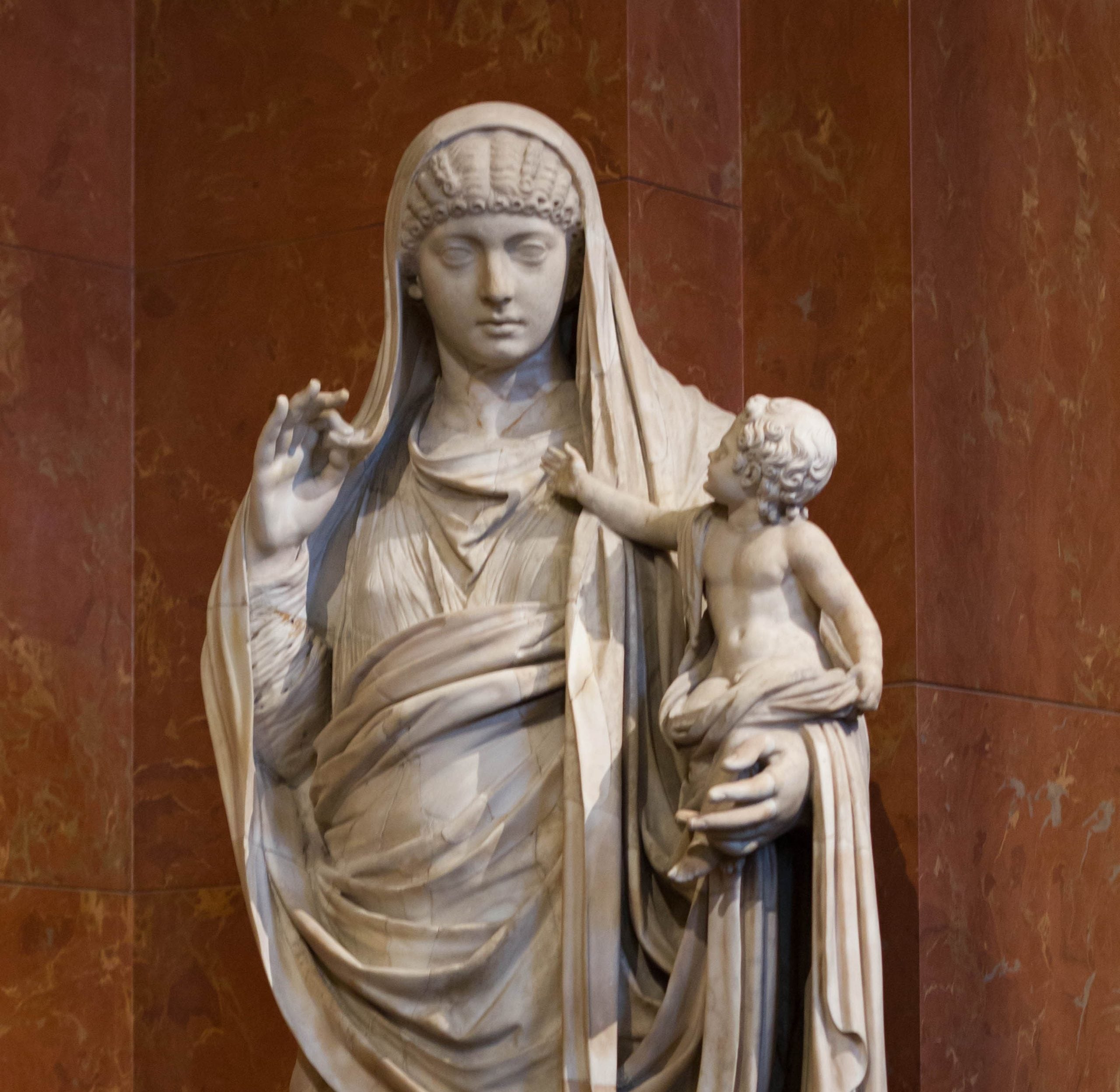
The couple had two children, Claudia Octavia and Britannicus. Their son was especially important because he represented a potential heir to the throne. Messalina was now more than the emperor’s wife; she was the mother of a boy who might one day rule Rome.
An Empress With Influence
Of course, becoming empress wasn’t simply a matter of enjoying lavish surroundings and attending elaborate banquets. The imperial household was a political arena in its own right, filled with ambitious senators, advisers, freedmen, and relatives competing for access to the emperor. Decisions made inside the palace could determine careers, fortunes, and sometimes whether someone lived to see another day.
Messalina wasn’t content to remain a decorative figure in this world, at least according to the ancient historians who later described her. They portrayed her as politically ambitious, remarkably influential over Claudius, and willing to use that influence against anyone who stood in her way.
One particularly revealing account concerns Valerius Asiaticus, a wealthy Roman senator who owned the magnificent Gardens of Lucullus. The historian Tacitus claimed that Messalina coveted the property and helped bring about accusations that ultimately led to Asiaticus’s death in 47 CE. He also connected her to the downfall of Poppaea Sabina the Elder, a prominent woman caught up in the same political intrigue.
Whether Messalina was truly the mastermind behind these events is difficult to establish. Tacitus was writing decades after her death and had his own ideas about corruption within the imperial household. Nevertheless, the episode illustrates how dangerous court politics could become. A wealthy senator’s downfall might involve imperial suspicion, accusations of disloyalty, personal rivalries, and the ambitions of people close to the emperor.
Messalina’s reputation as a political operator was already formidable in the ancient accounts. But it was her supposed private life that gave Roman writers some of their most irresistible material.
The Scandals That Made Messalina Infamous
Rome’s imperial family was hardly lacking in scandal, and some of the worst Roman emperors in history earned reputations that were every bit as outrageous as Messalina’s. But ancient writers were particularly fascinated by powerful women who appeared to defy traditional expectations.
Ancient authors portrayed Messalina as a woman with an appetite for scandal so outrageous that she shocked even Rome’s notoriously indulgent upper classes. Her alleged affairs involved actors, aristocrats, and men associated with the imperial court, while her political influence supposedly allowed her to pursue lovers without worrying about the usual consequences.
There is a catch, however. Roman writers loved a good scandal, especially when it involved a powerful woman behaving in ways they considered improper. Sexual misconduct was a familiar accusation against political enemies, and the surviving stories about Messalina often say as much about Roman attitudes toward women and power as they do about the empress herself.
That doesn’t mean every allegation was invented. It does mean we should enjoy the outrageous stories while remembering who told them, why they might have told them, and how much evidence survives.
Did Messalina Really Work in a Brothel?
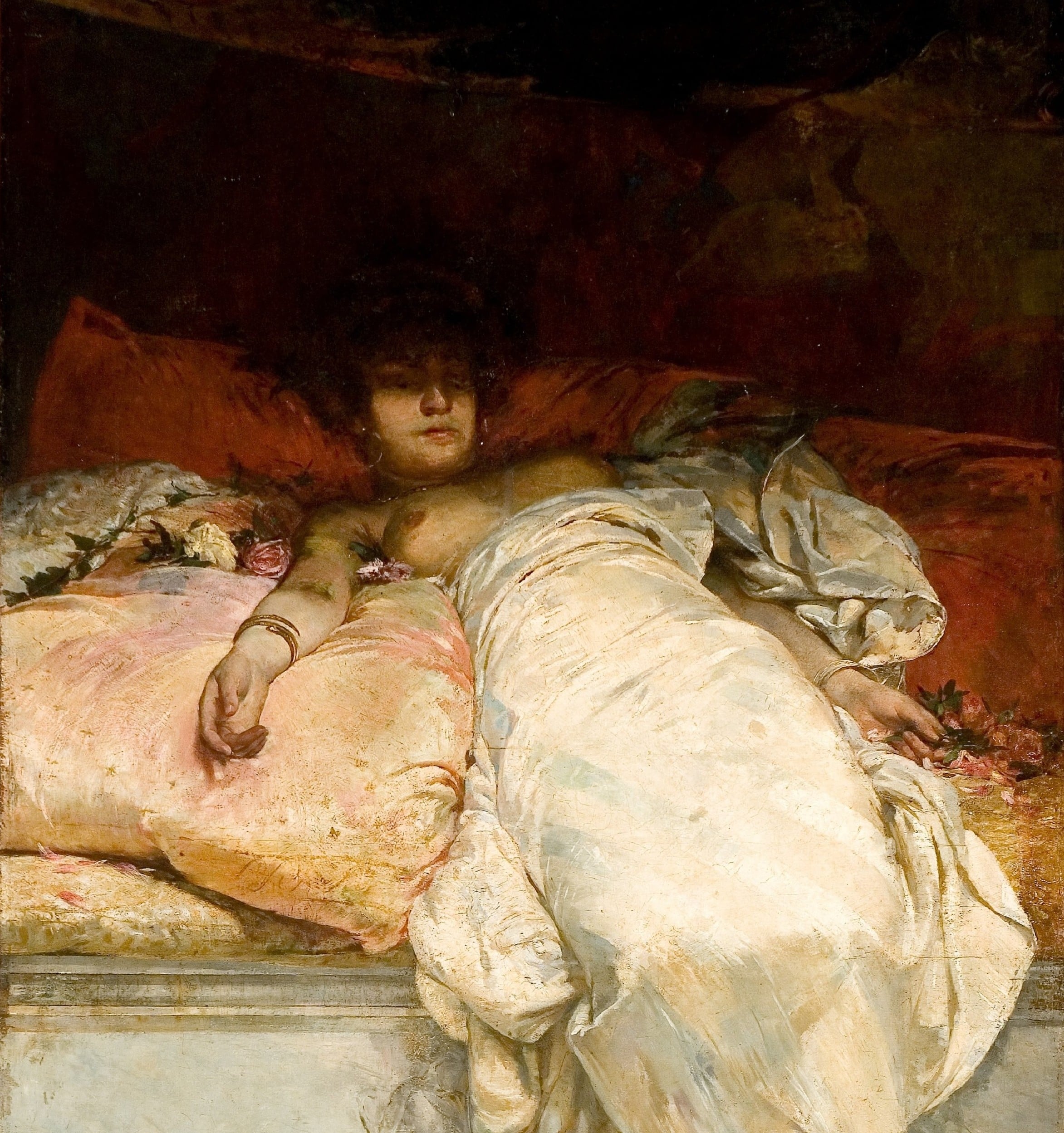
Perhaps the most famous story about Messalina claims that she regularly slipped out of the imperial palace at night, disguised herself with a blonde wig, and worked in a Roman brothel under the name Lycisca.
The Roman satirist Juvenal describes this extraordinary double life in his Satire VI. According to his account, Messalina waited until Claudius was asleep before sneaking away to satisfy desires that palace life apparently couldn’t accommodate. At the brothel, she supposedly entertained customers until closing time, eventually returning to the imperial residence exhausted but still unsatisfied.
It’s the sort of story that practically demands to be retold. Imagine being an emperor, surrounded by guards, servants, advisers, and all the luxuries of Rome, while your wife allegedly spends her evenings moonlighting at a brothel. One can understand why the tale has survived for nearly two millennia.
But Juvenal wasn’t conducting an investigation into the empress’s private life. He was writing satire, a genre known for exaggeration, ridicule, and attacks on perceived moral decline. His portrayal of Messalina was part of a broader critique of Roman women, particularly those he considered excessively wealthy, independent, or sexually liberated.
No independent surviving evidence confirms that Messalina actually worked in a brothel. The story reveals how Roman writers remembered and vilified Messalina, but it offers little evidence that she actually made these secret nighttime visits.
The Outrageous Competition With a Roman Prostitute
As if the brothel allegation weren’t enough, another ancient author claimed that Messalina once entered into a contest with a professional prostitute to determine who could have the most sexual encounters.
Pliny the Elder included the story in his Natural History, reporting that Messalina competed for an entire day and night and emerged victorious after 25 encounters. The claim was intended to illustrate the supposedly extraordinary limits of her sexual appetite.
For Roman readers, the accusation would have been particularly shocking because it portrayed the emperor’s wife behaving in a manner completely at odds with the traditional expectations of an aristocratic matron. Roman elite women were supposed to embody modesty, marital fidelity, and family honor. Messalina, in this telling, was the opposite of everything a respectable Roman wife should be.
Whether the contest actually occurred is another matter. Pliny offers the anecdote without the corroborating evidence a modern historian would want, and the story resembles the exaggerated tales of excess that ancient authors often used to make moral points.
Still, its survival reveals something important about Messalina’s reputation. She had become a symbol of sexual extravagance, a figure whose alleged behavior could be used to illustrate everything Roman moralists thought was wrong with their society.
And while the brothel and competition stories remain highly questionable, other accounts place her relationships much closer to the center of imperial power.
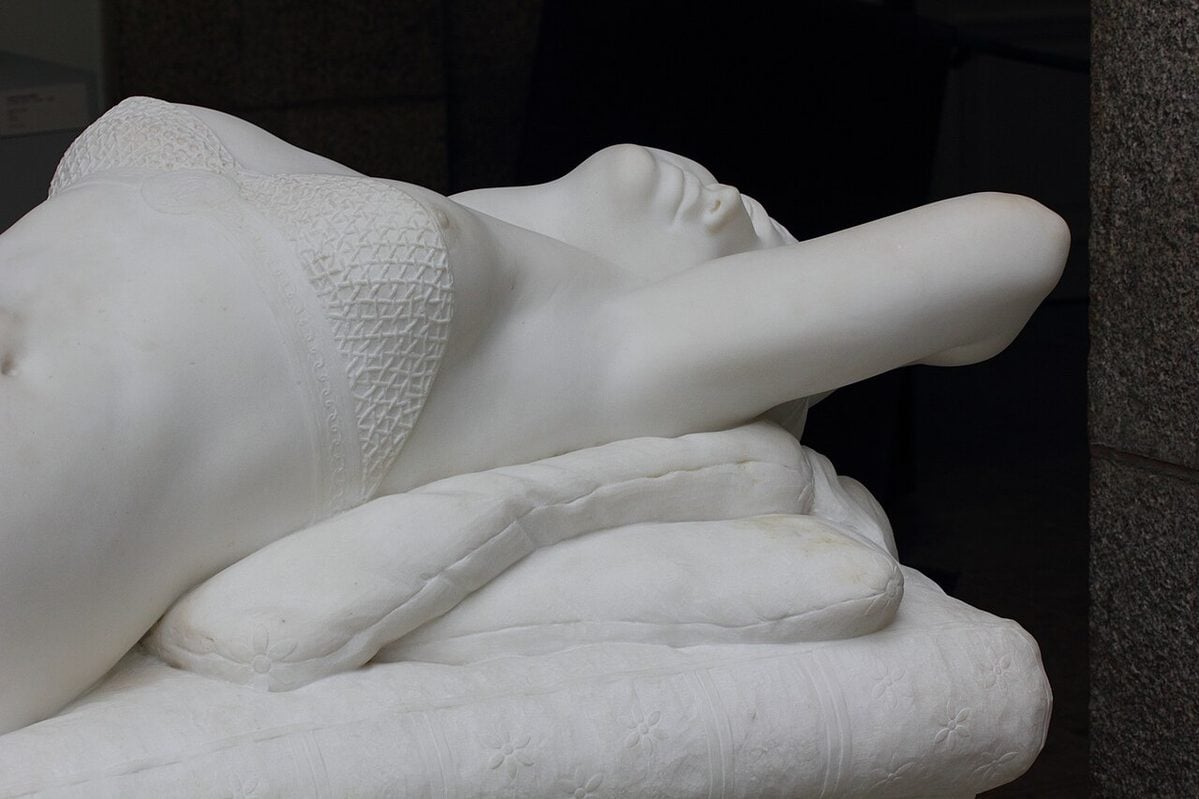
Messalina and Mnester: When the Emperor’s Orders Backfired
One of the more intriguing stories concerns Mnester, a popular actor whose performances apparently caught Messalina’s attention. According to Tacitus, the empress became infatuated with him, but Mnester wasn’t eager to begin an affair with Claudius’s wife.
His hesitation was understandable. An affair with the emperor’s wife might offer certain advantages, but it could also put a man in serious danger. And in ancient Rome, those risks could prove deadly.
Messalina allegedly solved the problem by turning to her husband. Tacitus reports that Claudius instructed Mnester to obey her commands, apparently without realizing what those commands might entail. The actor was then placed in an impossible position: refusing the empress could mean defying an order from the emperor himself.
This episode becomes particularly revealing when we reach Messalina’s downfall. After her relationship with Gaius Silius was exposed, Mnester was among those accused of involvement in her affairs. He reportedly defended himself by insisting that he had acted under compulsion, even showing marks from punishments and reminding Claudius of the original order to obey Messalina.
Claudius apparently considered sparing Mnester, but his advisers argued that he deserved the same punishment as the other prominent men. Ultimately, they persuaded Claudius to have him executed.
Whether Tacitus preserved every detail accurately is impossible to know. Yet the story offers a glimpse into the darker realities of Roman court life, where personal desires, political influence, and imperial authority could become dangerously entangled. It also reminds us that Messalina’s alleged relationships weren’t necessarily romantic affairs between willing participants.
But none of these episodes would prove as disastrous as the relationship that eventually brought down the empress herself.
The Secret Marriage That Changed Everything
By 48 CE, Messalina had become involved with Gaius Silius, a prominent Roman senator who was designated to serve as consul. Tacitus describes Silius as a handsome and ambitious man who attracted the empress’s attention despite already being married. Their relationship would develop into a scandal so serious that it threatened far more than Claudius’s marriage.
As Tacitus recounts in The Annals, Messalina pursued Silius so openly that his existing marriage came to an end. Their affair continued, but what began as an illicit relationship within the imperial court soon developed into something far more extraordinary.
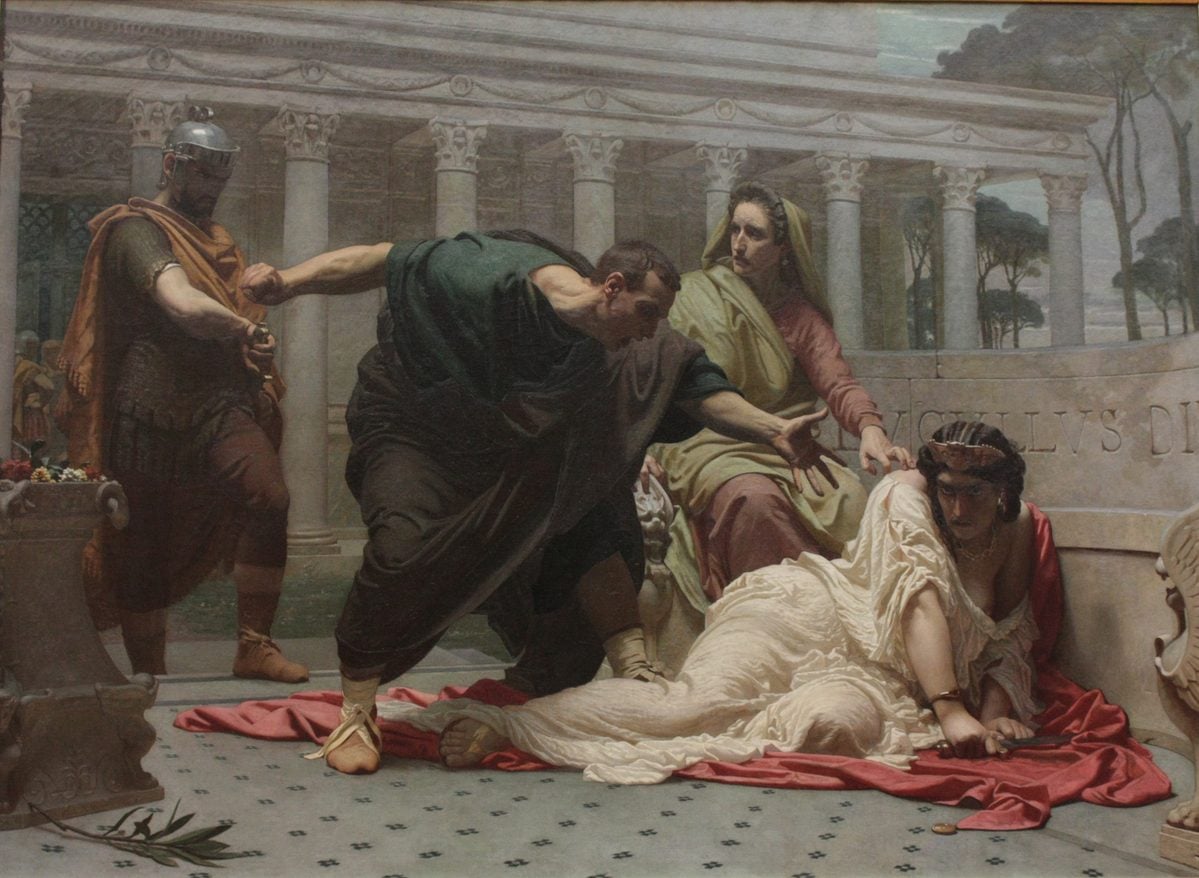
While Emperor Claudius was away from Rome, Messalina reportedly married Silius in a formal wedding ceremony.
Ancient Rome had seen plenty of extramarital affairs, political marriages, and ambitious aristocrats willing to take enormous risks. But marrying the emperor’s wife while the emperor himself was still alive was an entirely different proposition.
And despite its reputation as a secret marriage, the ceremony described by Tacitus was hardly discreet. He reports that witnesses were present and that the couple participated in recognizable wedding customs. Rather than a quiet arrangement between two lovers, the event appeared to announce a new relationship with potentially explosive political consequences.
Was Messalina Planning to Overthrow Claudius?
This is where the story becomes particularly fascinating, because historians still debate what Messalina and Silius were trying to accomplish.
Tacitus suggests that Silius understood how dangerous the affair had become and believed a bold move might be safer than continuing to conceal it. He also reports that Silius offered to adopt Britannicus, Messalina’s son and a potential successor to Claudius.
That detail raises the possibility of a serious political conspiracy. If Silius intended to replace Claudius, adopting Britannicus could help legitimize his position and preserve Messalina’s influence as the mother of a future emperor.
But there are problems with assuming that we know exactly what the couple intended. Ancient writers generally portrayed Messalina unfavorably, leaving us uncertain about the couple’s true motivations for marrying.
Was it an attempted coup? A desperate attempt to secure political power? Or did an affair that began with personal attraction become so reckless that its participants failed to appreciate the consequences?
Whatever their intentions, the marriage represented an extraordinary challenge to Claudius’s authority. It wasn’t simply a matter of an emperor discovering that his wife had been unfaithful. The man she had supposedly married was a leading senator with potential political ambitions, and her son stood in the line of imperial succession.
A personal scandal had become a possible threat to the throne.
The Emperor Discovers His Wife’s Marriage
At the time of the ceremony, Claudius was away in Ostia, Rome’s important port city. News of the marriage soon reached members of the imperial household. This included Narcissus, one of the emperor’s most influential freedmen and advisers.
Narcissus understood the danger immediately. If Silius emerged victorious in a struggle for power, those who had supported Claudius might find themselves facing execution or exile. He therefore moved quickly to warn the emperor and organize a response.
Tacitus portrays Claudius as deeply shaken by the news, struggling to understand whether his marriage and even his position as emperor were now under threat. Narcissus and others around him pressed for action, arguing that hesitation could allow the supposed conspirators to seize power.
Meanwhile, Messalina learned that the emperor had discovered what had happened. She reportedly abandoned the celebrations and attempted to reach Claudius before his advisers could turn him completely against her.
The woman who had once enjoyed extraordinary influence over the imperial household was suddenly fighting for her life.
How Did Empress Messalina Die?
The scandal surrounding Messalina’s marriage to Silius moved quickly from palace gossip to a deadly political crisis. With Claudius informed of the situation and Narcissus directing the response, the people associated with the alleged conspiracy had little time to defend themselves.
Silius was brought before the emperor and, according to Tacitus, offered little resistance. Rather than attempting a prolonged defense, he asked for a swift execution. Several other men accused of involvement were also put to death, including Mnester. His earlier relationship with Messalina had already placed him in a dangerous position.
Messalina, however, had not yet given up hope. Tacitus describes her desperately trying to reach Claudius and plead her case, believing that their shared children might persuade him to show mercy.
She reportedly traveled toward Ostia with the intention of meeting the emperor, hoping to remind him that she was the mother of Octavia and Britannicus. It was a reasonable strategy in a world where family relationships could determine political survival. However, she had powerful enemies working against her.
Narcissus was particularly determined to prevent a reconciliation. He understood that if Claudius forgave Messalina, those who had orchestrated the executions might suddenly find themselves accused of acting too hastily.
Messalina’s Final Hours
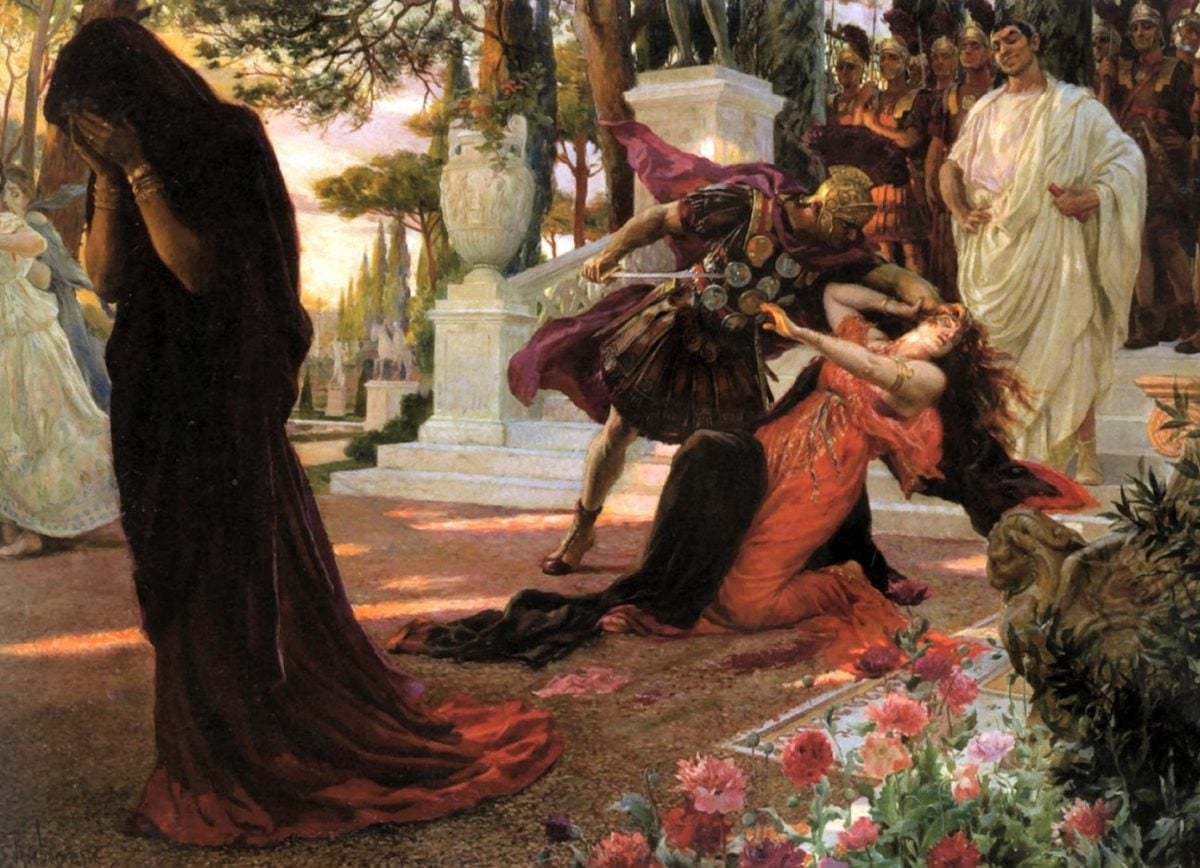
After failing to secure an audience with Claudius, Messalina withdrew to the Gardens of Lucullus, the luxurious estate that Tacitus had previously connected to her alleged persecution of Valerius Asiaticus.
There is a grim irony in that setting. According to Tacitus’s account, Messalina had once coveted the gardens so intensely that another man lost his life. Now she faced death in the same place.
The historian describes a remarkable turn of events as Claudius’s initial anger began to fade. After the executions, the emperor reportedly indicated that Messalina should be permitted to present her case the following day.
For Narcissus, the possibility that she might regain her husband’s favor was alarming. He therefore arranged for soldiers to carry out her execution, claiming that he was acting under imperial authority.
Messalina was at the gardens with her mother, Domitia Lepida, who urged her to face her death with dignity. The relationship between the two women had reportedly been strained, but Lepida remained with her daughter during her final hours.
Tacitus claims that Messalina attempted to kill herself with a dagger but lacked the resolve to complete the act. A soldier then delivered the fatal blow.
The empress was dead in 48 CE, still a relatively young woman whose precise age remains uncertain.
Tacitus adds a final detail that seems almost designed to capture the cold brutality of the imperial court. When Claudius was informed that Messalina had died, he supposedly continued his meal without asking whether she had taken her own life or been killed. Whether that scene unfolded exactly as described is impossible to establish, but it became one of the defining images of her downfall.
Rome’s Attempt to Erase Messalina
Messalina’s death wasn’t the end of the campaign against her reputation. According to Tacitus, the Roman Senate ordered that her name and statues be removed from public and private places, stripping her of the honors associated with her position as empress.
This type of action is commonly associated with damnatio memoriae, a modern term for Roman practices intended to condemn or dishonor the memory of an individual.
The goal wasn’t necessarily to eliminate every record that the person had ever existed. Rather, it was to remove public honors and reshape how future generations remembered someone who had fallen from favor.
In Messalina’s case, the result was almost comically unsuccessful. Far from disappearing into obscurity, she became one of the most notorious women in Roman history. Her name survived not primarily through monuments celebrating her achievements, but through stories of political intrigue, outrageous affairs, and the extraordinary marriage that supposedly cost her life.
Rome might have removed her statues, but its writers ensured that nobody would forget the scandals.
Was Messalina Really Rome’s Most Scandalous Woman?
By this point, it’s tempting to conclude that Messalina was simply an exceptionally reckless woman whose ambitions eventually caught up with her. After all, the marriage to Gaius Silius created an extraordinary political crisis, and ancient accounts repeatedly associate her with dangerous intrigues within the imperial household.
But the closer we look at those accounts, the more complicated her reputation becomes. Almost everything we know about Messalina comes from writers who had their own opinions about morality, political power, and the proper behavior of women. Some lived decades after her death, while others were personally entangled in the rivalries of Claudius’s court.
That doesn’t make their work worthless. Without these authors, we would know far less about the events surrounding her life. It does mean we need to distinguish between what they reported, what they believed, and what we can reasonably establish.
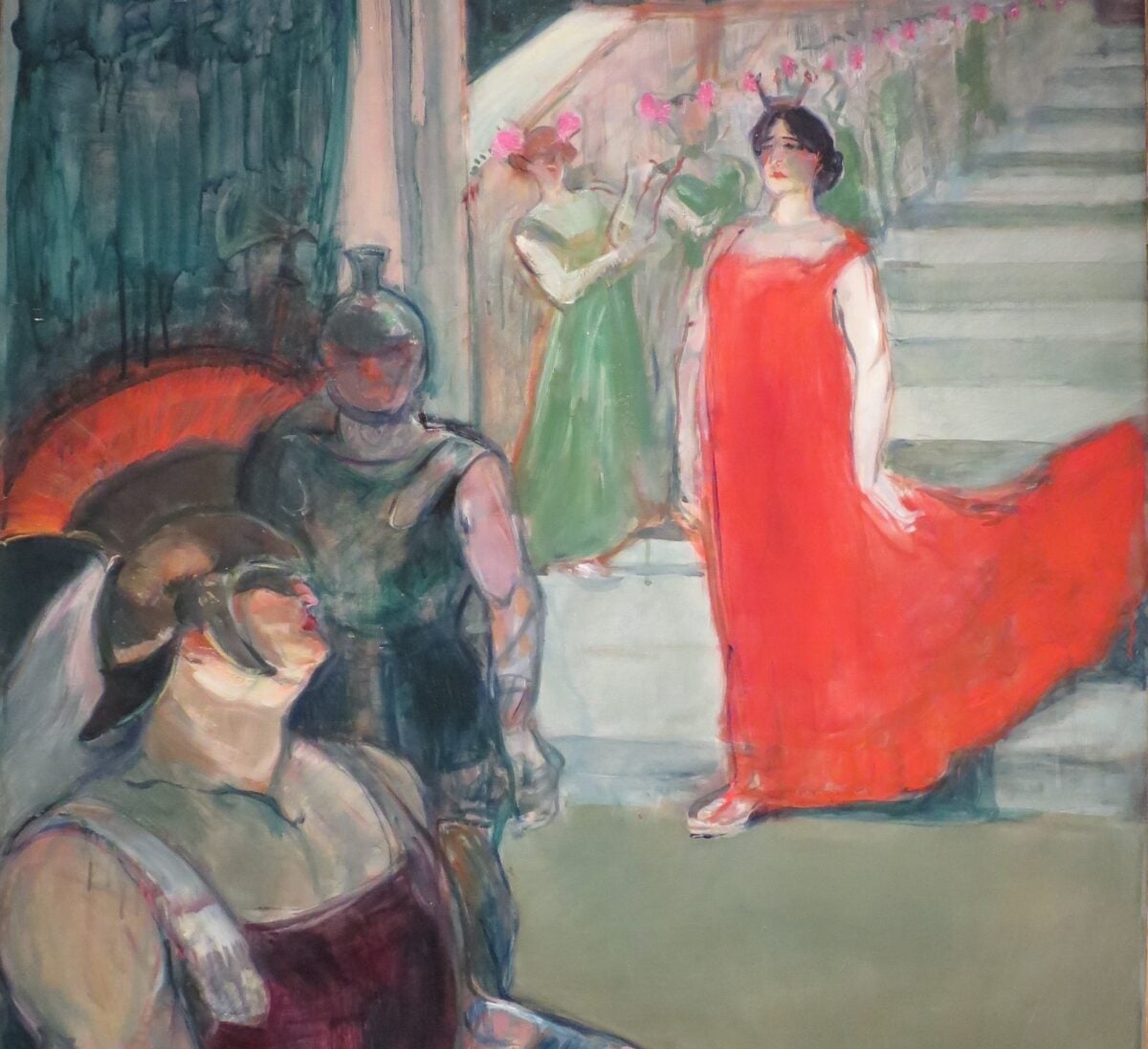
What the Ancient Historians Really Tell Us
Tacitus provides one of the fullest surviving narratives of Messalina’s political activities, relationship with Silius, and execution. His Annals are enormously valuable for understanding the early Roman Empire, but they are also shaped by his interest in the corruption and dangers of imperial power.
Suetonius, writing biographies of the Roman emperors, included memorable anecdotes about their personalities, marriages, and private lives. His account of Claudius helped reinforce the image of an emperor who was unable to control the people closest to him.
Cassius Dio, writing much later, also described scandals and political intrigues within the imperial household. Like Tacitus and Suetonius, he viewed the events through the expectations and assumptions of his own time.
Then there are Juvenal and Pliny the Elder, whose most outrageous allegations have contributed enormously to Messalina’s modern reputation. Juvenal was writing satire, not biography, while Pliny’s encyclopedic Natural History gathered an enormous variety of observations and anecdotes, not all of which meet modern expectations of historical verification.
Together, these authors created an unforgettable portrait of Messalina. But their accounts are not six independent eyewitness testimonies confirming every scandal. They represent different literary genres, purposes, and degrees of proximity to the events.
Seneca’s Personal Reasons to Dislike the Imperial Court
Seneca offers another interesting perspective because, unlike several of the later historians, he actually lived during Messalina’s lifetime.
The philosopher and statesman experienced the dangers of Roman court politics firsthand. In 41 CE, he was exiled following accusations involving Julia Livilla, a member of the imperial family. Ancient accounts connect Messalina to the political maneuvering surrounding Julia Livilla’s downfall, giving Seneca possible personal reasons to resent those associated with Claudius’s household.
Seneca eventually returned to Rome and became an influential adviser during Nero’s reign, but his earlier experiences illustrate how personal rivalries could shape the opinions of those writing about imperial life.
His perspective therefore deserves attention, although it would be too simple to assume that every criticism associated with Messalina resulted from a personal vendetta. Roman politics involved overlapping loyalties, grievances, and ideological conflicts that rarely fit into neat categories.
How Roman Gossip Became Historical Fact
One of the most fascinating aspects of Messalina’s story is how effectively gossip could shape a person’s reputation in ancient Rome.
Roman aristocratic society placed enormous importance on family honor, political loyalty, and the public behavior of elite women. An empress was expected to embody the dignity of the imperial household, so accusations of sexual misconduct carried implications far beyond her private marriage.
Messalina’s alleged behavior was particularly useful to writers who wanted to illustrate the dangers of unchecked desire or the supposed weakness of an emperor dominated by his wife. Her rumored affairs could be presented as evidence of moral corruption, while her political involvement could be portrayed as proof that the natural order of Roman society had been overturned.
The stories also became more memorable with repetition. A tale about an empress visiting a brothel or competing with a prostitute was far more likely to capture readers’ imaginations than a careful discussion of court factions and succession politics.
Once those stories entered the literary tradition, they helped establish a version of Messalina that remained influential for centuries. Her name became associated with sexual excess, often without much consideration of how the allegations originated or whether independent evidence supported them.
For modern historians, the challenge is separating actual political events from the layers of moral judgment, literary exaggeration, and gossip that accumulated around them.
History is full of famous stories that become accepted as fact through centuries of repetition. As we explore in our article on historical myths people still believe, even some of the most familiar tales about Roman emperors don’t hold up to closer scrutiny. Messalina’s reputation is another reminder that a memorable story isn’t necessarily an accurate one.
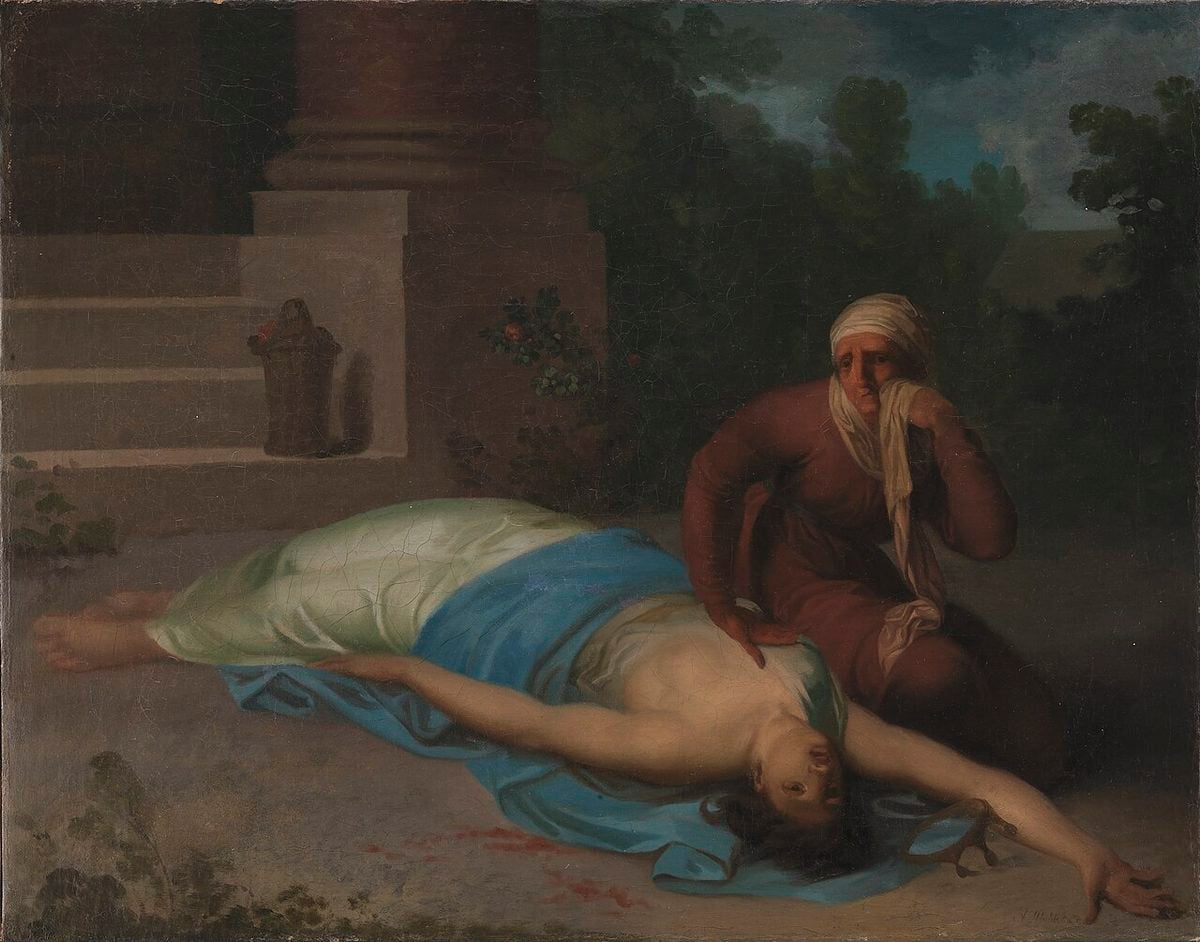
A Ruthless Empress or a Convenient Villain?
It would be misleading to suggest that Messalina was simply an innocent woman whose enemies invented every accusation against her. The marriage to Silius was a politically explosive event, and ancient sources connect her with serious conflicts involving other members of Rome’s ruling elite.
At the same time, accepting every outrageous anecdote at face value would be equally problematic. The surviving evidence does not allow us to reconstruct her private life in the detail that ancient writers confidently claimed to possess.
Messalina may have been ambitious, politically ruthless, impulsive, or some combination of all three. She certainly lived in a world where mistakes could be fatal and where the people who survived political struggles often had considerable influence over how the defeated were remembered.
Perhaps the most revealing thing about her reputation is that the stories of her alleged sexual behavior have often overshadowed the very real political crisis that brought her down.
The scandalous empress became a larger-than-life character, while the complicated woman behind that image nearly disappeared.
Frequently Asked Questions About Empress Messalina
Even after separating the ancient allegations from the better-documented political events, there are still some intriguing questions about Messalina’s life and death. Here are a few of the details that often get lost behind her scandalous reputation.
What Was Empress Messalina Famous For?
Messalina was the third wife of Emperor Claudius and became notorious for allegations of numerous affairs, political manipulation, and outrageous sexual behavior. Her most consequential scandal involved her reported marriage to Gaius Silius while still married to Claudius. The resulting political crisis led to her execution in 48 CE, although many of the more sensational stories about her private life remain unverified.
Why Did Messalina Marry Gaius Silius?
Her precise motivations remain uncertain. Ancient accounts suggest that the marriage may have been connected to a political conspiracy against Claudius, possibly involving Messalina’s son Britannicus and the imperial succession. Other interpretations emphasize the reckless nature of the affair or the difficulty of determining what the couple genuinely intended.
How Old Was Messalina When She Died?
Messalina’s exact birth year is uncertain, so her age at death cannot be established precisely. She died in 48 CE, probably while still in her twenties or early thirties.
Did Claudius Order Messalina’s Death?
According to Tacitus, Narcissus arranged for Messalina’s execution while Claudius appeared to be considering allowing her to defend herself. Narcissus claimed to act on the emperor’s authority, but the precise circumstances surrounding Claudius’s approval remain uncertain.
What Happened to Messalina’s Children After Her Death?
Messalina’s children, Octavia and Britannicus, remained part of the imperial family after her execution in 48 CE, but their futures were far from secure. Claudius later married his niece Agrippina the Younger, whose son Nero became the emperor’s adopted heir.
After Claudius died in 54 CE, Nero took the throne, pushing Britannicus aside. Britannicus died under suspicious circumstances in 55 CE, with ancient sources accusing Nero of poisoning him. Octavia later married Nero, but their marriage ended in divorce and her execution in 62 CE. Messalina’s downfall was only the beginning of her family’s tragic story.
Still curious about Messalina’s scandalous life, political ambitions, or dramatic downfall? If there’s something we haven’t covered, leave your questions in the comments below. We’d love to hear what else you’d like to know about one of ancient Rome’s most notorious women!
The Woman Behind Rome’s Most Infamous Reputation
Messalina’s story has everything that makes ancient Roman history so irresistible: outrageous accusations, political ambition, a spectacularly ill-advised marriage, and a downfall that seems almost too dramatic to be real. Her actions, or at least the actions attributed to her, made her one of the most notorious figures in a dynasty that was hardly lacking in scandal.
But what makes her story worth revisiting is the uncertainty surrounding so much of it. The political crisis of 48 CE was real, and Messalina paid for it with her life. The brothel visits, sexual competition, and countless alleged affairs belong to a much murkier world of satire, rumor, and hostile storytelling.
Rome tried to strip Messalina of her public honors after her death, yet the scandalous version of her life survived for centuries. Whether she deserved that reputation remains an open question. Perhaps she really was extraordinarily reckless and ruthless. Perhaps the ancient writers exaggerated her worst qualities. Most likely, the woman herself was more complicated than the legend they left behind.
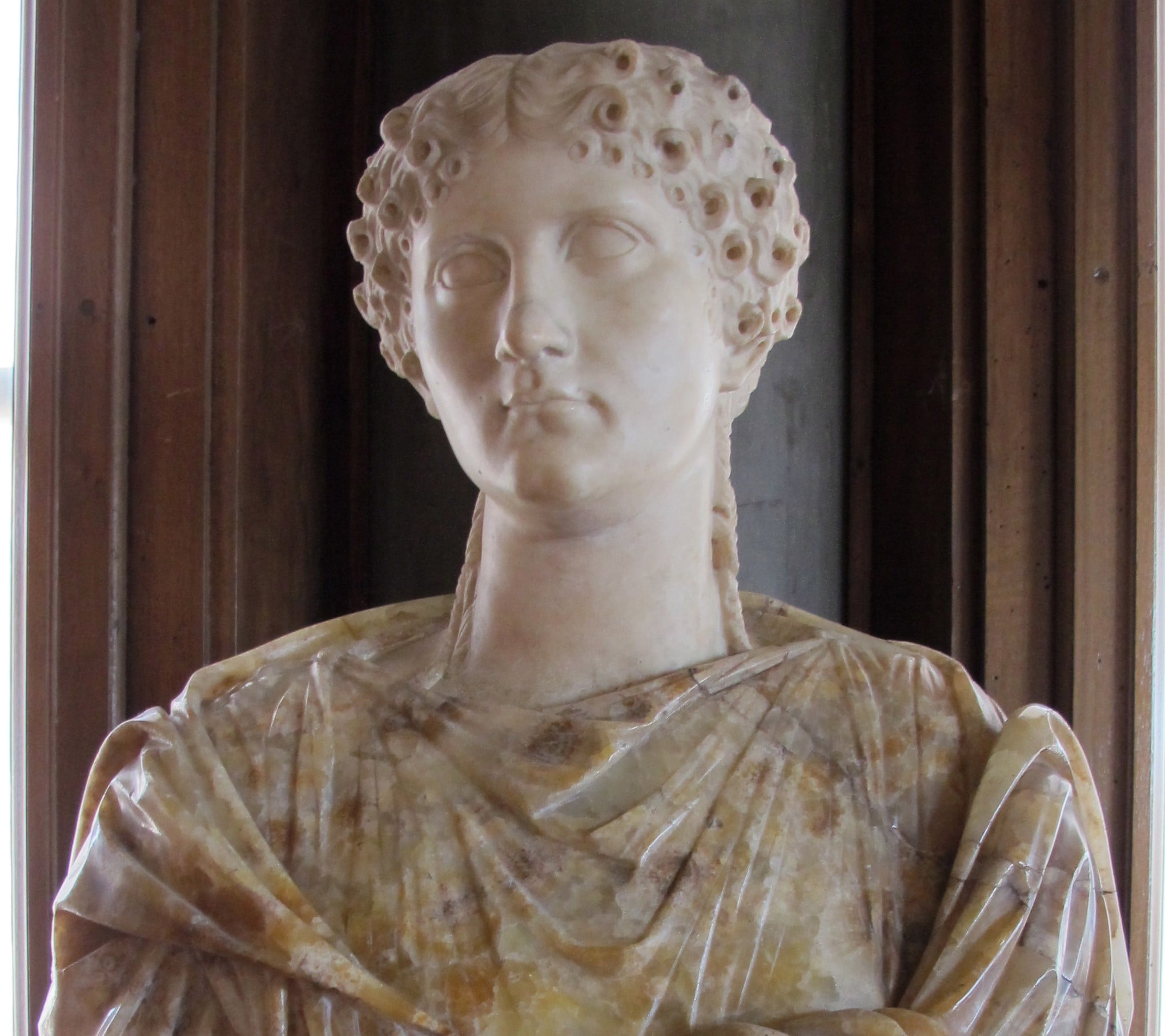
What do You Think? Was Messalina a Ruthless Empress or a Victim of Roman Gossip?
What do you think? Was Messalina a dangerous political player whose ambitions finally caught up with her? Or did Rome’s historians turn her into a convenient villain? Share your thoughts in the comments below. I’d love to hear which parts of her extraordinary story you find most convincing.
More Powerful Women Who Shaped Ancient History
Messalina wasn’t the only woman whose ambition, relationships, or defiance left a lasting mark on ancient history. From queens who challenged Roman armies to rulers whose love lives became political scandals, these fascinating women had stories every bit as dramatic.
- Queen Zenobia: The Warrior Queen – Discover how the ambitious Queen of Palmyra challenged Roman authority, expanded her territory, and ultimately faced a powerful emperor determined to defeat her.
- Julius Caesar and Cleopatra – Explore how Cleopatra’s relationships with two of Rome’s most powerful men became entangled with political alliances, civil wars, and the fate of Egypt.
- Queen Boudica: The Unyielding Warrior Queen of Ancient Britain – Meet the fierce Celtic queen who led a devastating revolt against Roman rule and became one of Britain’s most legendary historical figures.
From scandalous empresses to defiant warrior queens, these women refused to remain in the shadows of powerful men. They challenged empires, defied expectations, and left their mark on history, even when the men who wrote it tried to tell a different story.