The rise of Napoleon Bonaparte was one of the fastest and most unlikely climbs to power in modern European history.
In 1785, Napoleon Bonaparte was an obscure teenage artillery officer from Corsica.
Table of Contents
Nineteen years later, he was Emperor of the French.
That rise can look inevitable in hindsight. It wasn’t. Napoleon began far from the center of French power, survived political danger and military failure, and repeatedly advanced at moments when his career could have collapsed just as easily.
So how did a young Corsican officer climb from the margins of France to the top of the state in barely two decades?
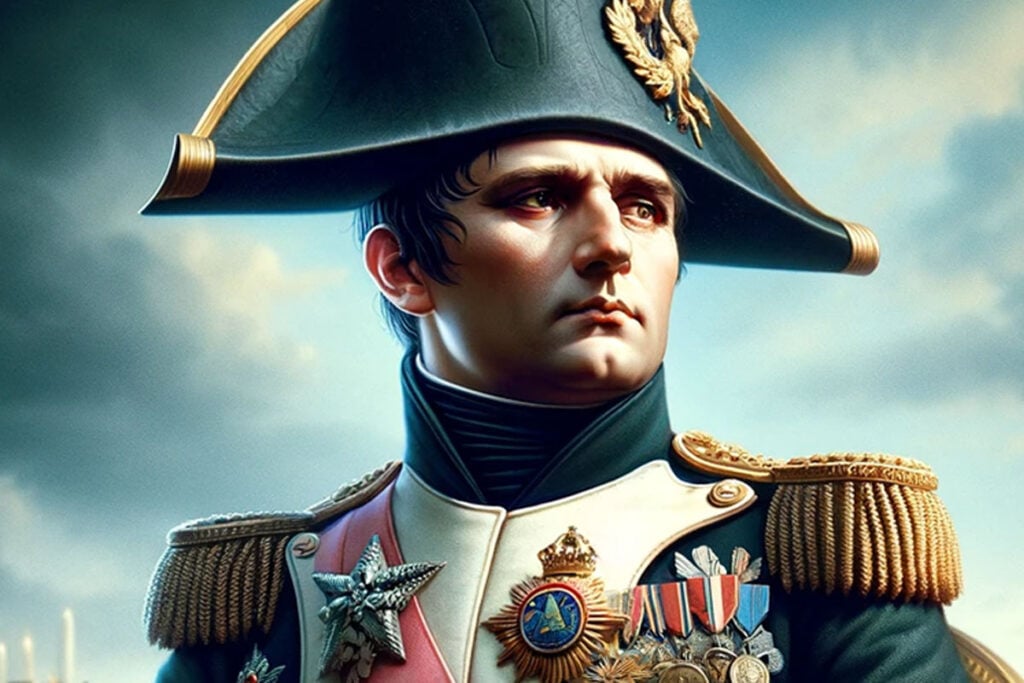
The answer was not military genius alone. Napoleon’s rise depended on ambition, timing, battlefield success, political chaos, and an extraordinary ability to turn every opportunity into more power.
Napoleon’s Rise Was Faster, and Less Inevitable, Than It Looks
The familiar version of the rise of Napoleon Bonaparte is simple: a brilliant general won battles, became famous, seized power, and eventually crowned himself emperor.
The reality was much messier.
Napoleon did not begin life inside France’s political elite. He was born on Corsica only a year after the island had come under French control, and as a young man he still identified strongly with his native island. His family possessed minor noble status, which helped him obtain a military education, but they were far removed from the wealth and influence of France’s great aristocratic families.
His rise was no smooth march upward. He benefited enormously from the French Revolution, which shattered the old military hierarchy and created opportunities for young officers. But those same upheavals nearly destroyed him. He was briefly arrested after Robespierre’s fall, his career stalled, his expedition to Egypt ended in strategic failure, and even the coup that eventually brought him to power nearly unraveled.
That is what makes his ascent so remarkable. Napoleon kept reaching turning points where failure was entirely possible—and somehow came out of them with greater authority than before.
To understand how, it helps to separate a few common assumptions from what actually drove his rise.
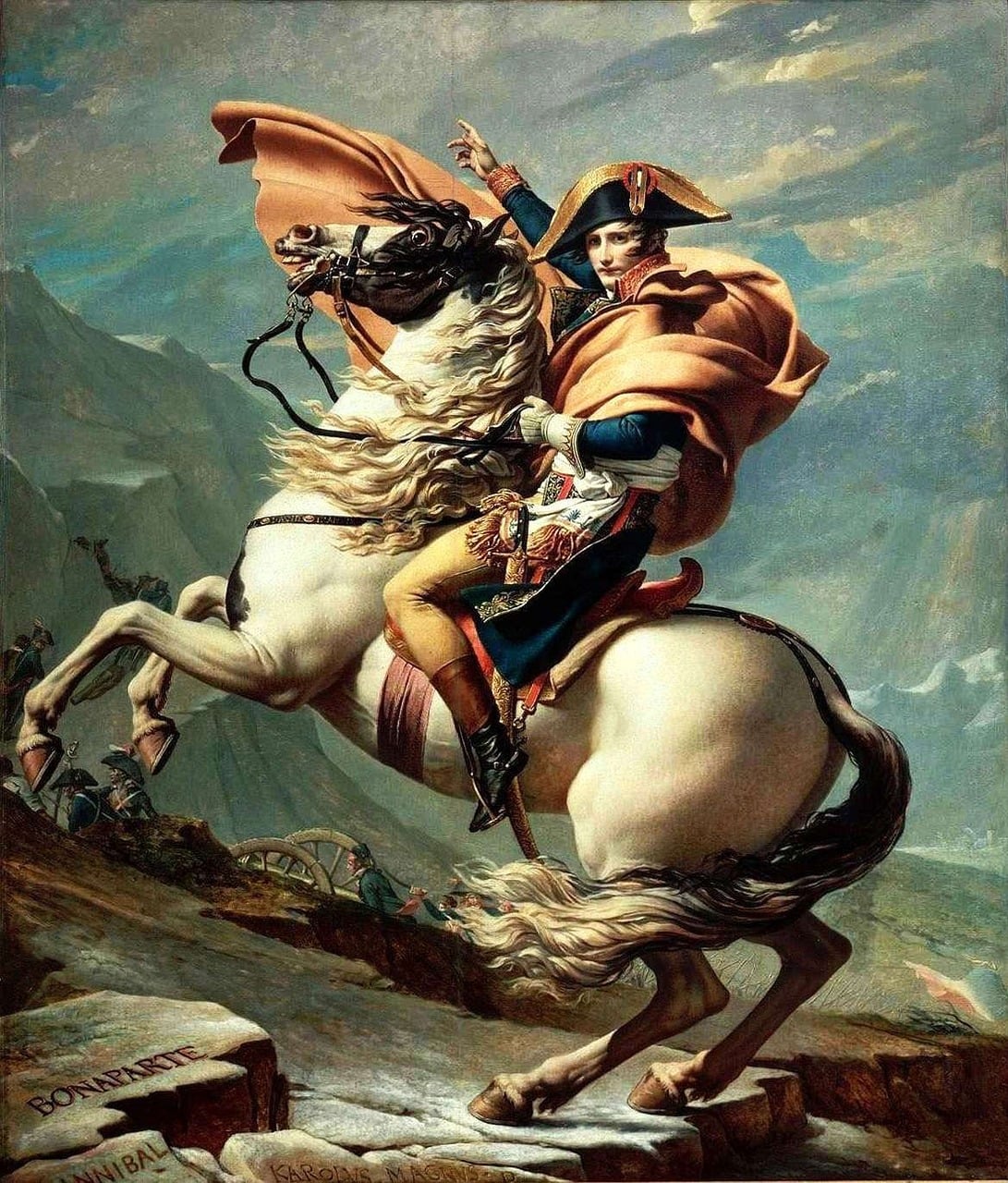
Myth: Napoleon Rose Because He Was Simply a Military Genius
His battlefield ability mattered enormously, but military talent alone does not explain how he became ruler of France.
Napoleon’s victories gave him visibility and prestige. What made him unusual was how effectively he converted those victories into political influence. He cultivated his public image, built relationships with powerful figures, and understood that reputation could become a form of power in its own right.
Myth: Napoleon Seized Power in One Sudden Coup
The Coup of 18 Brumaire in 1799 was decisive, but by then Napoleon had spent years building the position that made it possible.
Toulon had made him a general. Vendémiaire had made him useful to the government. Italy had made him famous, and propaganda had helped turn that fame into a national image.
By the time he returned from Egypt, Napoleon was no longer simply an ambitious officer looking for advancement. He was one of the most recognizable and politically valuable men in France.
The Biggest Question: Why Was France Ready for Him?
Napoleon’s ambition explains why he wanted power. It does not explain why he could take it.
By 1799, France had endured a decade of revolution, war, political violence, financial instability, and repeated government changes. The Directory had lost much of its credibility, and even some of the men running the regime were searching for a new political structure.
Napoleon did not create that crisis, but he arrived at exactly the moment it became useful to him. That pattern—opportunity appearing, Napoleon recognizing it, and then moving faster than everyone around him—would define nearly every stage of his rise.
Napoleon Began as an Outsider in France
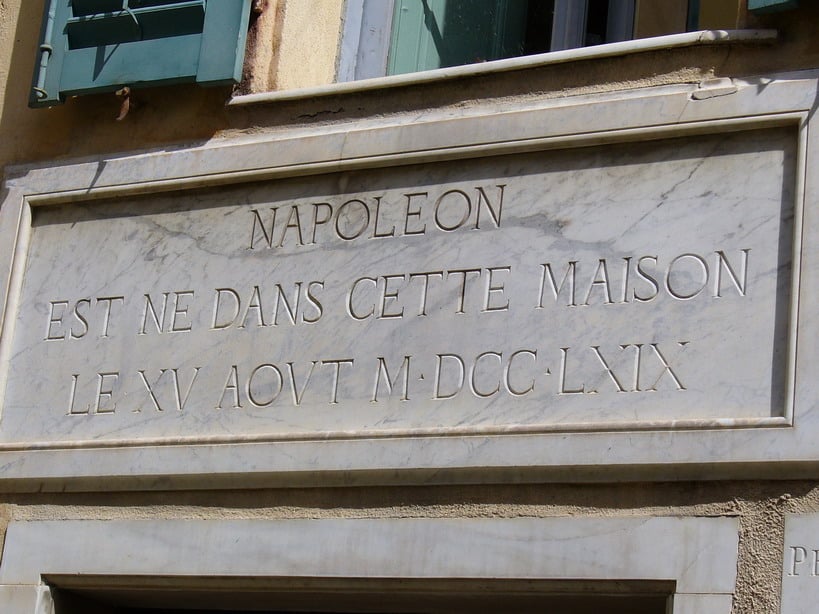
Napoleon Bonaparte was born in Ajaccio, Corsica, on August 15, 1769. That detail matters more than it might seem.
France had taken control of Corsica only shortly before Napoleon’s birth. The island had a strong local identity and a recent history of resistance to French rule. Napoleon’s father, Carlo Buonaparte, initially supported the Corsican nationalist leader Pasquale Paoli before eventually accommodating himself to French authority.
The Bonapartes had noble status, but they were not an enormously wealthy aristocratic family. Their position, however, helped Napoleon receive an education in France.
At nine, he left Corsica for the mainland. After a brief period at Autun, where he worked on his French, he entered the military school at Brienne as a royal scholarship student. For the young Napoleon, mainland France was not automatically home. French was not his first language, and his identity during his youth remained closely tied to his native island. He initially imagined his future as being tied to Corsica rather than to ruling France.
That would change dramatically.
Napoleon eventually attended the École Militaire in Paris, where he trained as an artillery officer. He entered the army as a second lieutenant in 1785: educated, technically skilled, intensely ambitious—and still one junior officer among many.
Had France remained politically stable, his rise might have been respectable but far slower.
France did not remain stable.
The French Revolution Destroyed the Old Career Ladder
Napoleon Bonaparte‘s rise would have been almost impossible without the French Revolution. Beginning in 1789, the Revolution dismantled the political and social order that had trained Napoleon.
The monarchy collapsed. Revolutionary governments replaced one another. France went to war with European powers determined, for different reasons, to contain or reverse the Revolution. Political purges, emigration, and upheaval transformed the officer corps.
For someone like Napoleon, chaos created danger—but also opportunity.
Under the old system, advancement to senior military command could be heavily constrained by birth, patronage, seniority, and court connections. Revolutionary France suddenly needed officers who could command armies in an expanding war, creating room for ambitious young men to rise much faster than they otherwise might have.
This did not mean Napoleon simply floated upward with the Revolution. Many officers had opportunities. Few exploited them as effectively.
His first major chance came at Toulon.
Toulon: The Breakthrough That Changed Everything
In 1793, Napoleon was only 24 years old. He was about to become a general.
The southern port city of Toulon had rebelled against the revolutionary government, and British and allied forces entered the harbor, placing one of France’s most important naval bases in enemy hands. For revolutionary France, Toulon had to be recovered.
Napoleon, serving with the republican forces, recognized that artillery could decide the siege. Rather than treating Toulon as simply a problem of attacking the city itself, he focused on positions that controlled the harbor. If French guns could threaten the anchorage, the allied fleet would be forced into a much more dangerous position.
The plan worked: republican forces seized key ground, the allied position in the harbor became untenable, and a British-led evacuation followed. Toulon returned to government control.
Napoleon did not single-handedly win the siege, as later legend sometimes implied, but his artillery planning and performance drew serious attention. On December 22, 1793, he was promoted to brigadier general.
He was 24.
Why This Mattered
Before Toulon, Napoleon was a promising officer. After Toulon, he was a general.
The Revolution had just demonstrated the rule that would define his rise: success could collapse the distance between obscurity and power almost overnight.
But Napoleon’s position was still far from secure.
Napoleon Nearly Fell as Quickly as He Rose
Success during a revolution came with a problem: political alliances could become liabilities without warning.
Napoleon had connections to Augustin Robespierre, the younger brother of Maximilien Robespierre, one of the central figures of the Reign of Terror. When Robespierre fell in July 1794, association with his circle suddenly became dangerous.
Napoleon was arrested in August. This could easily have been the point where his career ended, but authorities released him less than two weeks later after finding insufficient grounds to keep him.
His career nevertheless entered a difficult period. He was temporarily without the kind of command he wanted and, at one point, was removed from the list of actively employed generals. For a man who would soon dominate Europe, it was an extraordinary moment of uncertainty.
Then Paris gave him another opening.
The Crisis That Brought Napoleon Into Parisian Politics
On October 5, 1795—13 Vendémiaire in the revolutionary calendar—a royalist uprising threatened the National Convention in Paris. The revolutionary government needed military force to defend itself, and Napoleon was called in.
Government troops used artillery against the insurgents, and the uprising collapsed. The episode became famous partly because later accounts emphasized Napoleon’s use of cannon and grapeshot, but its political importance outweighed the tactical detail.
Napoleon had helped defend the government at a moment of immediate danger, and his reward came quickly. He was promoted to general of division and became commander of the Army of the Interior.
Why This Mattered
Toulon had shown that Napoleon could solve a military problem. Vendémiaire showed France’s political leadership that he could also be useful in a political crisis.
That distinction was crucial. Napoleon was no longer merely an army officer advancing through battlefield competence. He was entering the world where military force and political authority overlapped.
Within months, he received the command that would make him famous.
Napoleon was hardly the first commander whose military usefulness brought him close to the center of political power. Centuries earlier, Belisarius helped save Emperor Justinian during the Nika Riots before becoming one of the Byzantine Empire’s most important generals.
Italy Turned Napoleon Into a National Celebrity
In March 1796, Napoleon took command of the Army of Italy. He was 26 years old.
The army he inherited was not the glamorous instrument later associated with Napoleon. It was badly supplied and had been operating on what French planners regarded as a secondary front, while greater expectations rested on armies campaigning farther north.
Napoleon changed the scale of what seemed possible.
His approach relied heavily on speed, concentration, and defeating enemy forces in isolation before they could unite. Beginning in April 1796, his army won a succession of victories against Piedmontese and Austrian forces. Within weeks, the Kingdom of Sardinia had been knocked out of the campaign, leaving Austria to face Napoleon without its Piedmontese ally.
Then came Lodi.
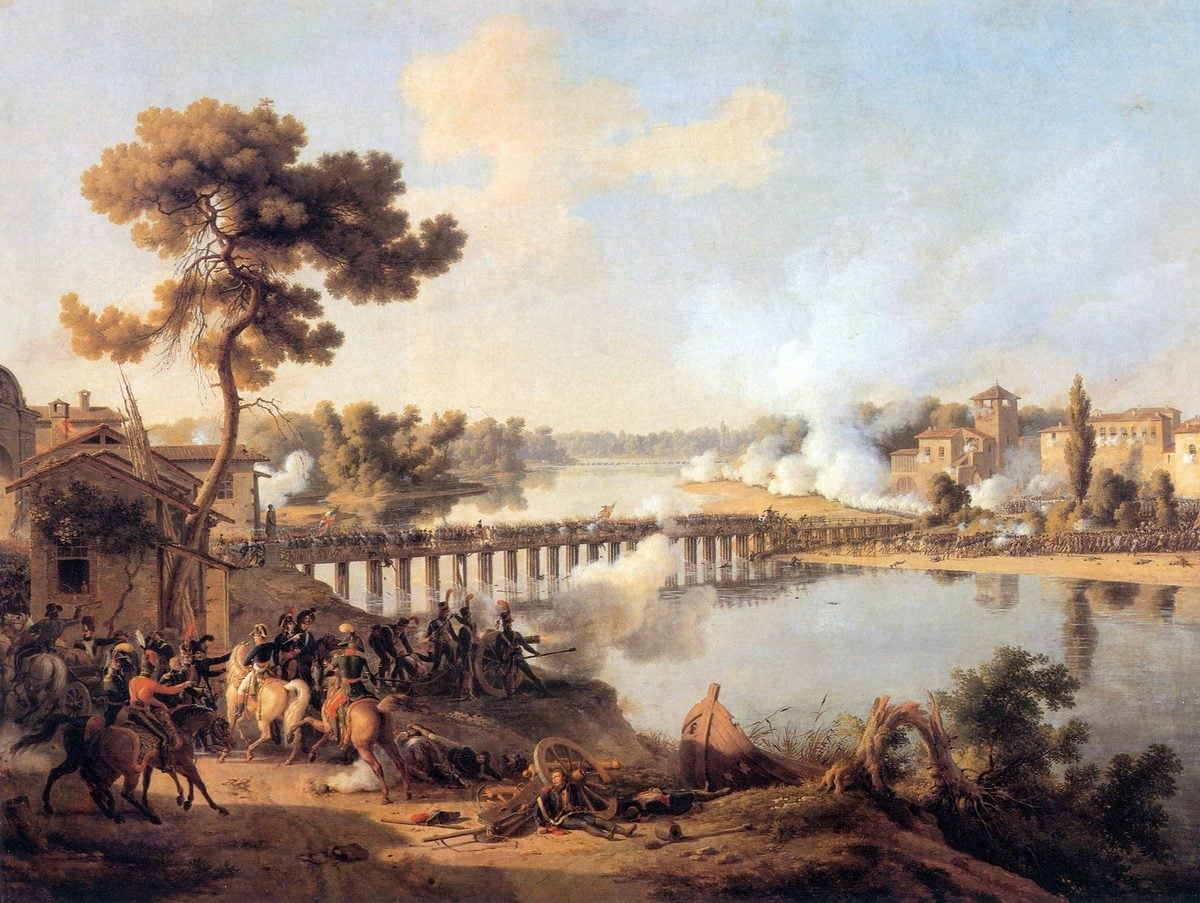
On May 10, 1796, French forces fought the Austrians around the bridge across the Adda River. The battle did not decide the entire war, but it became one of the great symbolic moments in the creation of the Napoleon legend. The victory opened the road toward Milan and helped consolidate French control in Lombardy.
More victories followed: Castiglione, Arcole, Rivoli. Mantua eventually fell, and the Austrian position in northern Italy collapsed.
The campaign moved with extraordinary speed. Napoleon took command in March 1796, won at Montenotte in April, Lodi in May, Castiglione in August, Arcole in November, and Rivoli in January 1797.
When the Directory tried to divide his command, Napoleon pushed back hard enough that Paris backed down—an early sign the government was already finding its successful young general hard to control.
This was the period when Napoleon stopped being simply one successful French general.
He became Bonaparte—a name recognized throughout France.
Why This Mattered
Military victories gave Napoleon more than promotions. They gave him political capital.
He commanded armies, negotiated with states, shaped the political organization of conquered territories, sent wealth back to France, and increasingly acted as if his authority extended beyond the battlefield.
Most importantly, victory gave him something that the Directory could not simply bestow or withdraw: a public reputation of his own.
And Napoleon understood how to cultivate it.
Battlefield fame has often translated into political ambition. After destroying three Roman legions in the Teutoburg Forest, Arminius tried to use his military reputation to build broader political authority among the Germanic tribes.
Napoleon Did Not Just Win Battles. He Built the Napoleon Image.
Napoleon’s rise was not based purely on what happened. It was also shaped by how events were presented.
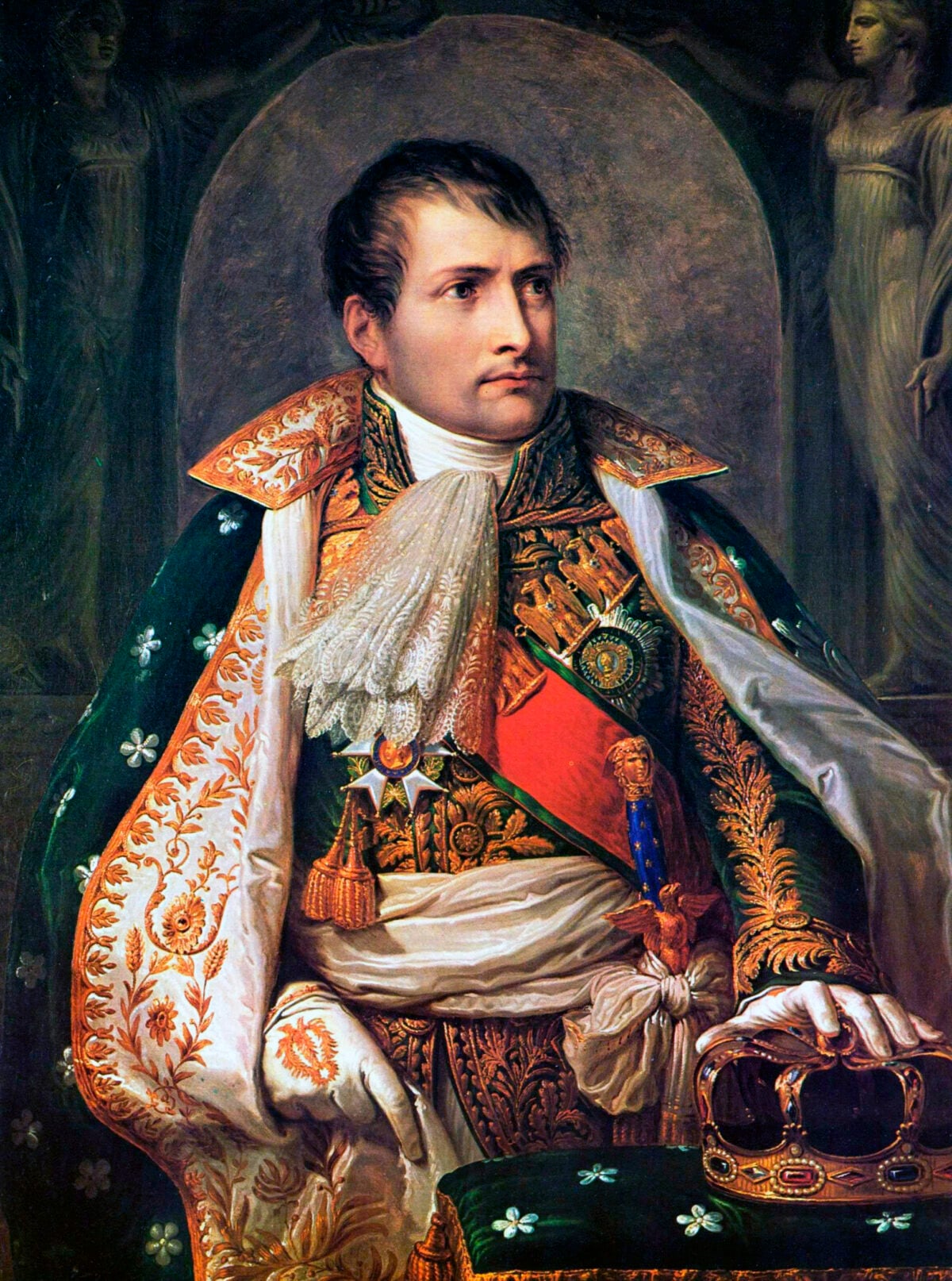
During the Italian campaign, Napoleon issued military bulletins and encouraged newspapers associated with his army. His exploits reached readers in France in carefully framed form: victories became stories, while setbacks received far less attention.
The young general was increasingly depicted as energetic, fearless, brilliant, and almost personally responsible for transforming exhausted soldiers into conquerors. Napoleon was learning how to turn military victory into a public image.
Military victory could also produce something more valuable than territory: political influence. Julius Caesar had used his conquest of Gaul in much the same broad sense, with victories such as the Battle of Alesia strengthening his reputation and political position in Rome.
That matters because he was doing something more sophisticated than gaining fame. He was reducing his dependence on the government that had promoted him. The Directory could give Napoleon a command, but it could not easily take away a reputation that now existed in the minds of soldiers and civilians.
Why This Mattered
Napoleon’s political strength eventually depended on an unusual combination: he had an army career, but he also had an audience.
Long before modern mass political campaigning, he understood a basic principle of power: achievements matter more when people hear about them repeatedly.
By 1797, Napoleon was no longer simply serving the French Republic. He was becoming a political force inside it.
Then Napoleon Chose Egypt—and Almost Lost Everything
After the Italian campaign, Napoleon faced a new question: what next?
Britain remained at war with France, and a direct invasion across the English Channel appeared extremely difficult. Attention turned instead toward Egypt, which offered a way to strike indirectly at British strategic and commercial interests.
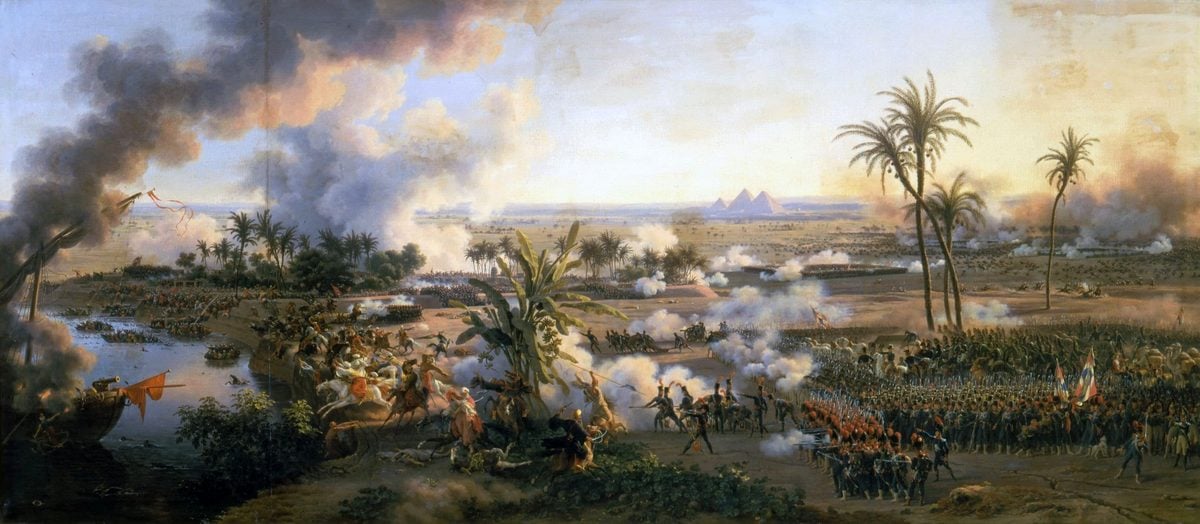
In 1798, Napoleon led a major French expedition across the Mediterranean. At first, events appeared to reinforce his legend. French forces captured Malta and landed in Egypt; Napoleon defeated Mamluk forces at the Battle of the Pyramids, and the French entered Cairo.
Then the campaign went badly wrong.
On August 1, 1798, Admiral Horatio Nelson destroyed or captured most of the French fleet at the Battle of the Nile, also known as the Battle of Aboukir Bay. The French army was effectively stranded.
Napoleon later advanced into Syria, but the siege of Acre failed. Disease and logistical problems added to the army’s difficulties, and the expedition’s larger strategic ambitions began to collapse.
For many generals, a campaign like this might have ended a career.
For Napoleon, it did not.
That may be one of the most revealing episodes in his entire rise.
Why Egypt Did Not Destroy Napoleon
By the time of Egypt, Napoleon had built a public image of success powerful enough to survive a major setback.
News traveled slowly and unevenly. His victories could be celebrated in France while the full strategic consequences of the expedition were less immediately visible. More importantly, political conditions at home were changing in his favor.
The Directory had become deeply unpopular. War had intensified again, political factions distrusted one another, and repeated constitutional manipulation had weakened confidence in the regime.
Napoleon learned that the situation at home was fragile. In August 1799, he left Egypt and sailed for France, leaving General Jean-Baptiste Kléber in command. He reached France in October.
The timing was extraordinary. He returned not as a disgraced commander walking into an investigation, but as the country’s most famous general, arriving at a moment when influential political figures were actively searching for a way out of the Directory.
The question was no longer whether Napoleon’s career would survive Egypt.
It was whether he would use the crisis in Paris to make his next leap.
He did.
By 1799, France Had a Government Few People Wanted to Defend
To understand why Napoleon could seize power, it helps to understand the weakness of the government he overthrew.
The Directory had ruled France since 1795. It was designed partly to prevent another concentration of power like the one associated with the Terror: executive authority was divided among five Directors. By contrast, legislative power was divided between two councils.
In theory, this arrangement created safeguards. In practice, the system struggled with political instability, factional conflict, war, financial difficulties, and a recurring reliance on force to resolve political disputes. The regime had also damaged its own constitutional legitimacy through earlier coups and interference against political opponents.
By 1799, some senior political figures were themselves considering constitutional change. One of the most important was Emmanuel-Joseph Sieyès, a veteran political thinker of the Revolution who had become one of the Directors.
Sieyès wanted a different governmental structure, but restructuring the state required power behind the plan. Napoleon had exactly what Sieyès lacked: enormous public prestige and strong military connections.
Each man initially believed the other could be useful.
That alliance would not remain equal for long.
18 Brumaire: The Coup That Put Napoleon at the Center of the State
The coup began on November 9, 1799—18 Brumaire Year VIII in the revolutionary calendar.
The plan was more complicated than Napoleon simply marching troops into the government and declaring himself ruler. The two legislative councils were moved out of Paris to Saint-Cloud on the grounds that they needed protection from a supposed threat, while Napoleon received command of troops to protect the legislature.
At the same time, political pressure and maneuvering effectively dismantled the Directory.
So far, the plan was working.
The next day was more dangerous. Napoleon appeared before the legislative bodies and was not at his best. Instead of the controlled commander of battlefield legend, he faced hostile legislators and struggled to persuade them. At the Council of Five Hundred, opposition grew so intense that the coup appeared, for a time, to fail.
This was one of those moments when Napoleon’s later career makes the outcome seem inevitable.
It was not.
The coup survived because the conspirators still had military force. Napoleon’s brother Lucien, president of the Council of Five Hundred, played an important role in framing the deputies’ resistance as a threat to the political order, and troops eventually cleared the chamber.
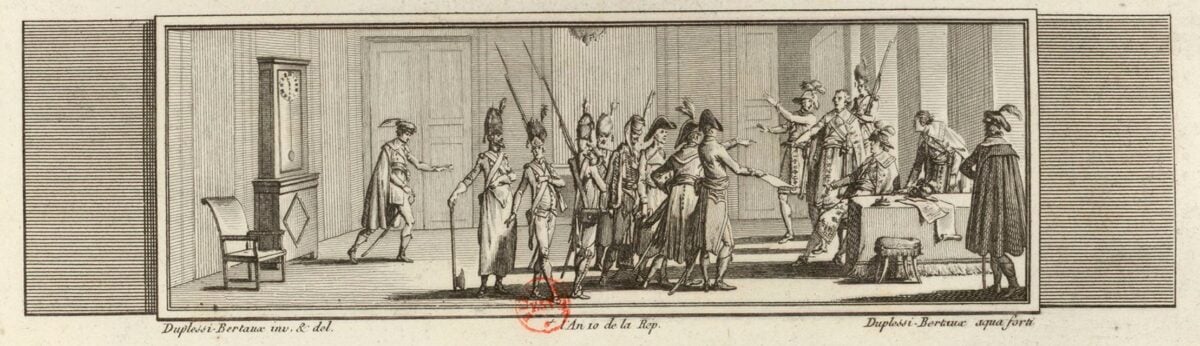
The councils had been dispersed, and a rump of legislators was then brought back to give the new arrangement a veneer of legality. A provisional government was created around three consuls: Napoleon Bonaparte, Sieyès, and Roger Ducos.
But the arrangement did not produce a balanced triumvirate.
Napoleon quickly emerged as the dominant figure.
Why This Mattered
Before Brumaire, Napoleon possessed influence. After Brumaire, he possessed the machinery of government.
The distinction was enormous. He had crossed the final barrier separating a celebrated general from a ruler.
Yet Napoleon had still not become emperor. First, he had to make his new power durable.
First Consul in Name, Ruler in Practice
The Constitution of Year VIII formalized the new Consulate and made Napoleon First Consul.
The title still sounded republican. The balance of power did not.
The constitution gave Napoleon extensive authority. As First Consul, he could appoint ministers, ambassadors, senior military officers, local administrators, and other important officials. The other consuls remained part of the system, but Napoleon clearly occupied its center.
He also understood that force alone would not make the new regime durable. After a decade of revolution, France had endured repeated constitutional changes, political violence, civil conflict, war, financial instability, and bitter religious division. Napoleon needed to show that his government could do something the Directory increasingly could not: make the state function.
So he moved quickly. The Bank of France was created in 1800. The prefect system strengthened central control over the departments. The Concordat of 1801 helped repair relations between the French state and the Catholic Church. Legal reform culminated in the Civil Code of 1804, which became one of the most enduring institutions associated with Napoleon’s rule.
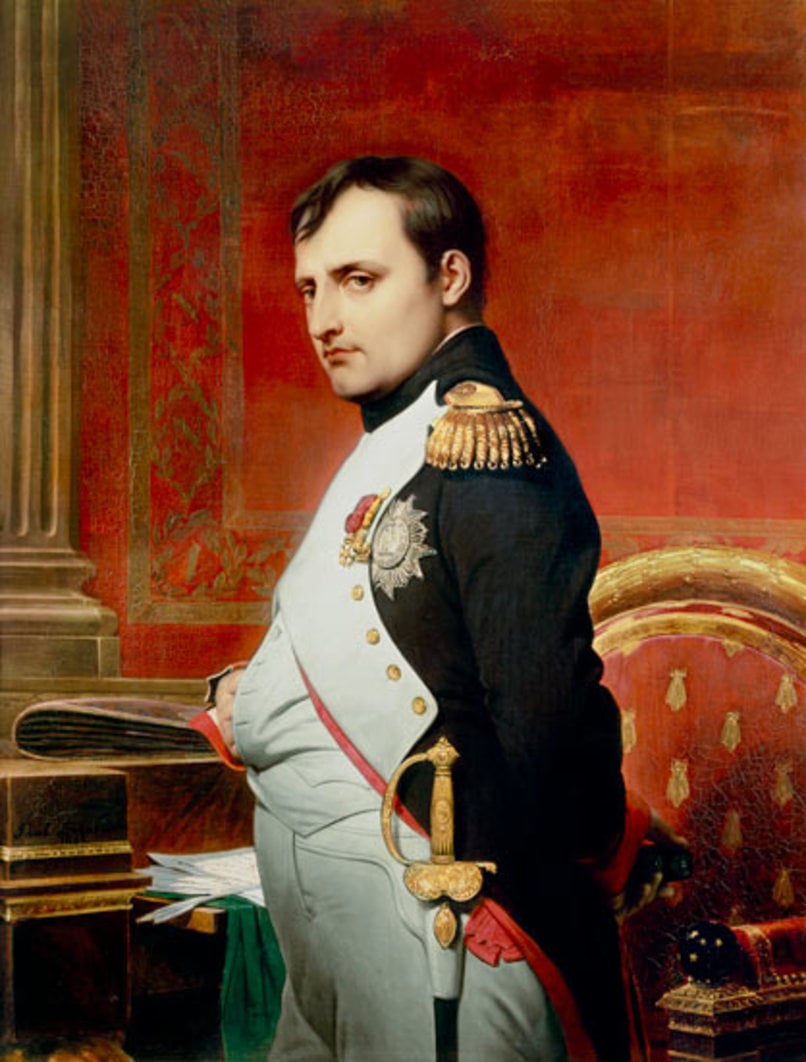
The Civil Code was not Napoleon’s work alone. French jurists carried out much of the detailed drafting, and codification efforts had begun before he came to power. But Napoleon strongly supported the project and understood its political value.
These reforms did more than improve administration. They strengthened the state—and because Napoleon stood at the center of that state, they strengthened him as well.
The contrast he wanted France to see was simple:
Before him, instability; under him, order.
Why Did France Accept Napoleon?
The easy answer is that France was exhausted and wanted stability. That is partly true, but it does not fully explain why Napoleon, specifically, could occupy that role.
By 1799, different groups wanted very different things from the future. Property owners wanted protection from another round of revolutionary upheaval and from any restoration that might threaten land acquired during the Revolution. Many Catholics wanted an end to years of religious conflict.
Soldiers admired Napoleon’s victories. Officials wanted a government that could operate more predictably. Former revolutionaries wanted to preserve important gains of 1789 without returning to the violence and uncertainty of the previous decade.
Napoleon offered each of them something. To soldiers, he was the victorious general. For property owners, he appeared to offer order. To many former revolutionaries, he seemed capable of preserving legal equality and destroying feudal privilege. To Catholics, he offered reconciliation without simply restoring the old religious order.
That was one of the strengths of his position: Napoleon did not need everyone to imagine the same future. He only needed enough people to see his government as preferable to the alternatives.
And by 1799, those alternatives looked increasingly unattractive.
Political conflict, war, economic pressure, and its own repeated interference in elections and constitutional government had weakened the Directory. Napoleon arrived at exactly the moment when confidence in the existing regime was running out.
He offered a powerful bargain: preserve important parts of the Revolution, but end the instability that had followed it.
That acceptance was never universal, and Napoleon did not rely on popularity alone. Political opposition narrowed as his authority expanded, and his regime increasingly used controls over political life and public expression alongside claims of popular legitimacy.
He was not restoring the France of Louis XVI.
He was building a new political order—and placing himself at its center.
Napoleon was not unique in turning a moment of imperial weakness into personal opportunity. Queen Zenobia of Palmyra also expanded her authority dramatically during a period when the Roman Empire was struggling to maintain control of its territories.
From First Consul to Emperor
Napoleon’s rise had followed the same pattern again and again: he rarely treated success as the finish line. Toulon made him a general, Vendémiaire brought him into Parisian politics, Italy made him famous, and Brumaire put him inside the state.
Once he became First Consul, his next challenge was to make sure power would not remain temporary.
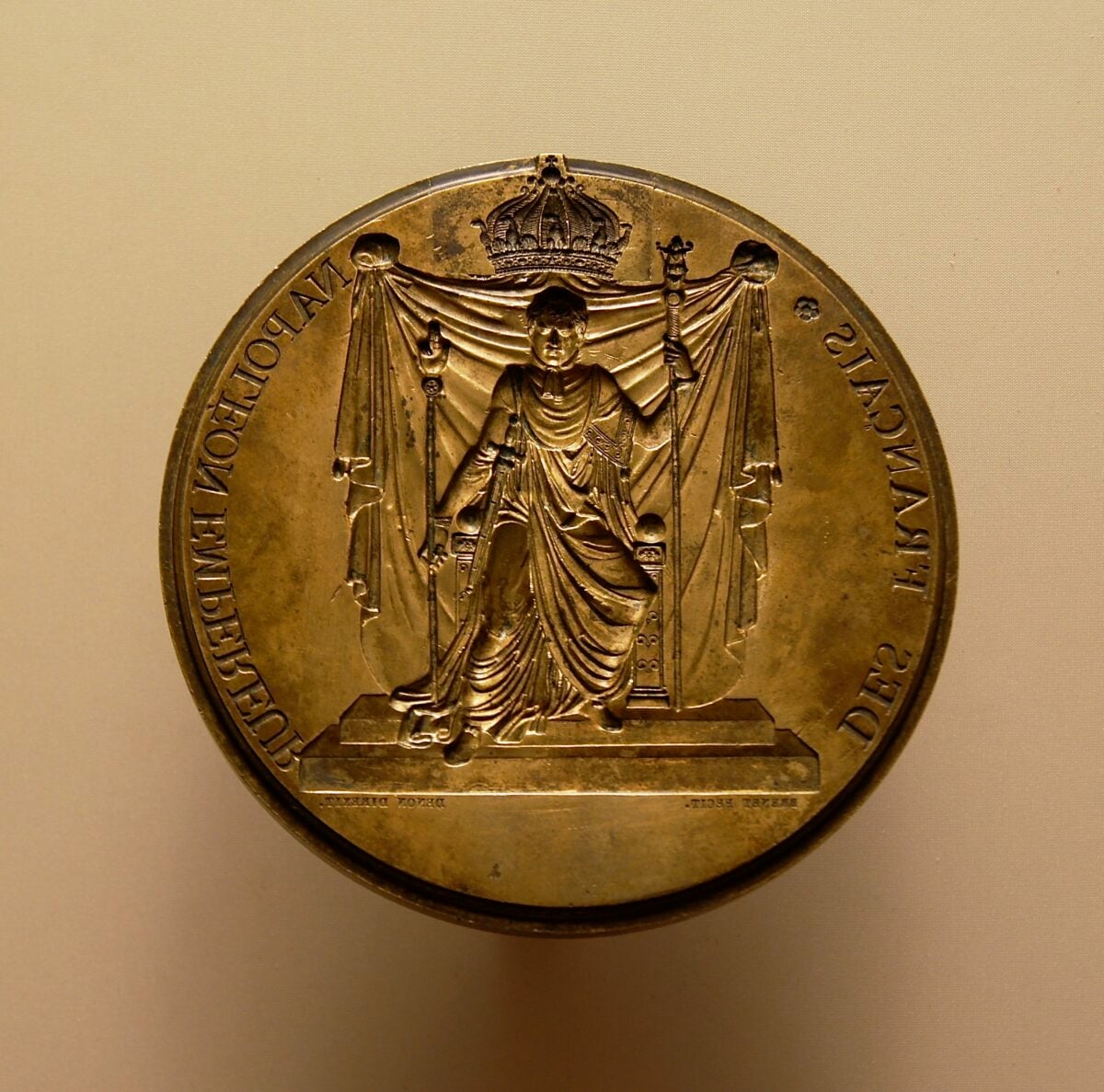
In 1802, Napoleon was proclaimed First Consul for life. The change made the direction of his rule increasingly difficult to miss. The office which had begun as part of a republican constitution was becoming bound more closely to Napoleon himself.
Two years later came the decisive step. On May 18, 1804, a sénatus-consulte proclaimed Napoleon Emperor of the French and made the imperial dignity hereditary in the Bonaparte family. A plebiscite on the hereditary Empire followed, and on December 2, Napoleon was crowned at Notre-Dame Cathedral in Paris.
Only eleven years had passed since Toulon, and only nineteen since he had left military school as a teenage artillery officer.
The speed of the transformation is striking when you see it in one place:
| Year | Napoleon’s Position |
|---|---|
| 1785 | Second lieutenant in the artillery |
| 1793 | Brigadier general after Toulon |
| 1795 | General of division after 13 Vendémiaire |
| 1796 | Commander of the Army of Italy |
| 1797 | Victorious commander and major political figure |
| 1799 | First Consul after the Coup of 18 Brumaire |
| 1802 | First Consul for life |
| 1804 | Emperor of the French |
By the age of 35, the obscure artillery officer of 1785 had become a hereditary ruler.
What makes that ascent so remarkable is not simply the distance Napoleon traveled, but how often he seemed to accelerate. Military success brought promotion. Promotion brought command. Command brought fame. Fame became political leverage. Political leverage brought him into government, and government gave him the opportunity to make his authority permanent.
By 1804, the young Corsican who had once stood outside the traditional French elite was no longer trying to enter the system.
He had reshaped it around himself.
So How Did Napoleon Rise to Power So Quickly?
There was no single cause behind the rise of Napoleon Bonaparte.
The French Revolution created the opening by shattering the old political order and disrupting the traditional military hierarchy. Napoleon had the ability and ambition to exploit that opening. Toulon gave him rank, Vendémiaire brought him into the orbit of political power, and Italy gave him something even more valuable: a national reputation.
He then learned how to turn reputation into leverage. His victories were amplified through bulletins, newspapers, and carefully managed public imagery. Even the failure of the Egyptian expedition did not destroy him because he returned to France at the moment when the Directory was weakest and powerful political figures were already searching for an alternative.
Brumaire put him inside the machinery of the state. The Consulate gave him the chance to show that he could offer something many French people wanted after a decade of upheaval: a government that appeared capable of restoring order and making institutions work.
Again and again, the pattern was the same: an opening appeared, Napoleon seized it, and then he turned the result into something larger.
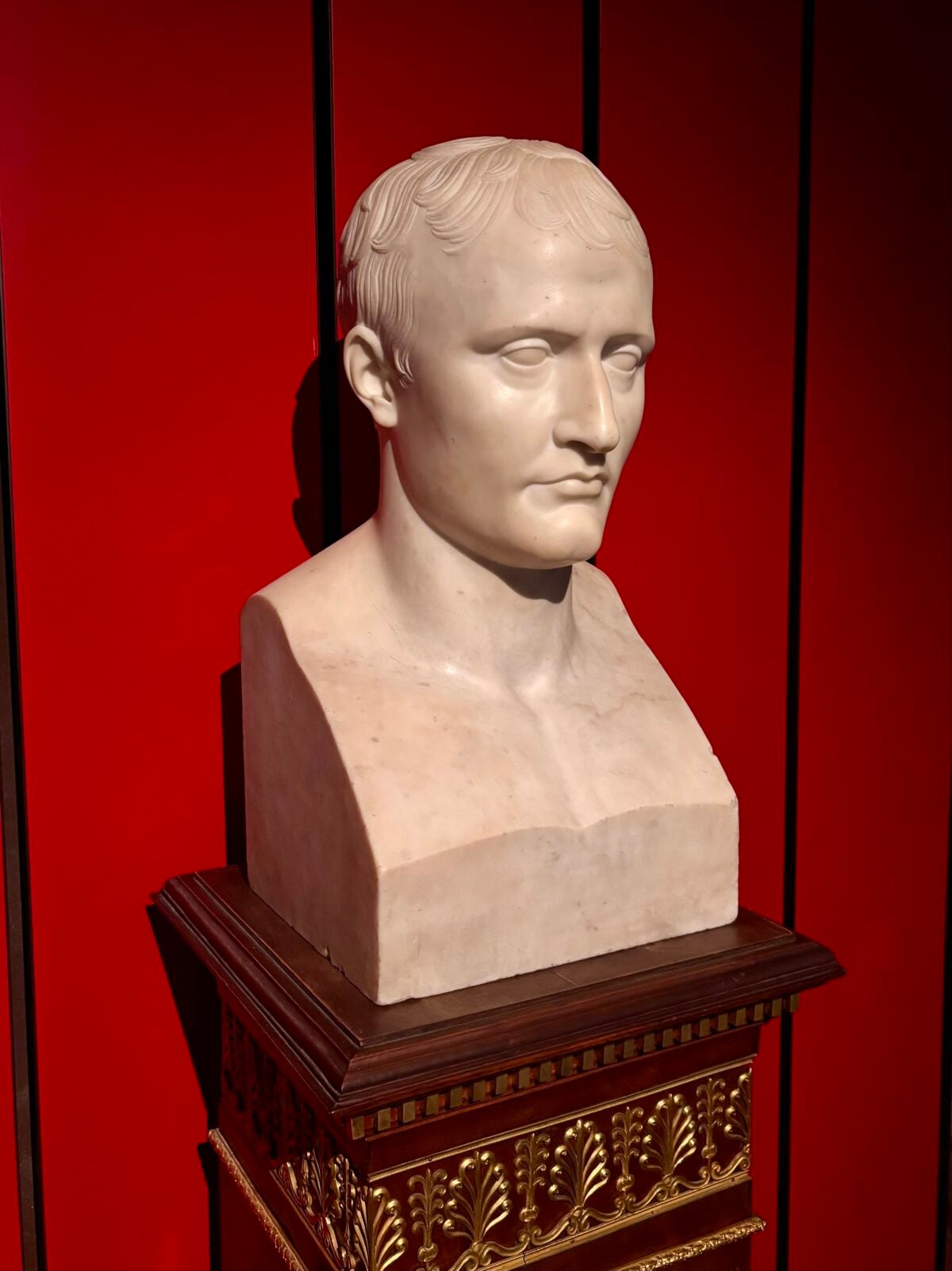
The Real Story of Napoleon’s Rise
The most remarkable thing about Napoleon’s ascent is how easily it could have gone another way. His early attachment to Corsica might have kept his ambitions focused there. His political associations during the Terror could have destroyed his career. Toulon might have brought no great distinction. Italy could have failed. Egypt could have ruined his reputation. Even Brumaire became chaotic enough that its success was never guaranteed.
None of that makes Napoleon’s rise accidental. It makes the achievement more revealing.
He did not create the French Revolution, the wars that consumed Europe, or the Directory’s weakness. Those forces were larger than he was. What Napoleon did exceptionally well was recognize what those crises made possible—and move quickly when an opening appeared.
He was ambitious enough to keep pushing after each success, talented enough to make himself difficult to ignore, and politically shrewd enough to understand that military reputation could become political authority.
Napoleon did not climb a stable ladder to power.
He rose through a France in which the ladder itself had been smashed apart—and he proved better than almost anyone else at finding a way upward.
Napoleon’s later reputation became almost as carefully shaped as his rise itself, producing myths that still survive today—including the persistent idea that Napoleon was unusually short.
Related Reading: Ambition, Power, and the People Who Seized It
Napoleon was hardly the only figure in history to rise through military success, political chaos, or sheer ambition. If you enjoyed the story of how he climbed from outsider to emperor, these stories explore other remarkable paths to power:
- Maximinus Thrax: The Giant Soldier Who Became Emperor — A soldier from the fringes of the Roman world who rose through the army all the way to the imperial throne.
- The Praetorian Guard: From Bodyguards to Roman Kingmakers — How an elite military unit gained enough political power to make and break emperors.
- Queen Zenobia: The Warrior Queen Who Challenged Rome — The story of an ambitious ruler who built a rival power in the eastern Roman world.
- Caligula: Survival, Power, and the Making of an Emperor — How a young survivor of Rome’s deadly imperial politics reached the throne.
History is full of people who seized a moment when the old order was breaking down—and few did it as quickly or as completely as Napoleon.
Join the Discussion
What do you think mattered most in Napoleon’s rise? Military talent, political chaos, ambition, or timing? Share your take in the comments, and if you enjoyed the article, pass it along to someone who loves history.




Hello, I’m Eleanor La Renard. I dove into the article about Napoleon’s rise to power, but I have to say, it didn’t quite satisfy my curiosity. I’m left wondering, what drove this complex figure to greatness? Was it ambition, circumstance, or something more? If you’re as intrigued as I am, maybe try searching online for more insights – there’s bound to be a treasure trove of information out there waiting to be uncovered!