Movies paint medieval battles as orderly clashes of gleaming swords, shields, archers, and knights charging toward castles, but the reality was messier, stranger, and far less clean-cut.
Some fighters carried weapons shaped like bird beaks. Others went into battle with oversized forks, hooked blades, spiked clubs, or farming tools rebuilt to kill. Engineers constructed enormous crossbows and stone-throwing machines, while Byzantine ships projected a mysterious fire that could continue burning on the water.
Table of Contents
These weapons looked strange because medieval soldiers faced very specific problems. Armor could stop a sword cut. Horses gave mounted warriors a huge advantage. Castle walls made ordinary attacks almost useless. Even getting close enough to strike an enemy could be difficult.
The answer was often a specialized weapon designed to hook, crush, trap, pierce, burn, or smash one particular target.
Some of these weapons were common and practical. Others were rare, experimental, improvised, or far more popular in movies and video games than they ever were on real battlefields.
Here are 13 of the weirdest weapons of the medieval world, how they were actually used, and whether they worked.
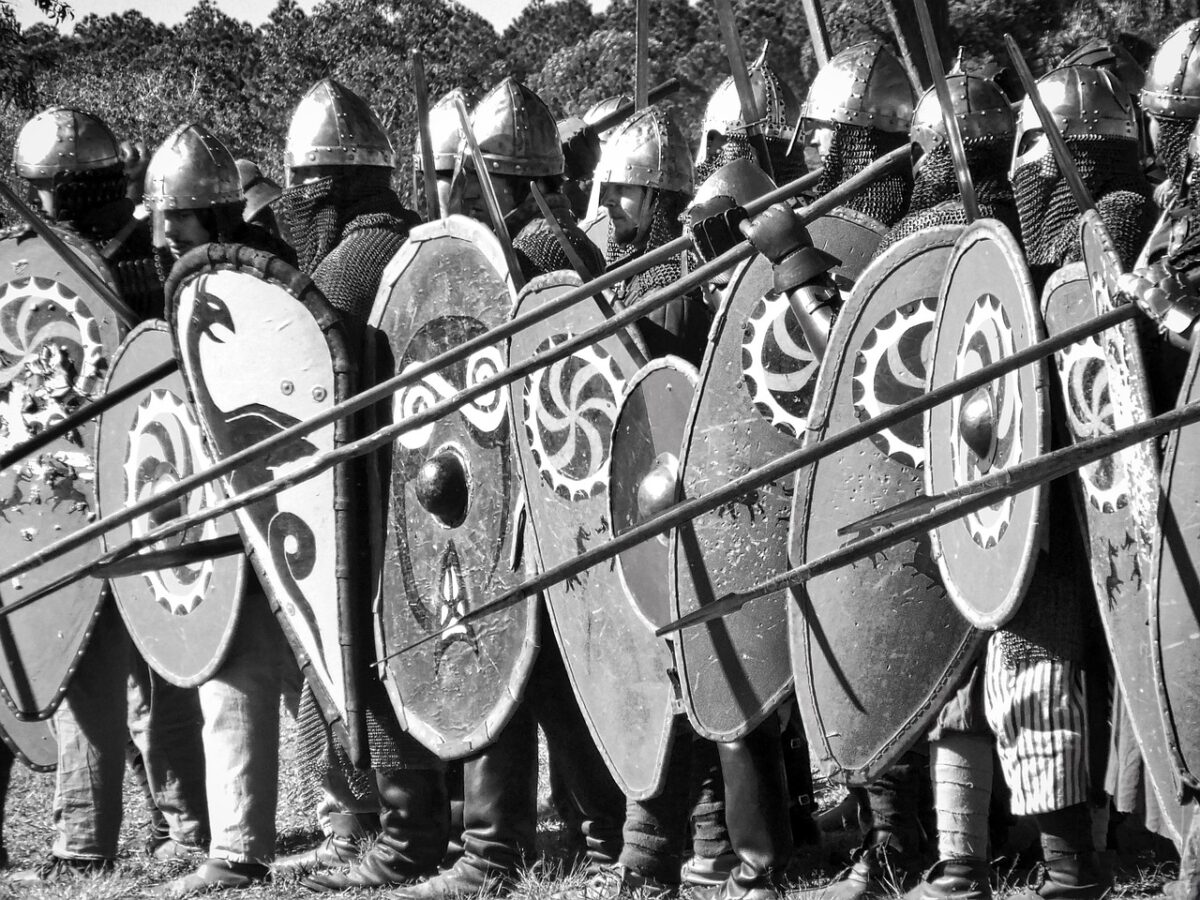
Why Medieval Weapons Became So Specialized
A sword was useful in many situations, but it was not the perfect answer to every battlefield problem.
As armor improved, warriors needed weapons that could concentrate force into a small point, damage the person beneath the metal, or reach vulnerable gaps around the joints. Infantry facing cavalry needed long weapons that could threaten horses and pull riders from their saddles. Armies attacking castles required machines powerful enough to damage stone walls from a distance.
That pressure produced weapons that sometimes looked more like tools than traditional arms.
A hook could control an opponent. A hammer could transmit force through armor. A long pole could keep danger several feet away. A lever could trade power for speed. An enormous wooden frame could turn a rock into a wall-breaking projectile.
The strangest medieval weapons were rarely strange for no reason.
13 Strange Weapons Built for Real Medieval Battlefields and How They Worked
The weapons below range from practical battlefield tools to rare siege machines and designs exaggerated by modern entertainment. Each entry explains what made the weapon look unusual, the problem it was designed to solve, how it was used, and whether it was genuinely effective.
1. Bec de Corbin: A Metal Bird Beak for Armored Opponents
The strangest detail: Its head looked like a hammer with a curved bird’s beak growing from the back.
The name Bec de Corbin means “raven’s beak.” It referred to the pointed beak found on certain war hammers and pole weapons used during the later Middle Ages.
Instead of trying to slice cleanly through armor, the weapon concentrated the force of a blow into a narrow point. A fighter could use the hammer side to strike a helmet or plate, then turn the weapon and use the beak against gaps, joints, or lighter sections of armor.
Some examples also had a spike projecting from the top, making the weapon resemble a brutal medieval multitool.
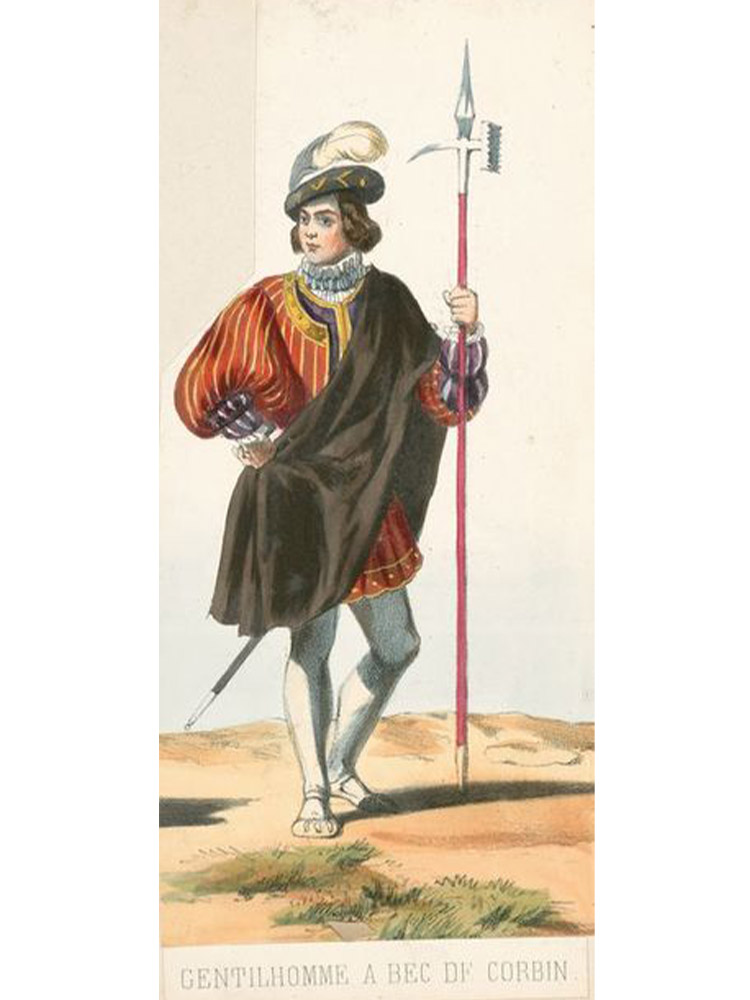
- Why it was weird: It combined a hammer, pick, and stabbing point in one compact head.
- Did it actually work? Yes. War hammers became especially valuable after plate armor made sword cuts less effective. Surviving examples show heavy hammer faces, rear beaks, and top spikes designed for armored combat.
- Reality check: It was not a magical can opener that could punch through any breastplate. The beak was particularly useful for attacking gaps between plates and might penetrate lighter armor, but the strongest plates remained difficult targets.
- How common was it? Specialized but well documented.
2. Glaive-Guisarme: A Sword Blade with a Hook Attached
The strangest detail: It looked as though someone had placed a large knife and a metal hook on the end of a long pole.
The glaive-guisarme combined two useful ideas.
The glaive contributed a broad cutting blade. The guisarme contributed a hook or projecting point. Together, they created a pole weapon that could slash, thrust, catch equipment, or interfere with a mounted opponent.
The pole gave the user reach, allowing infantry to threaten enemies before they came within sword distance. The hook could potentially catch clothing, limbs, reins, shields, or parts of a rider’s equipment.
The weapon’s exact form varied. Medieval polearm names were not always used consistently, and modern classification can make the designs seem more standardized than they really were.
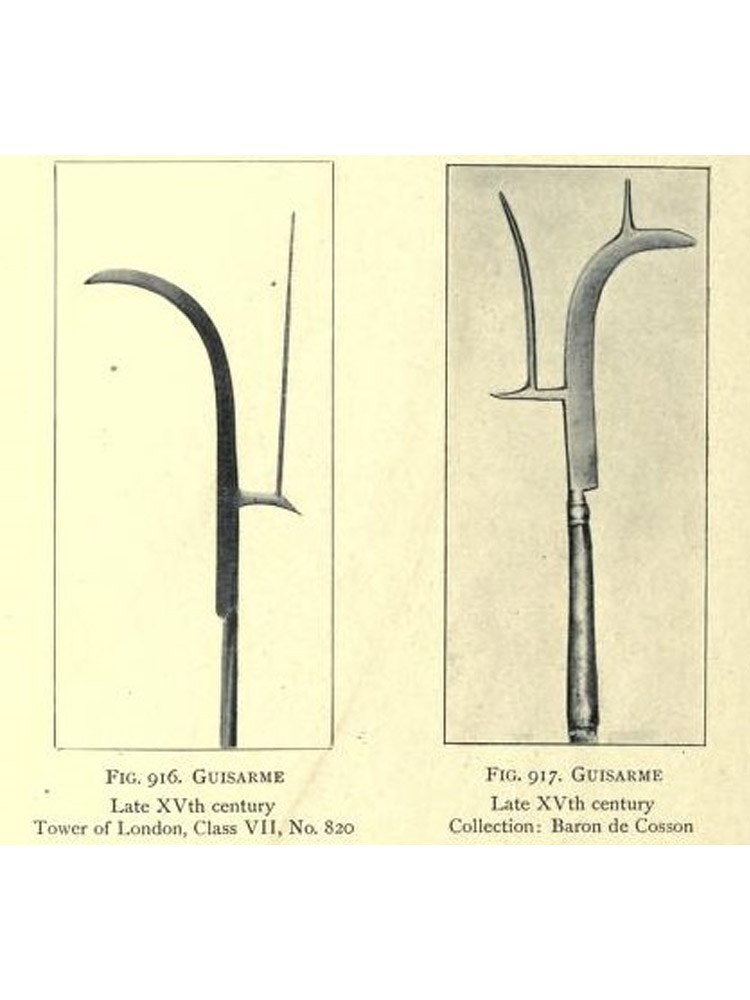
- Why it was weird: It placed several competing shapes on one weapon—blade, point, and hook—each meant to solve a different problem.
- Did it actually work? Yes. Multi-purpose polearms were valuable because they gave foot soldiers reach and several attacking options.
- Reality check: Pulling a fully armored knight cleanly from a galloping horse would have been far harder than games make it look. Hooks were useful, but they were not guaranteed rider-removal devices.
- How common was it? Part of a broad and common family of medieval pole weapons, although exact names and forms varied.
3. The Goedendag: A Club, Spear, and Bad Day in One
The strangest detail: It looked like a thick wooden club with a large metal spike driven through the end.
The goedendag was associated particularly with Flemish infantry during the late 13th and early 14th centuries.
Its design was extremely simple. A heavy wooden shaft widened near the top, where an iron spike projected forward. The user could thrust with it like a short spear or swing it like a club.
That combination made it useful against both people and horses. The spike could threaten an advancing mount, while the thick shaft could deliver a powerful crushing blow at close range.
Its name is often translated as “good day,” although the origin of the term and its connection to the weapon are debated.
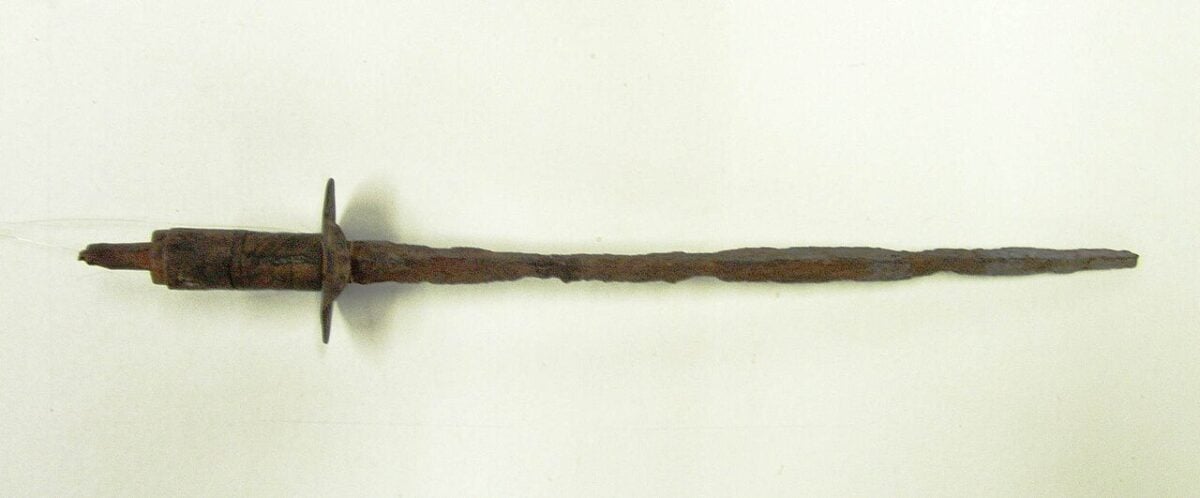
- Why it was weird: It looked less like a carefully forged weapon than a fence post upgraded with a spear point.
- Did it actually work? Yes. In organized infantry formations, a simple weapon capable of thrusting and striking could be highly effective.
- Reality check: The goedendag was not simply a peasant club swung randomly by an untrained mob. Its value came from soldiers using it together in disciplined formations.
- How common was it? Regionally important, especially in medieval Flanders.
4. Military Fork: The Battlefield Pitchfork
The strangest detail: It resembled a farming fork with fewer, stronger prongs.
The military fork transformed an agricultural shape into a dedicated pole weapon.
Unlike a light wooden pitchfork, the military version had solid metal prongs designed for thrusting. Some examples had two long tines, while others included hooks or additional projections.
Its narrow points could target an opponent, threaten a horse, or reach into gaps that a broad blade might miss. The long shaft also allowed the user to fight from behind other infantry.
The shape may look crude, but it followed the same logic as many more elaborate polearms: keep the enemy away and concentrate force at the end of a long pole.
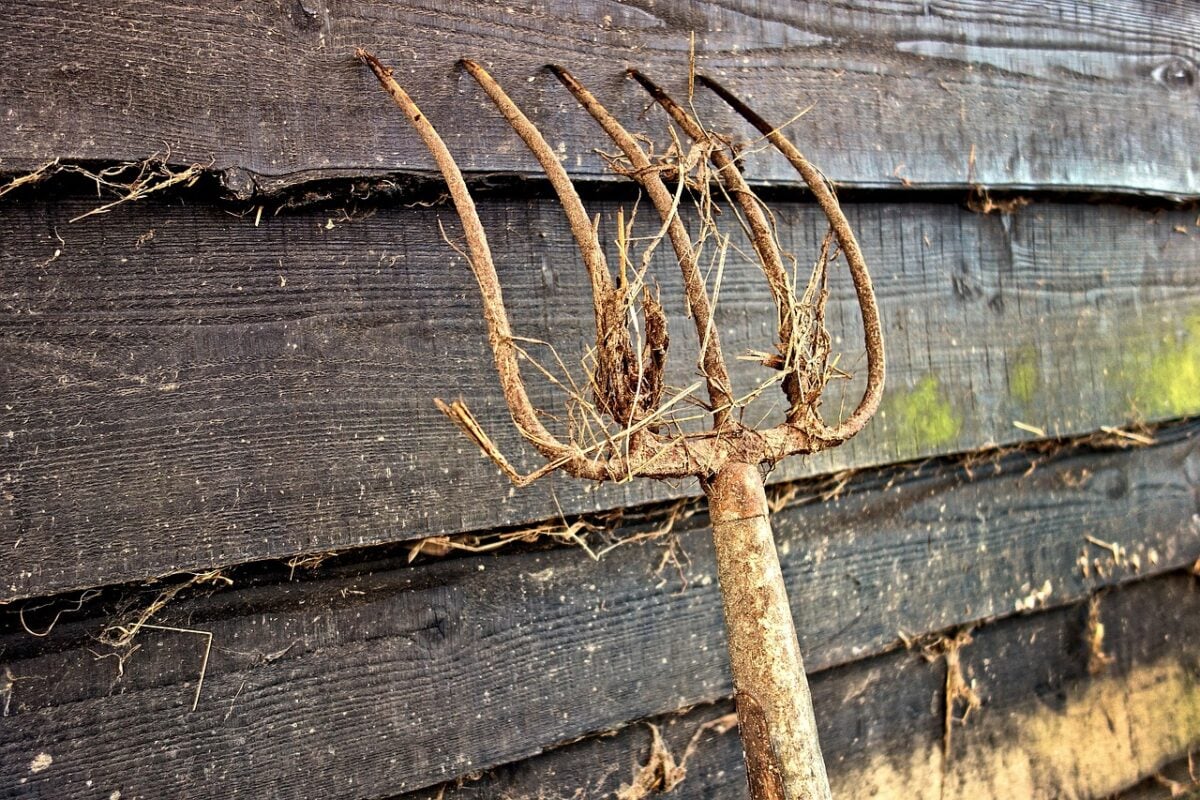
- Why it was weird: It turned one of the most ordinary objects in rural life into a weapon capable of stopping a mounted fighter.
- Did it actually work? Yes, particularly as a thrusting weapon. Its simplicity also made it easier to manufacture than more complex polearms.
- Reality check: Not every farm pitchfork carried into a revolt was a true military fork. Purpose-built versions were reinforced weapons, not simply agricultural tools grabbed from a barn.
- How common was it? Less prominent than spears and halberds, but a genuine and documented weapon type.
5. Man-Catcher: A Pole Weapon Designed to Trap People
The strangest detail: Its head looked like a giant metal collar lined with inward-facing spikes.
The man-catcher was not primarily designed to cut or stab. It was designed to seize.
A typical version had a circular or U-shaped metal head mounted on a long pole. Spring-loaded arms or inward-facing projections could close around a person’s neck, torso, arm, or leg.
The long shaft allowed several users to restrain someone while keeping their distance. Such devices were particularly useful when the goal was capture rather than immediate killing.
They could be used against important prisoners, criminals, or armored opponents who were difficult to subdue safely at close range.
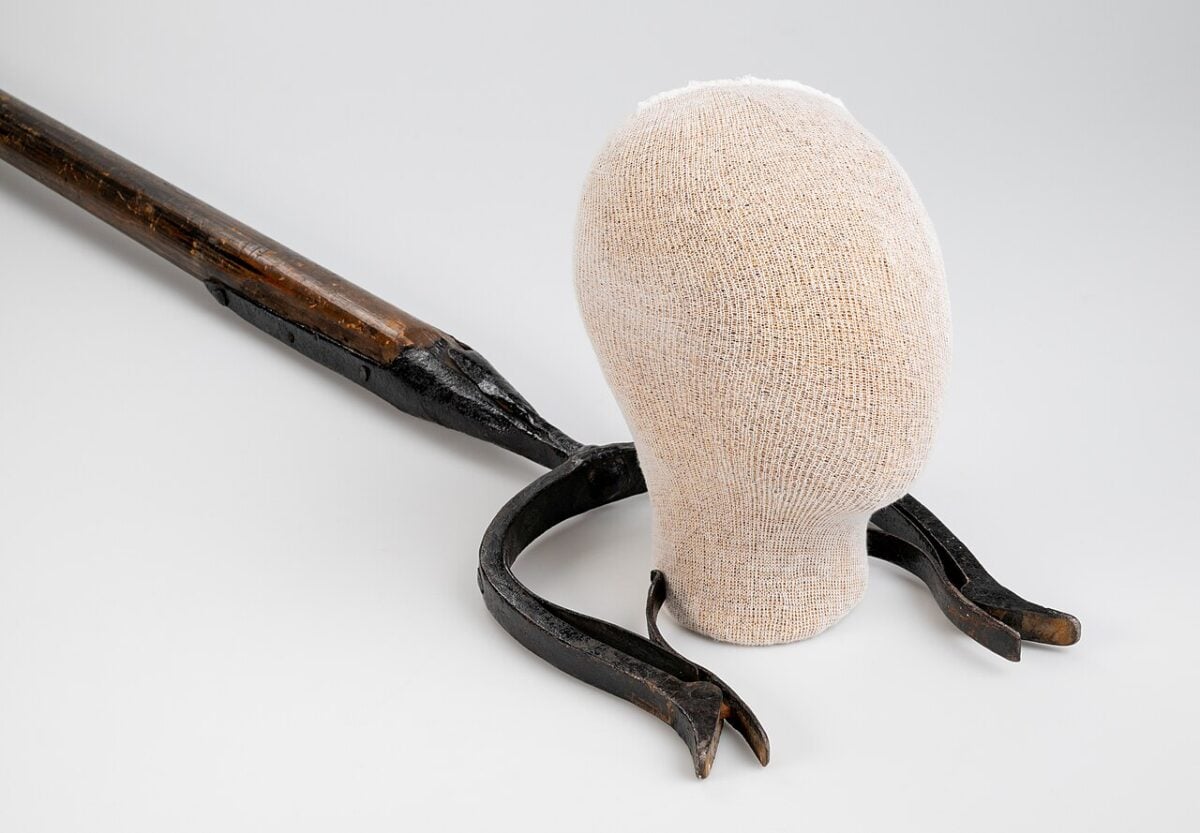
- Why it was weird: It functioned like a human-sized animal-control pole.
- Did it actually work? In controlled situations, yes. A long restraining device could help several people overpower one target.
- Reality check: It was not normally used to scoop enemies out of fast-moving battlefield formations. Man-catchers were more practical for arrests, guard duty, and capturing isolated individuals.
- How common was it? Rare and specialized.
6. War Scythe: A Farm Tool Rebuilt for Combat
The strangest detail: Its blade looked familiar, but it had been rotated to point forward.
An ordinary agricultural scythe has a curved blade mounted at an angle so a farmer can sweep it sideways through crops. That shape is useful in a field but awkward in a fight.
To create a war scythe, the blade was remounted so it extended more directly from the shaft. The result functioned less like a harvesting tool and more like a long, curved sword blade on a pole.
The weapon was especially associated with uprisings and forces that needed to arm people quickly using available materials. It could deliver powerful cutting attacks and provide useful reach.
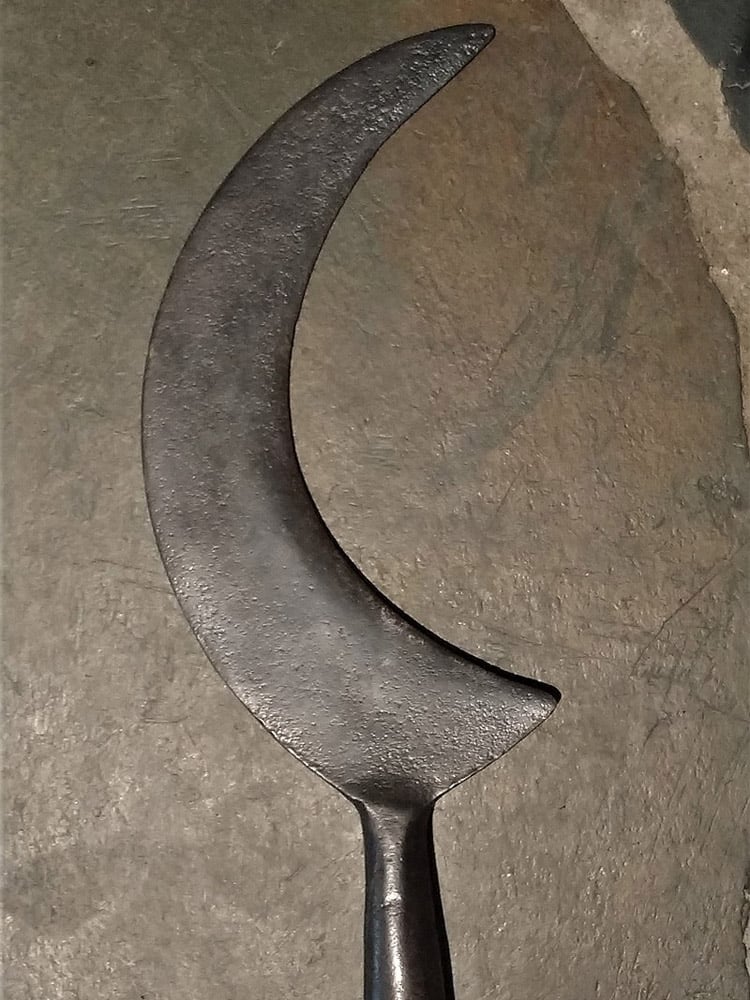
- Why it was weird: It was recognizable as farm equipment, but the blade had been repositioned into a far more dangerous shape.
- Did it actually work? Yes, once properly modified. A forward-facing blade could be used much like other cutting polearms.
- Reality check: Fighters did not normally use it with the same wide harvesting motion used to cut grain. The converted weapon was handled as a polearm.
- How common was it? Improvised or locally produced rather than a universal battlefield weapon.
7. Flail: Famous in Games, Questionable on Battlefields
The strangest detail: A heavy striking head swung from a chain, apparently threatening the user almost as much as the enemy.
The medieval flail is one of the most recognizable weapons in fantasy art. It is usually shown as a wooden handle attached by a chain to one or more spiked metal balls.
A flexible joint could allow the striking head to move around a shield or defensive object. In theory, the chain also made the direction of the blow harder to predict.
The problem was control.
A heavy object on a chain was difficult to stop, redirect, or recover after a missed strike. It could become tangled, strike nearby allies, or rebound dangerously.
Some flail-like weapons certainly existed, including weapons derived from agricultural threshing tools. However, the classic one-handed spiked-ball flail appears much less securely established as a widespread battlefield weapon than movies, games, and decorative collections suggest.
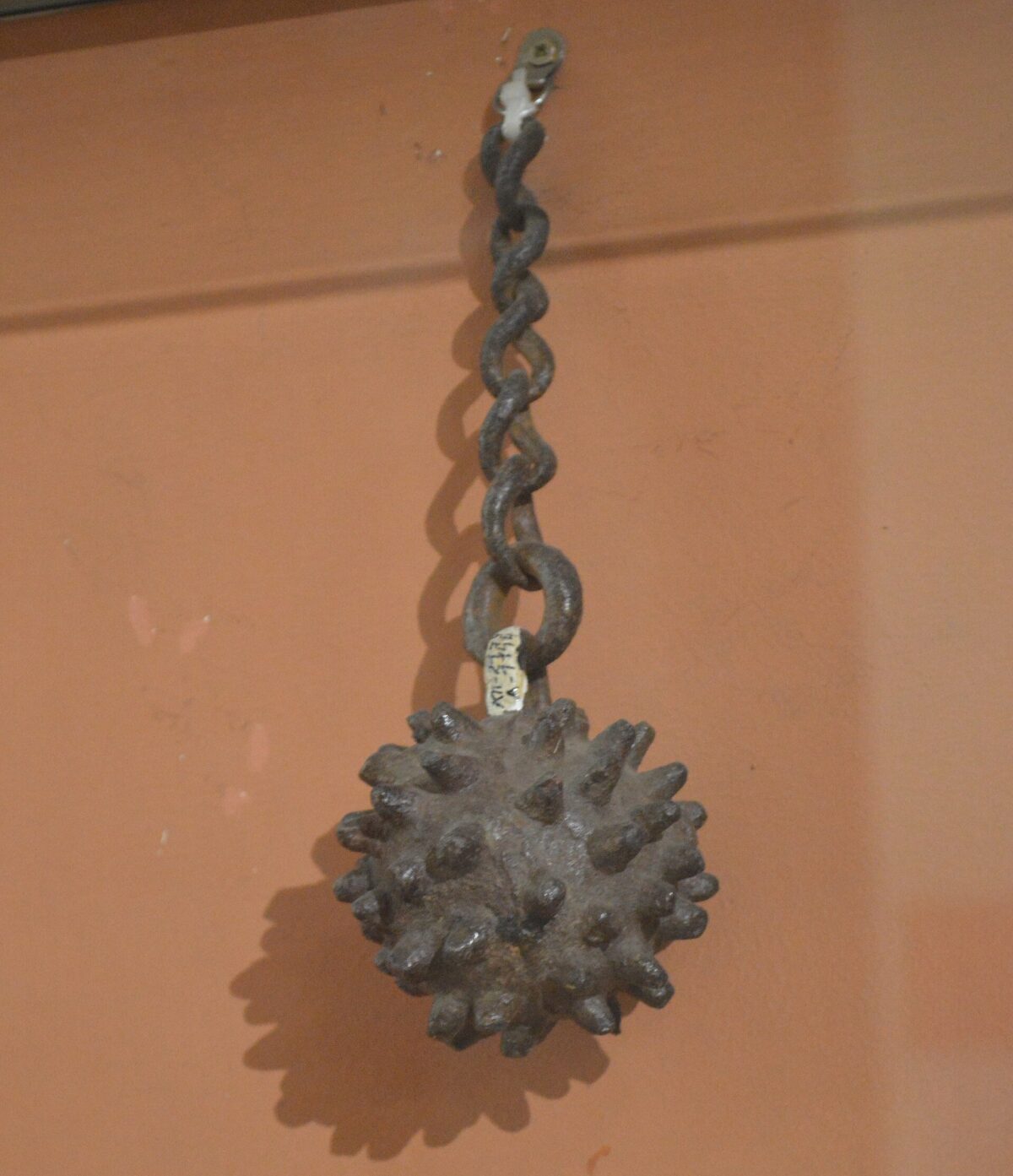
- Why it was weird: Its most dangerous feature—the freely swinging head—was also its biggest weakness.
- Did it actually work? Some flexible weapons could work, especially larger two-handed forms. Their battlefield importance was probably limited.
- Reality check: The one-handed spiked ball on a chain was not a standard weapon carried by every medieval knight.
- How common was it? Rare, disputed, or heavily exaggerated in modern media.
8. Chu Ko Nu: The Lever-Action Repeating Crossbow
The strangest detail: A wooden box above the bow held a stack of bolts like a primitive magazine.
The Chinese repeating crossbow, often called the Chu Ko Nu or Zhuge crossbow, used a lever to perform several actions in one continuous movement.
Moving the lever drew the string, positioned a bolt, and released the shot. Repeating the motion allowed the user to fire again far faster than with a powerful European-style crossbow.
That speed came with a tradeoff.
The mechanism limited how far the string could be drawn, which reduced the weapon’s power. The bolts were often light, and the weapon sacrificed range and armor penetration for a higher rate of fire.
Its simplicity made it useful for defense, particularly when the user did not have the strength or training required for other bows.
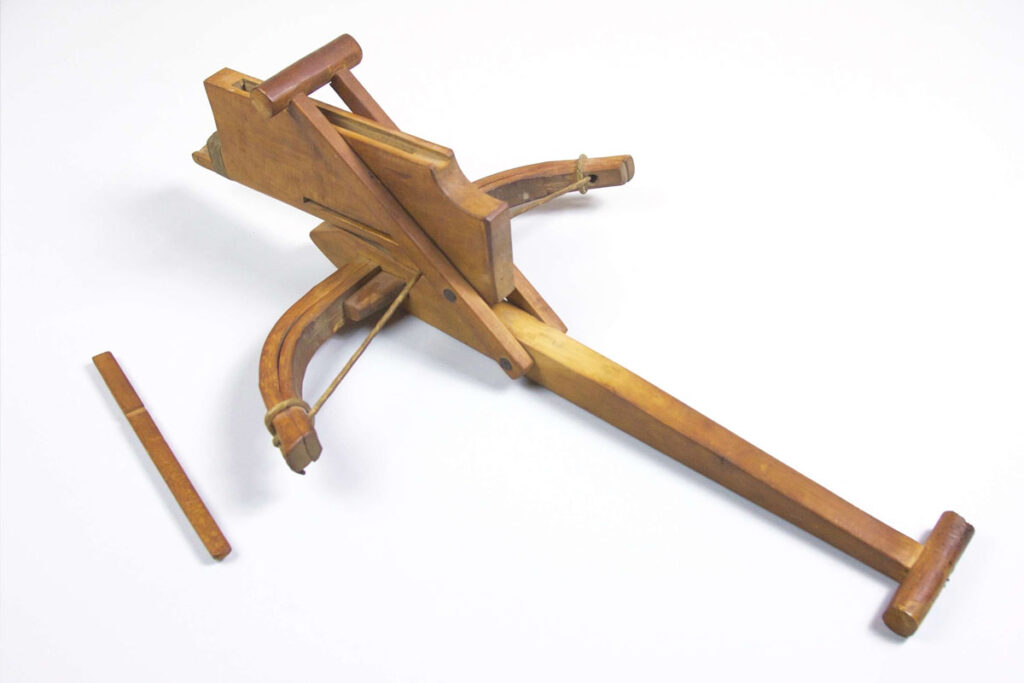
- Why it was weird: It worked like a hand-powered bolt dispenser centuries before modern repeating firearms.
- Did it actually work? Yes, but it emphasized speed rather than force. Repeating crossbows have a long history in China, and surviving later examples demonstrate the mechanism.
- Reality check: It did not fire powerful armor-piercing bolts like a modern video-game crossbow. Its shots were comparatively weak.
- How common was it? A genuine Chinese weapon with a long history, although its use and construction changed over time.
9. Springald: A Giant Crossbow Built into a Frame
The strangest detail: It looked like an enormous crossbow squeezed into a wooden box.
The springald, also called the espringal, was a mechanical bolt-thrower used during the medieval period.
Rather than relying on the flex of one large bow, many versions used tightly twisted cords or bundles of material to store energy. When released, the arms snapped forward and launched a heavy bolt.
Its compact frame made it useful in locations where a larger siege engine would be difficult to operate. Springalds could be positioned in towers, behind walls, aboard ships, or near gateways.
The weapon was aimed more like artillery than a handheld crossbow.
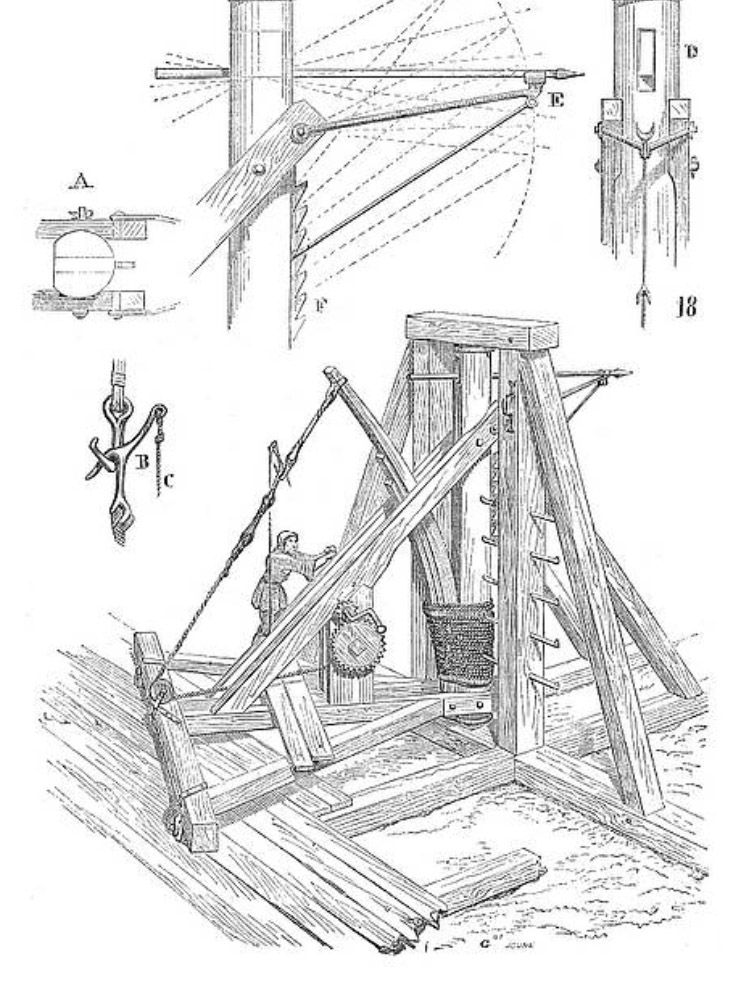
- Why it was weird: It was essentially a piece of torsion-powered machinery constructed to throw an oversized arrow.
- Did it actually work? Yes. Machines in this general family could launch heavy projectiles with considerable force.
- Reality check: It was not simply a ballista with a different name. Historical terminology and construction varied, and modern illustrations sometimes blur distinctions between several bolt-throwing machines.
- How common was it? Specialized siege and defensive equipment.
10. Warwolf: The Trebuchet Built to Terrify a Castle
The strangest detail: It was so large that its construction became part of the siege itself.
In 1304, King Edward I of England ordered the construction of a huge trebuchet during the siege of Stirling Castle in Scotland.
The machine became known as the Warwolf or Warwulf.
A trebuchet used a falling counterweight to swing a long throwing arm. A sling attached to the arm released a stone at high speed, allowing the machine to strike walls from a distance.
The Warwolf required an enormous amount of timber, labor, transport, and engineering. It was not a weapon an army simply rolled out of storage. It was a temporary structure assembled for the purpose of breaking one heavily defended position.
The defenders reportedly attempted to surrender while it was being prepared, but Edward still wanted the machine tested. Historic Environment Scotland describes a projectile weighing approximately 140 kilograms striking and breaking part of the castle’s curtain wall.
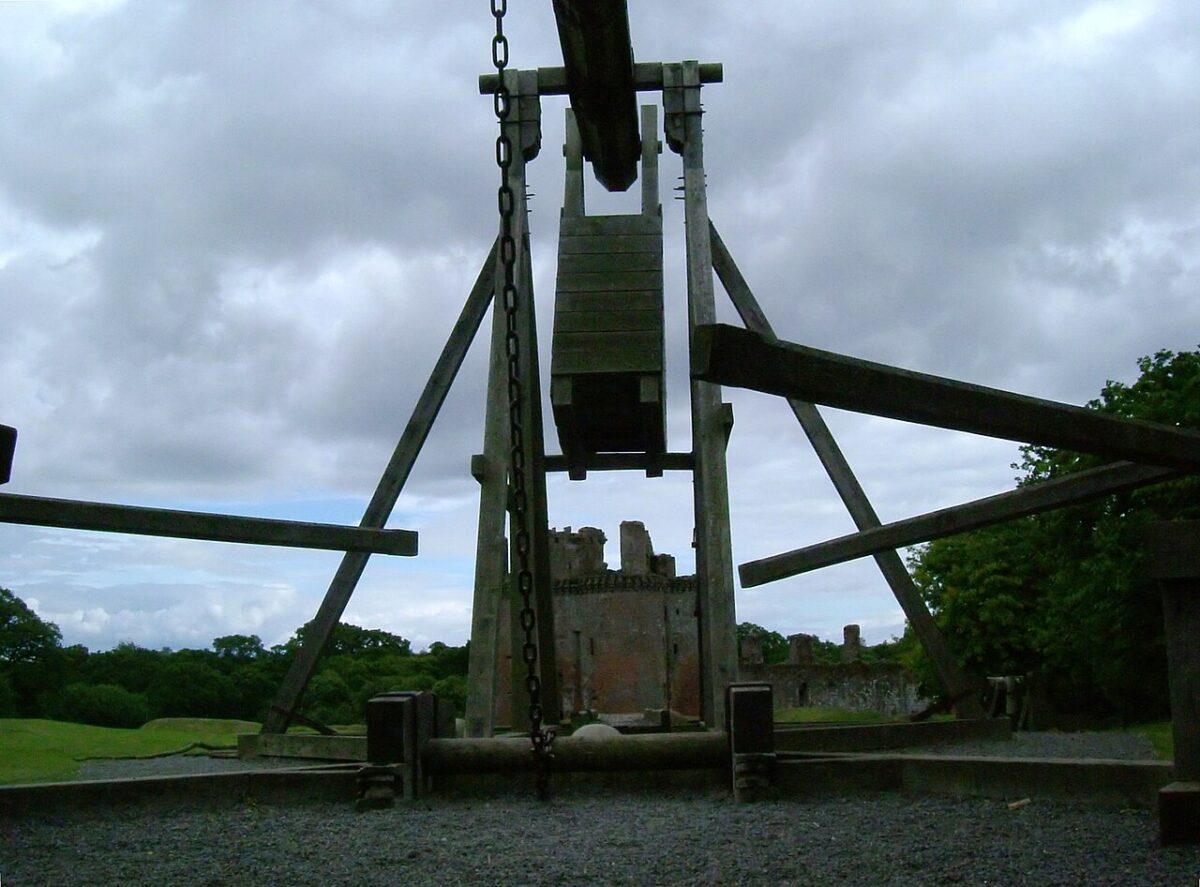
- Why it was weird: It was less a portable weapon than a custom-built demolition project.
- Did it actually work? Yes. Its test shot caused serious damage to Stirling Castle’s defenses.
- Reality check: Claims that it was unquestionably the largest trebuchet ever made are difficult to prove. The documented story is already impressive without uncertain superlatives.
- How common was it? Unique or nearly unique in scale, although trebuchets themselves were important siege weapons.
11. War Hammer: The Weapon That Attacked the Person Inside the Armor
The strangest detail: Its small head could be more dangerous to armor than a much larger sword blade.
A sword spreads the force of a cut along an edge. A war hammer concentrates that force into a compact metal head. That made it particularly useful against armored opponents.
A solid hammer blow might dent a plate, damage a helmet, knock an opponent off balance, or transmit enough force through the metal to injure the person underneath. The weapon did not always need to break through the armor to be effective.
Many war hammers also included a rear spike or beak. This gave the fighter another option for attacking armor gaps or lighter plates.
Some were short enough for mounted use. Others were mounted on long shafts and used more like polearms.
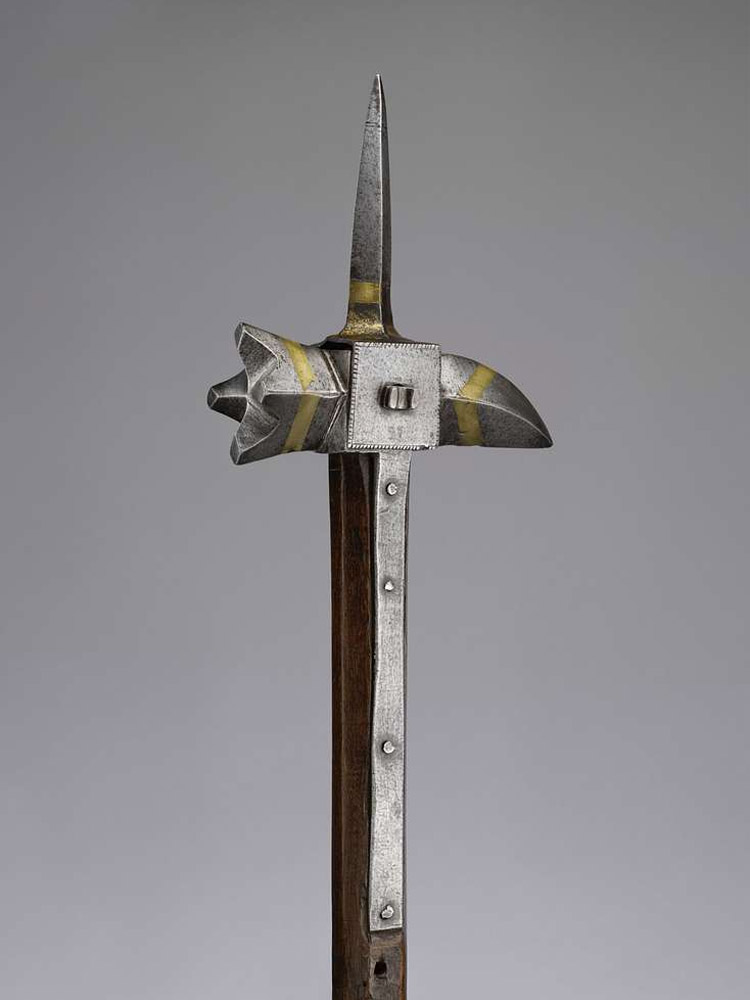
- Why it was weird: It turned a familiar tool into a highly specialized answer to expensive armor.
- Did it actually work? Yes. Museum examples show that war hammers became important weapons after the spread of full plate armor.
- Reality check: A hammer did not necessarily crush an entire breastplate inward with one blow. Its value came from concentrated impact, repeated strikes, and attacks on vulnerable areas.
- How common was it? Well documented, especially in late medieval and early Renaissance armored combat.
12. Greek Fire: Flames That Water Could Not Easily Stop
The strangest detail: Enemy sailors could see fire burning across the surface of the water.
Greek fire was an incendiary weapon most closely associated with the Byzantine Empire.
Its exact formula has been lost, although it probably used some combination of combustible substances that allowed it to burn fiercely and resist ordinary attempts to extinguish it.
Byzantine forces are especially famous for projecting it from ship-mounted tubes during naval battles. It could also be placed in containers or used in other incendiary devices.
The weapon’s psychological effect may have been as important as the physical damage. A crew facing flames that appeared to spread across the sea could quickly lose discipline.
Greek fire was not a handheld flamethrower in the modern sense. It depended on specialized equipment, trained operators, and careful handling.
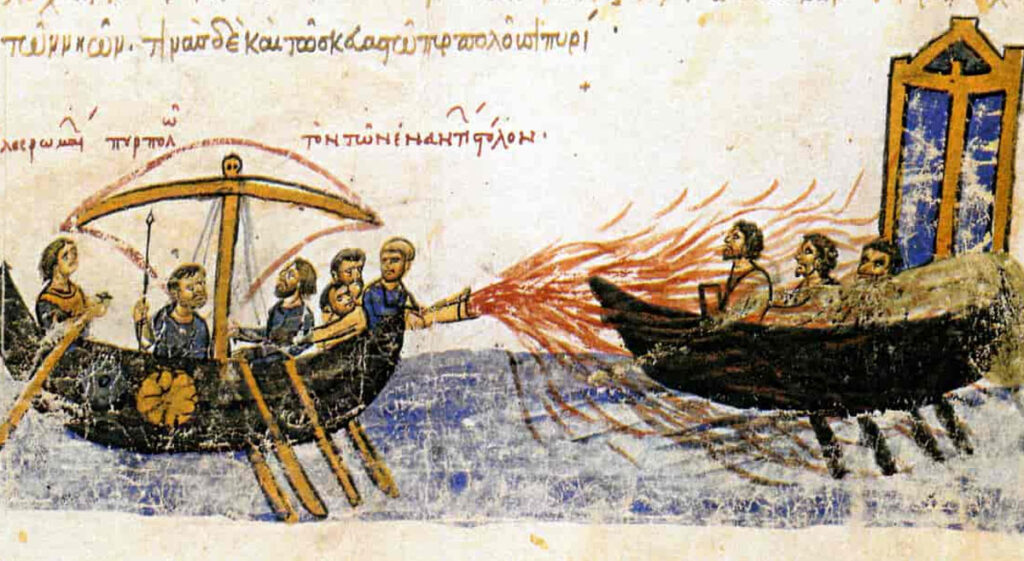
- Why it was weird: It made the water around a ship appear to catch fire.
- Did it actually work? Yes. Byzantine accounts repeatedly connect it with naval defense and attacks on enemy fleets.
- Reality check: Historians do not know the complete recipe. Any modern claim to have perfectly recreated Greek fire should be treated cautiously.
- How common was it? A highly guarded and specialized Byzantine weapon rather than a standard weapon across medieval Europe.
13. Caltrops: Tiny Spikes That Could Stop a Horse
The strangest detail: No matter how one landed, one sharp point always faced upward.
A caltrop was a small metal object formed from four spikes arranged so that one point projected upward when the others rested on the ground.
Soldiers scattered them across roads, gateways, river crossings, or likely routes of advance. A person could step on one, but their most important targets were often horses.
A caltrop driven into a hoof could injure the animal, disrupt a charge, and create confusion among the riders behind it. Even when the spikes were visible, they could force mounted troops to slow down or avoid an area.
Caltrops required no moving parts, no aiming, and no operator once they had been placed.
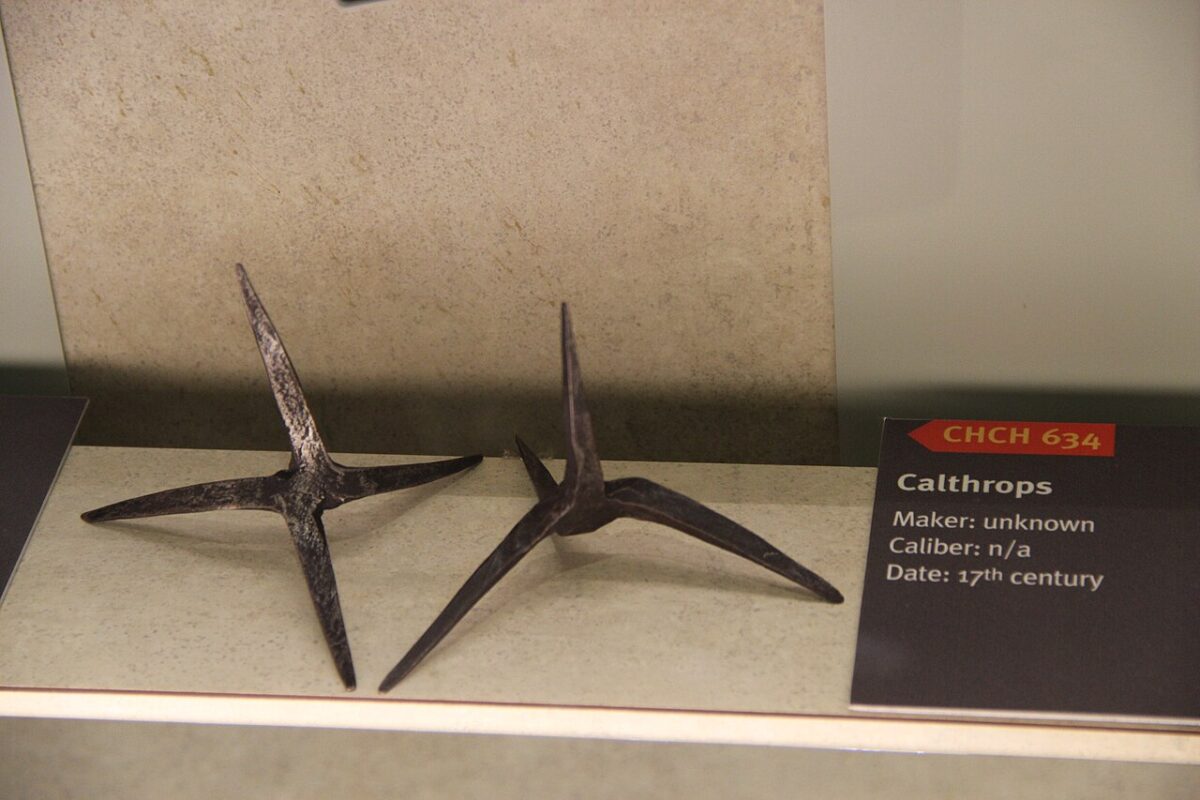
- Why it was weird: A piece of metal small enough to hold in one hand could disrupt an entire cavalry movement.
- Did it actually work? Yes. Its effectiveness came from simple geometry and the vulnerability of feet and hooves.
- Reality check: One caltrop would not automatically destroy an army. They worked best when scattered in large numbers and combined with terrain, barriers, or defending troops.
- How common was it? Simple, ancient, and repeatedly used across many periods.
Which Weird Medieval Weapons Were Actually Common?
Not every dramatic weapon on this list was equally important.
War hammers and multi-purpose polearms were practical responses to armored combat and were used in significant numbers. Spears, hooks, axes, and hammer-like weapons appeared in many regional forms because they were useful and relatively straightforward to produce.
Other weapons were more situational.
The Warwolf was created for a particular siege. Greek fire depended on specialized Byzantine knowledge and equipment. Man-catchers were more useful for restraint than open battle. Repeating crossbows traded power for speed. War scythes were especially valuable when forces needed to create weapons quickly from available materials.
The flail occupies a different category. Flexible striking weapons existed, but the familiar spiked-ball version has become much more common in modern fantasy than it appears to have been in medieval warfare.
What Movies and Video Games Get Wrong
Modern media often treats medieval weapons as if each one had a simple special ability.
A hook instantly pulls a rider from a horse. A hammer smashes directly through plate armor. A repeating crossbow fires with the force of a heavy military bow. A flail swings safely around shields. Greek fire behaves like modern napalm. A trebuchet hits the same point with perfect accuracy.
Real weapons were less predictable.
Hooks could miss or become trapped. Heavy weapons exhausted their users. Armor had weak points but was not easy to defeat. Siege engines required calculation, adjustment, and enormous amounts of labor. Incendiary weapons were dangerous to their own operators. Flexible weapons were difficult to control.
The weapon was only one part of the system. Training, formation, terrain, timing, armor, morale, and teamwork often mattered more than an unusual design.
Movies and games are not the only reason inaccurate ideas survive. Many familiar stories have been repeated for so long that they feel true, as these historical myths and misconceptions demonstrate.
What These Weapons Reveal About Medieval Warfare
The weirdest medieval weapons were not products of random imagination.
Their shapes reveal the practical problems soldiers were trying to solve.
Bird-beak hammers appeared because armor resisted ordinary cuts. Hooks and long poles helped infantry control distance and challenge mounted opponents. Converted farm tools allowed communities to arm people quickly. Repeating mechanisms increased speed at the cost of power. Siege engines turned gravity, rope, timber, and mathematics into weapons capable of damaging stone.
Even the most bizarre design followed a recognizable logic.
Medieval warfare was an arms race. Better armor encouraged harder-hitting weapons. Stronger castles encouraged larger siege engines. Powerful cavalry encouraged longer and more specialized polearms.
Some of the solutions were elegant. Many were crude. And others were terrifying. A few may have caused almost as many problems for their users as for the enemy.
But none of them were created simply to look strange.
Frequently Asked Questions
Medieval weapons often look simple at first glance, but their names, designs, and battlefield roles can raise plenty of questions. Below are answers to some of the most common ones. Have a question we did not cover? Leave it in the comments, and we may add it to the article.
What was the strangest medieval weapon?
The answer is subjective, but the man-catcher is one of the strangest in appearance and purpose. It was designed to trap and restrain a person with a spiked metal collar mounted on a long pole.
What medieval weapon was best against armor?
There was no single perfect armor-defeating weapon. War hammers, pollaxes, maces, picks, and narrow thrusting points could all be useful. Fighters also targeted gaps around the visor, armpits, elbows, groin, and backs of the knees.
Were medieval flails real?
Some flail-like weapons existed, especially larger forms related to agricultural threshing tools. The familiar one-handed weapon with a spiked metal ball on a chain was probably much rarer than its popularity in fantasy suggests.
Could a war hammer break plate armor?
A powerful blow could dent or damage armor, but the weapon did not always need to break through it. The impact could injure, stun, or unbalance the wearer. Rear spikes were also used against gaps and lighter sections.
Did Greek fire really burn on water?
Historical descriptions associate Greek fire with flames that remained effective during naval combat and were difficult to extinguish with water. Its exact formula is unknown, so its precise behavior cannot be reconstructed with certainty.
Why were so many medieval weapons mounted on poles?
A pole provided reach, leverage, and safety. It allowed a foot soldier to attack before an opponent with a shorter weapon could respond. Polearms could also be used in organized formations and equipped with blades, hooks, spikes, or hammers for different tasks.
Function Over Form
If a medieval weapon looked strange, it usually meant the battlefield had changed.
Stronger armor demanded weapons that could crush, pierce, or attack vulnerable joints. Mounted knights encouraged infantry to experiment with longer poles, hooks, and spikes. Fortified castles pushed engineers to build machines capable of throwing enormous projectiles. When conventional weapons were unavailable, ordinary tools could be rebuilt for war.
Some of these designs were clever. Others were crude, highly specialized, or far less practical than modern entertainment suggests. What mattered was not how elegant a weapon looked, but whether it solved the deadly problem directly in front of its user.
That cycle of military innovation did not end with the Middle Ages. Centuries later, engineers were still producing weapons that ranged from ingenious to wildly impractical, as seen in these 15 German WWII Wunderwaffe that sounded like science fiction.
Weapons, however, were only as effective as the people using them. Continue exploring battlefield history with our look at the deadliest elite soldiers in history, or step deeper into the medieval world and examine the history behind the real Ragnar Lothbrok.
For an even darker look at how violence and fear were used away from the battlefield, read about the worst punishments in human history.
Which Medieval Weapon Surprised You Most?
Did we miss a bizarre medieval weapon that deserves a place on the list? Share your pick in the comments, tell us which weapon you would least want to face, and let us know what piece of medieval history we should explore next.




.jpg)


.jpg)
