In the final months of World War II, Nazi Germany poured time, money, and dwindling resources into Wunderwaffen, “wonder weapons” supposedly capable of changing the course of a collapsing war.
Some were startlingly ahead of their time: guided bombs, rocket fighters, and pioneering helicopters. Others were bizarre dead ends… a tank too heavy for bridges, a rifle built to shoot around corners, and a one-person armored ball whose purpose is still debated.
Table of Contents
These weapons were not secret shortcuts to victory. They were a mix of real innovation, military desperation, propaganda, and engineering fantasy. Here is the reality behind 15 of the strangest weapons ever conceived.
Before We Begin: What Counts as a “Wonder Weapon”?
Not every weapon on this list was actually used in combat. Some were working weapons, some were prototypes, and others never made it past plans or testing. That is part of what makes them so fascinating: Nazi Germany was chasing battlefield miracles at a time when it could least afford expensive experiments.
Status key:
- Used in combat — actually saw action during the war
- Prototype — built and tested, but never widely used
- Paper project — planned or designed, but never built
The 15 Craziest German WWII Wonder Weapons
Some of these weapons were genuinely ahead of their time. Others were wildly impractical, dangerously unreliable, or never made it beyond the drawing board. Here is what made each one so strange—and whether it ever actually worked.
Start Small, Then Go Supersonic
Some of Germany’s strangest ideas started with weapons soldiers could actually carry, or fly. These projects promised a simple edge: shoot without exposing yourself, climb faster than any enemy fighter, or strike from farther away than anyone expected. In practice, they often revealed just how dangerous “innovation” could become when rushed into war.
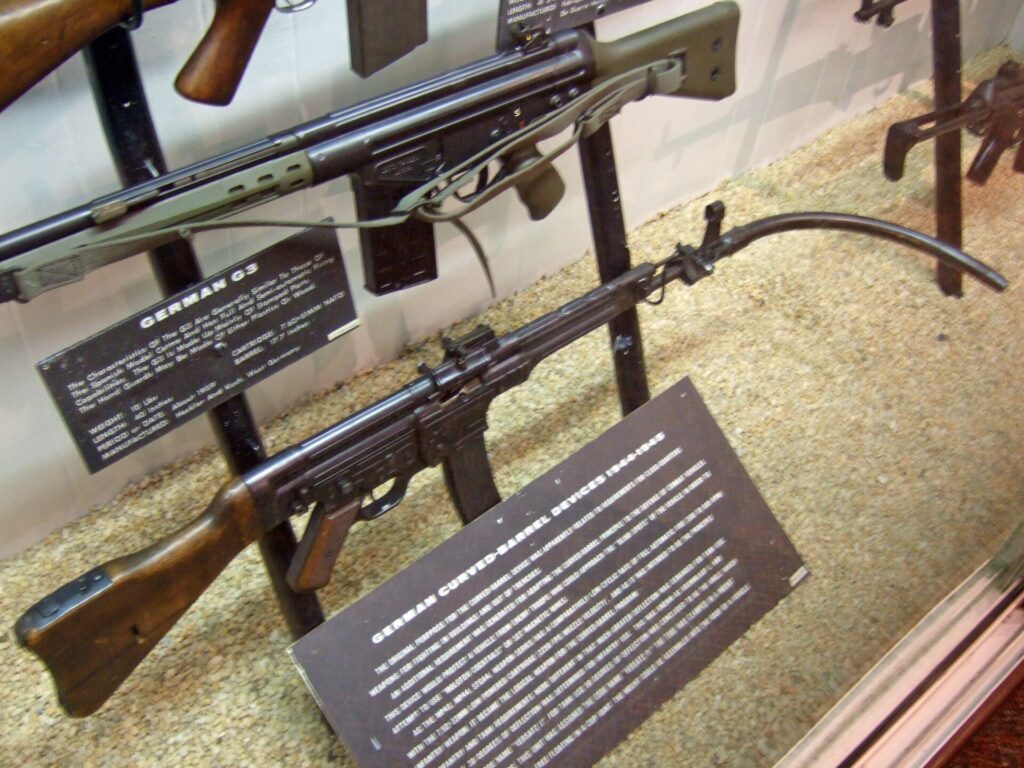
1. StG 44 Krummlauf: The Curved Barrel That Shot Around Corners
- Status: Limited production
Germany tried to solve a deadly battlefield problem with what looked like a metal elbow bolted onto a rifle.
The Krummlauf—German for “curved barrel”—was an attachment for the StG 44 assault rifle. With a small periscope-style sight, it was designed to let soldiers fire from behind cover or from inside an armored vehicle without exposing their heads and shoulders.
It sounds like something from a comic book: point the rifle around a corner, look through the sight, and fire at an enemy you could not directly see.
The trouble was that bullets do not enjoy taking corners.
The Krummlauf came in several versions, from relatively gentle bends to extreme 90-degree models intended for armored vehicles. The 30-degree infantry version was the most practical. The sharper the bend became, however, the more violently the bullet and barrel were stressed. U.S. Ordnance testing found that bullets emerged seriously distorted—and, in the tightest versions, often fragmented.
- Why it was crazy: It tried to turn an assault rifle into a periscope. A soldier could theoretically fire around a wall while keeping most of his body safely behind it.
- Did it actually work? Sort of. The shallow-bend version could fire rounds and offered a real advantage in tight urban fighting or from inside an armored vehicle. But it was never reliable enough to become a widely useful battlefield weapon.
- Reality check: The tighter the curve, the worse the idea became. U.S. testers called the 30-degree version partly practical—but judged the 90-degree version impractical after severe recoil, damaged bullets, and dangerous handling problems.
2. Messerschmitt Me 163 Komet: The Rocket Fighter With Only Minutes to Attack
- Status: Used in combat
Imagine climbing into a fighter plane that could outrun almost anything in the sky—but carried only a few minutes of fuel and was packed with chemicals dangerous enough to turn a rough landing into a disaster.
That was the Messerschmitt Me 163 Komet, the only rocket-powered fighter aircraft ever used in combat. While most fighters relied on propellers or early jet engines, the Komet used a rocket engine to rocket upward toward Allied bombers at astonishing speed.
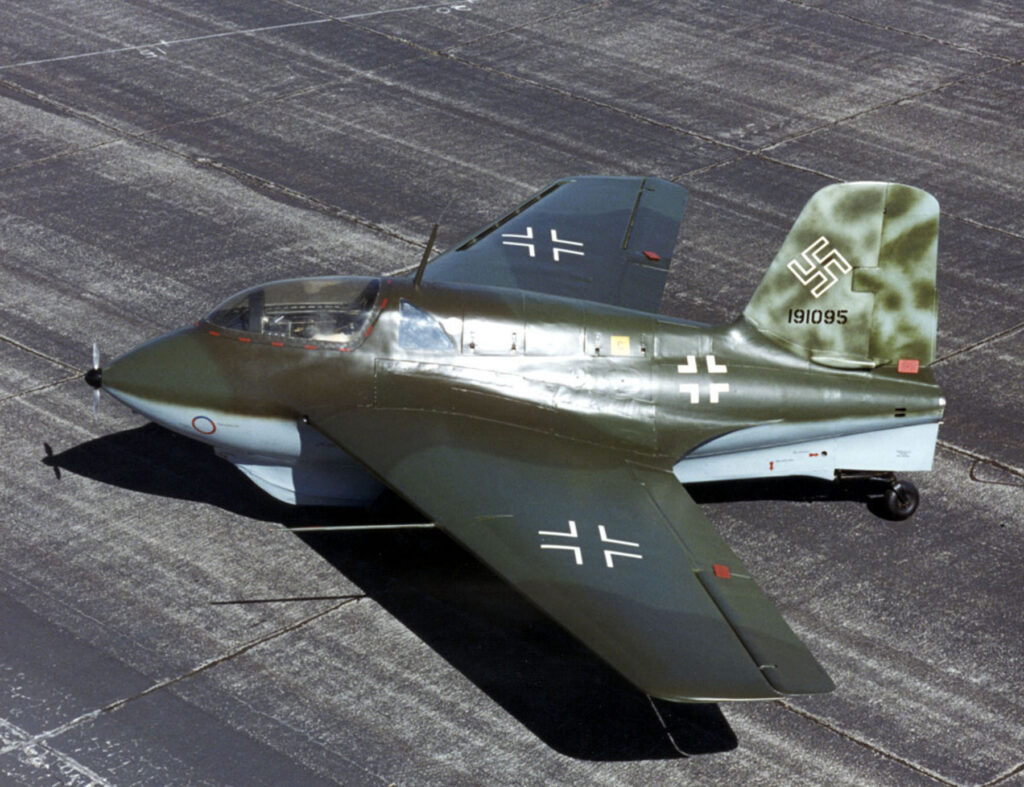
In testing, it became the first piloted aircraft to exceed 620 mph in level flight. One test pilot pushed it to roughly 700 mph—an almost unbelievable speed for 1944.
But the Komet’s incredible performance came with a brutal catch: its rocket engine burned through fuel in minutes. After a brief, high-speed climb and attack run, pilots often had to glide back to base with little room for error.
Its fuel was also extremely volatile. The two chemicals used to power the aircraft could react violently, and crashes or leaks could be fatal.
- Why it was crazy: The Komet was basically a manned rocket built to make one lightning-fast attack on a bomber formation before falling back to Earth as a glider.
- Did it actually work? Yes—Me 163s entered combat in 1944 and did shoot down Allied bombers. Its speed made it difficult to intercept and gave it a real edge during its short attack window.
- Reality check: Being fast was not enough. The Komet had too little time in the air, a dangerous fuel system, and a difficult landing routine. It was years ahead of its time—but far too hazardous and impractical to become the weapon Germany hoped for.
3. Rheinbote: The Long-Range Rocket With a Tiny Payoff
- Status: Used in combat
Germany built a four-stage rocket that could travel about 100 miles—then gave it a warhead weighing only 88 pounds.
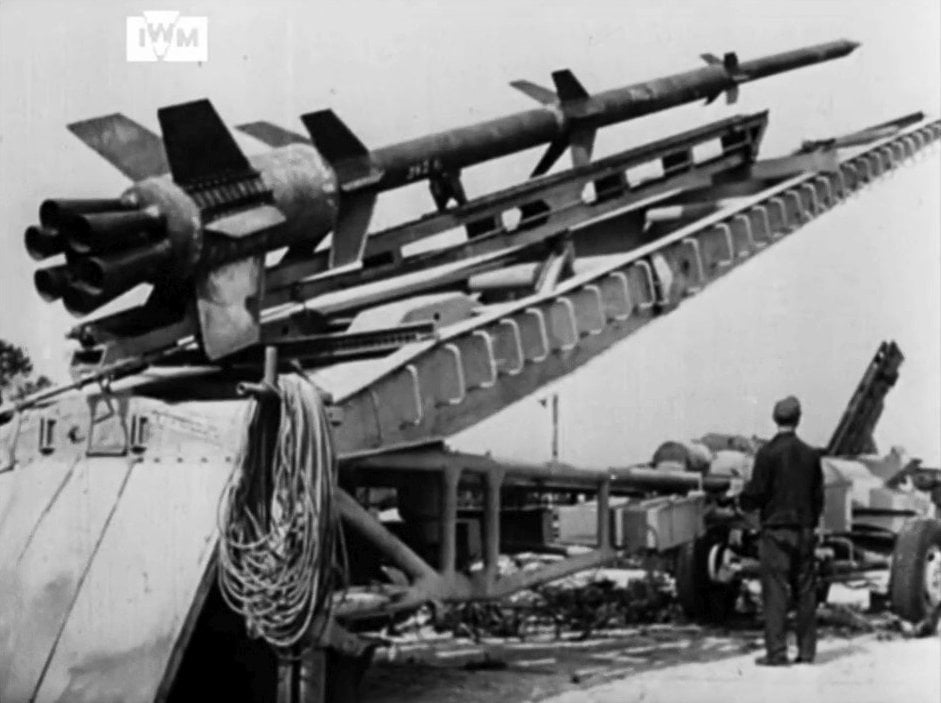
The Rheinbote, or “Rhine Messenger,” was designed to do what long-range artillery could not: strike targets far behind the front without hauling a gigantic gun into position. It was more than 37 feet long, launched from a mobile rail, and shed rocket stages as it climbed toward its target.
That sounds like a major breakthrough—and in one sense, it was. The Rheinbote was the first multi-stage missile used in warfare. But all that engineering effort delivered a surprisingly small explosive charge.
From late 1944 through the end of the war, Germany launched more than 200 Rheinbotes toward the vital Allied port of Antwerp. The rocket had range, but not much accuracy. It was aimed by setting the launcher in the general direction of the target, which was a little like trying to hit a city block by pointing a fire hose at the horizon.
- Why it was crazy: It used four rocket stages to send a relatively small warhead farther than conventional artillery could reach.
- Did it actually work? Yes—unlike many late-war German projects, the Rheinbote was built, launched, and used against Antwerp.
- Reality check: Its 40 kg warhead contained only about 30 kg of explosive, and its poor accuracy meant the weapon caused limited military damage. It was an impressive piece of rocket engineering—but a poor return for all the material, fuel, and effort needed to fire it.
4. Kugelblitz: The “Ball Lightning” Anti-Aircraft Tank
- Status: Prototype
Germany’s answer to Allied fighter-bombers looked like a Panzer IV wearing a metal ball on its roof.
The Kugelblitz—German for “ball lightning”—was an anti-aircraft tank built around a fully enclosed rotating turret. Earlier German flak tanks often left their crews exposed from above. The Kugelblitz was meant to fix that problem by protecting its gunners inside an armored, ball-shaped turret while two 30 mm cannons tracked low-flying aircraft.
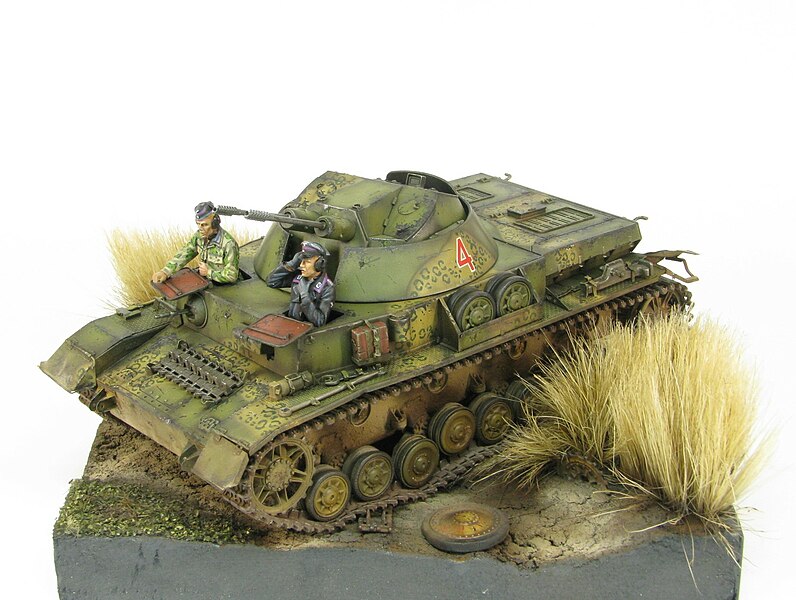
On paper, it was one of Germany’s more sensible late-war ideas. It could move with armored units, fire rapidly, and give its crew more protection than the open-topped vehicles it was meant to replace.
But it arrived when Germany’s factories, transport network, and supply system were already coming apart.
- Why it was crazy: It was essentially a tank with a spinning armored “ball” on top—built to chase planes while surviving the return fire that earlier anti-aircraft crews had to endure in the open.
- Did it actually work? The design appears to have been promising in testing, but it never reached meaningful production or widespread combat use. Sources disagree on whether two or five complete vehicles were finished before the war ended.
- Reality check: The Kugelblitz may have been one of Germany’s better late-war defensive concepts, but a useful weapon that arrives only as the war is ending is still too late to change anything.
5. V-3: The Supercannon Aimed at London
- Status: Prototype — though smaller versions saw limited combat use
Germany’s V-3 was not just a big gun. It was a giant cannon system meant to be buried inside a French hillside and fire on London from across the English Channel.
Known as the “High Pressure Pump,” the V-3 was built around a long barrel lined with extra propellant charges. As each shell raced forward, those charges were meant to ignite in sequence and keep accelerating it—like giving a projectile repeated pushes down the barrel.
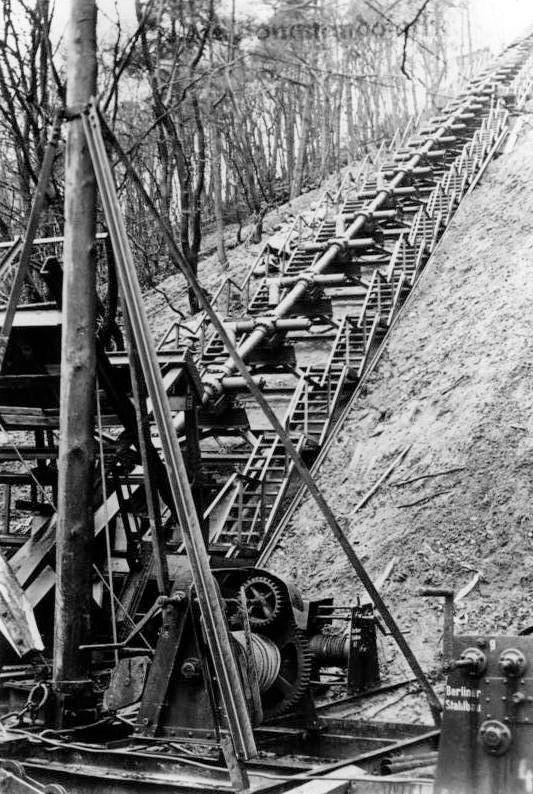
The plan at Mimoyecques, in northern France, was staggering: an underground complex containing multiple fixed guns aimed at London. It was less like ordinary artillery and more like an industrial-scale siege weapon built into the landscape.
But the project never got the chance to fire on its intended target.
- Why it was crazy: Germany tried to turn an entire underground fortress into a cannon—one designed to bombard London without ever moving.
- Did it actually work? Not as planned. The London battery at Mimoyecques was never completed or used. Smaller, shortened V-3 guns were later used to fire on Luxembourg, but with limited effect.
- Reality check: RAF No. 617 Squadron—better known as the “Dambusters”—hit Mimoyecques with 12,000-pound Tallboy bombs on July 6, 1944. The strikes collapsed key shafts and tunnels, effectively ending the London supercannon project before it could fire a shot.
6. Landkreuzer P. 1000 “Ratte”: The 1,000-Ton Tank That Never Existed
- Status: Paper project
Germany’s proposed P. 1000 Ratte was not really a tank in any normal sense. It was closer to a battleship that someone wanted to drive across Europe.
The plan called for a vehicle weighing around 1,000 tons—more than five times heavier than the already enormous Panzer VIII Maus. Some proposals envisioned naval-scale guns, huge tracks, and a crew large enough to make it feel less like a tank and more like a moving fortress.
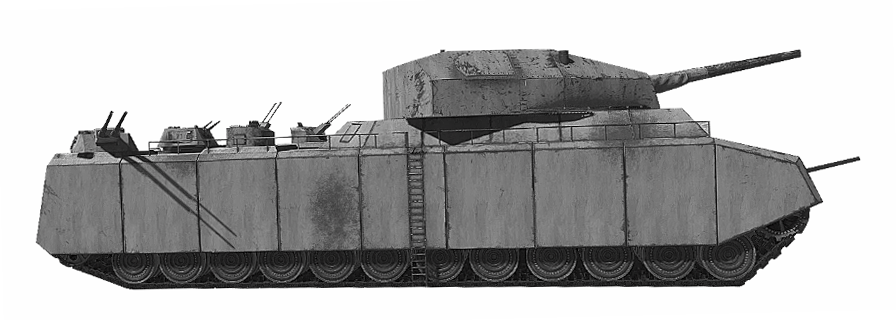
On paper, the Ratte was supposed to smash enemy defenses with overwhelming armor and firepower. In reality, its size was the problem.
A machine this huge would have struggled with roads, rail transport, bridges, tunnels, fuel consumption, and basic mobility. Even if it could move, it would have been nearly impossible to hide from Allied aircraft. It would have been a giant target crawling across the battlefield.
- Why it was crazy: Germany tried to imagine a land vehicle so large that it borrowed ideas from naval warships. It was less “super tank” and more “armored battleship with tracks.”
- Did it actually work? No. The Ratte never left the planning stage. No prototype was built, tested, or used in combat.
- Reality check: Bigger is not always better. The Ratte may have looked unstoppable in a blueprint, but in the real world, it would have been too expensive, too difficult to move, and far too obvious to survive for long. Even the project’s history is murky, which is a reminder that many famous “Nazi superweapon” designs became larger in popular imagination than they ever were on an actual factory floor.
7. Karl-Gerät: The 600mm Mortar That Needed Its Own Support Army
- Status: Used in combat
The Karl-Gerät (also referred to as Mörser Karl) fired shells so huge that each one weighed about as much as a small car.
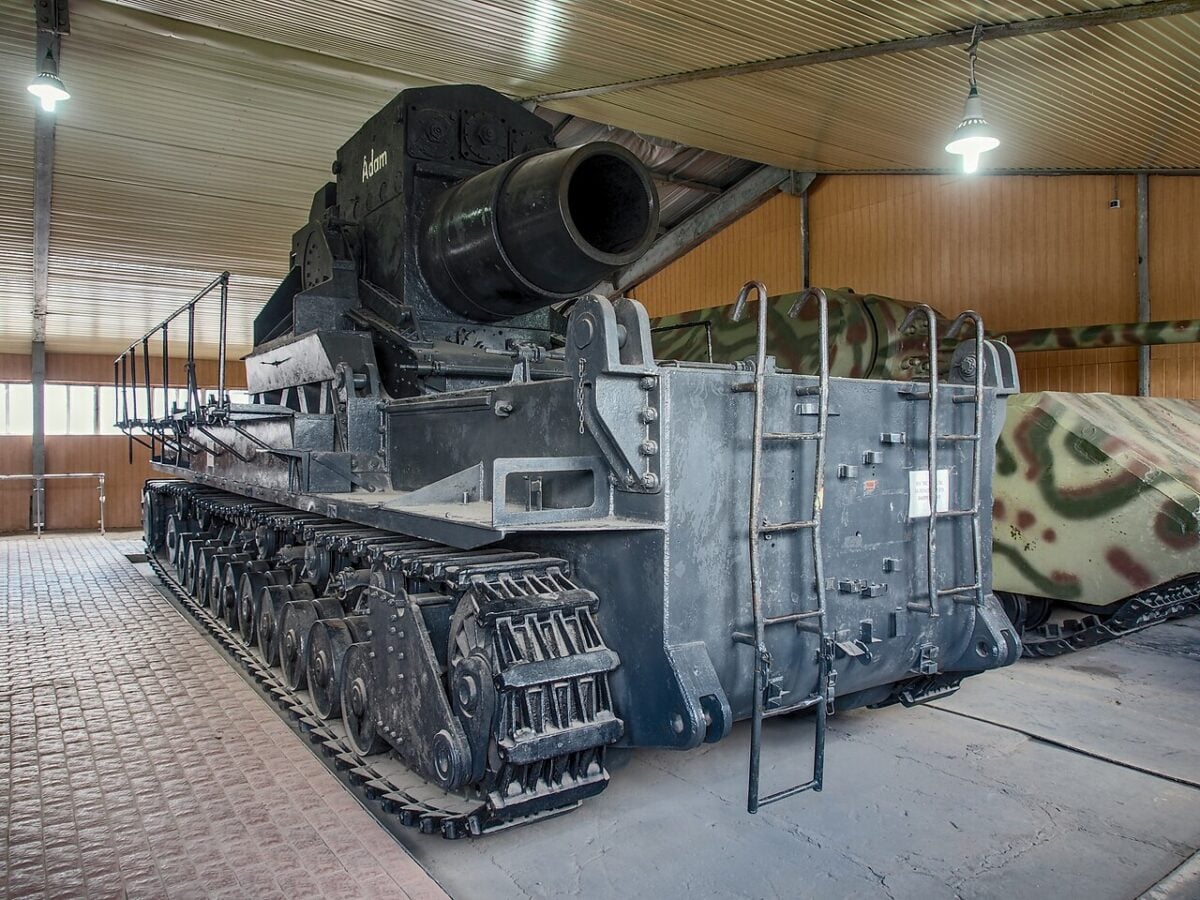
Built to smash bunkers and fortified positions, this 600 mm siege mortar was technically self-propelled—but that did not mean it was easy to move. At more than 120 tons, it crawled along at walking speed and needed a dedicated support force to keep it operating.
A crew had to bring in special ammunition carriers, cranes, transport equipment, and massive shells before the weapon could fire. It was less like bringing a gun to the battlefield and more like moving a small construction site.
When it fired, the effect was terrifying. Karl-Gerät mortars were used against fortified Soviet positions and later during the Nazi suppression of the Warsaw Uprising, where German newsreel footage showed the mortar firing into the city.
- Why it was crazy: It was a tracked mortar with a barrel wider than many doorways, firing shells that weighed more than two tons.
- Did it actually work? Yes. Unlike many “wonder weapons,” Karl-Gerät saw real combat and could destroy heavily fortified targets.
- Reality check: It was powerful—but painfully slow, difficult to transport, and dependent on an entire convoy of support vehicles. A weapon that needs its own logistics operation is impressive, but not exactly practical.
Desperate Experiments at Sea and in the Sky
As the war turned against Germany, engineers looked beyond conventional tanks and artillery for an answer. Some projects tried to strike from beneath the waves. Others aimed to outrun, outfly, or outthink the Allies with giant aircraft, vertical-launch rockets, and guided missiles.
A few of these ideas were genuinely ahead of their time. Most were too complex, too dangerous, or too late to make a difference.
8. Rocket U-Boat: The Submarine That Fired Rockets Underwater
- Status: Prototype
Germany really did fire rockets from a submerged U-boat—but not the V-2 strikes on America often imagined online.
In 1942, the Type IXC submarine U-511 was fitted with a rack carrying six 30 cm artillery rockets. During trials, it successfully launched rockets while submerged at a depth of about 40 feet. That meant German engineers had proved a startling idea: a submarine could fire a rocket without surfacing first.
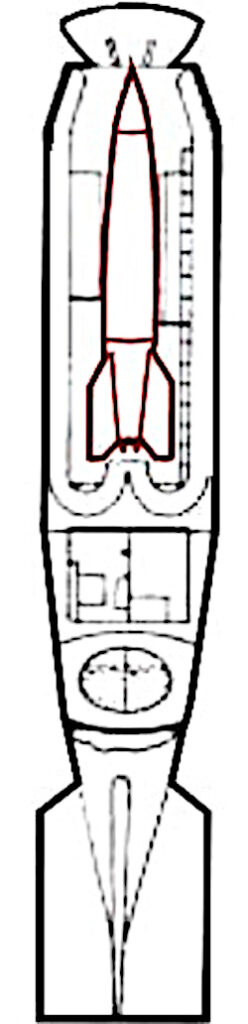
Later, the plan became even more ambitious. Engineers proposed that U-boats tow sealed launch containers holding V-2 rockets across the Atlantic. Once close enough to the U.S. coast, the container would supposedly rise into a vertical position and fire. It sounded like an early version of a missile submarine—but it was never close to becoming one.
- Why it was crazy: Germany wanted to turn a stealthy submarine into a floating rocket launcher, combining two of the war’s most feared weapons into one attack system.
- Did it actually work? The smaller U-511 rocket tests did work. Rockets were successfully launched from underwater. But the much more dramatic V-2 container plan never produced a confirmed missile launch.
- Reality check: The tested rockets were unguided artillery weapons, not long-range V-2 missiles. And the V-2 plan was too complicated, too late, and too risky to move beyond wartime planning. It was a glimpse of the future—but mostly a sign of how desperately Germany was searching for a way to strike beyond its reach.
9. Blohm & Voss BV 238: The Giant Flying Boat
- Status: Prototype
The Blohm & Voss BV 238 was so enormous that it looked less like a normal airplane and more like a ship that had somehow learned to fly.
Built as a long-range flying boat, the BV 238 was designed to carry huge loads across vast distances. It had six engines, a massive hull, and wings so large that the aircraft could have been mistaken for a floating building from the water.
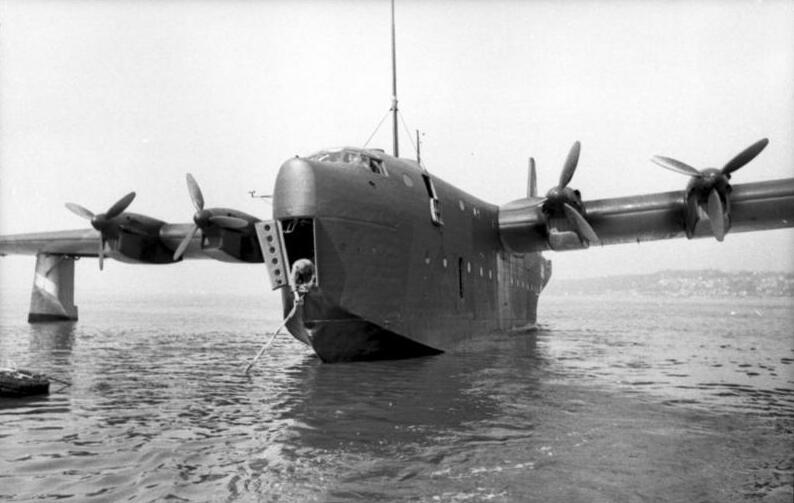
At the time, it was the largest aircraft produced by any Axis power during the war. A 1944 German Federal Archives photograph identifies the BV 238 V1 prototype near Hamburg, showing just how enormous the aircraft really was.
But its size was also its weakness.
Only one completed prototype flew. Before it could become a serious transport or maritime patrol aircraft, it was attacked while moored on Lake Schaal and left partially sunk. The war ended before the project could go any further.
- Why it was crazy: It was essentially a giant seaplane built to cross huge distances while carrying the kind of payload normally associated with ships.
- Did it actually work? It flew, but only as a prototype. It never entered operational service.
- Reality check: The BV 238 was impressive because of its size, not because of what it accomplished. Germany built one enormous flying boat—but never had the time, resources, or air superiority to turn it into a useful weapon.
10. Focke Rochen: The “Flying Ray” VTOL Concept
- Status: Paper project
The Focke Rochen looked less like a fighter plane and more like a flying saucer crossed with a stingray.
Named after the German word for “ray,” the Rochen was a proposed vertical-takeoff aircraft with a broad circular wing and two huge propellers at its center. The idea was to lift off vertically, then redirect the airflow backward to fly forward—almost like tilting a giant fan from the ground toward the horizon.
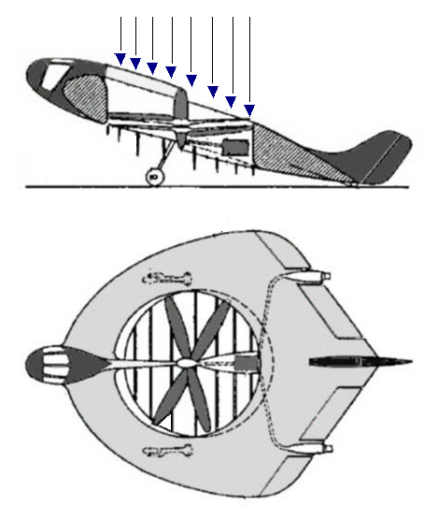
It was an audacious attempt to solve a real wartime problem: how to get an aircraft into the air without needing a vulnerable runway. In theory, the Rochen could have launched from a small clearing, climbed vertically, and then raced away like a conventional fighter.
But this was never more than a concept.
- Why it was crazy: It tried to combine a helicopter, a jet, and a flying saucer into one aircraft—decades before vertical-takeoff jets became practical.
- Did it actually work? No. The Rochen was never built as a full-size aircraft and never flew. A small wooden model was tested in a wind tunnel after the war, but that was as far as the project went.
- Reality check: The Rochen is one of the murkier “wonder weapon” stories. The surviving documentation is limited, and its postwar testing shows just how far it remained from becoming a usable aircraft. It was a fascinating vision of the future—but not a weapon Germany was anywhere close to fielding.
11. Bachem Ba 349 Natter: The Rocket Fighter Launched Like a Missile
Status: Prototype
The Natter did not take off from a runway. It launched straight up from a tower like a missile—with a pilot strapped inside.
Built largely from wood, the Bachem Ba 349 Natter was Germany’s desperate answer to Allied bomber raids. It was designed to climb rapidly on rocket power, fire a burst of rockets into a bomber formation, then break apart in midair. The pilot and the rocket-engine section were supposed to descend separately by parachute.
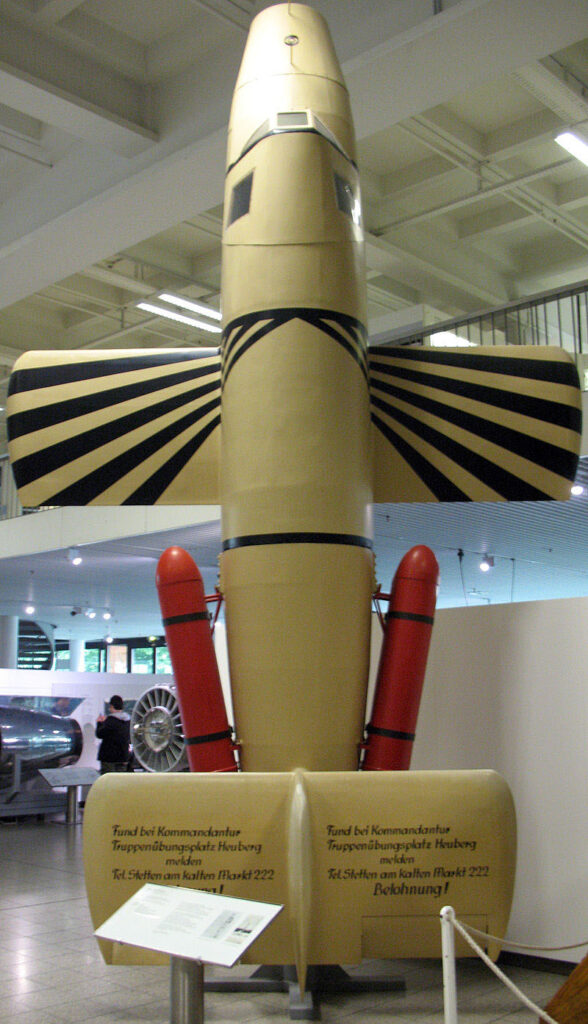
It was less like a normal fighter plane and more like a manned rocket that happened to have wings.
- Why it was crazy: The Natter asked a pilot to launch vertically, attack bombers at high speed, then escape from an aircraft designed to come apart after the mission.
- Did it actually work? No. It never entered combat.
- Reality check: The first and only manned vertical launch took place on March 1, 1945. Shortly after takeoff, the canopy came off, the aircraft disappeared into the cloud, and test pilot Lothar Sieber was killed in the crash. The exact chain of failures remains uncertain.
The Natter was undeniably ahead of its time in concept. But it was also a perfect example of late-war desperation: an extraordinary idea rushed forward before it was ready.
12. Junkers Ju 390: The “Amerika Bomber” That Never Reached America
- Status: Prototype
Germany wanted a bomber that could make the Atlantic Ocean feel much smaller.
The Junkers Ju 390 was a massive six-engine aircraft developed for extremely long-range missions. It has often been linked to the Amerika Bomber idea: a German aircraft capable of reaching targets in the United States.
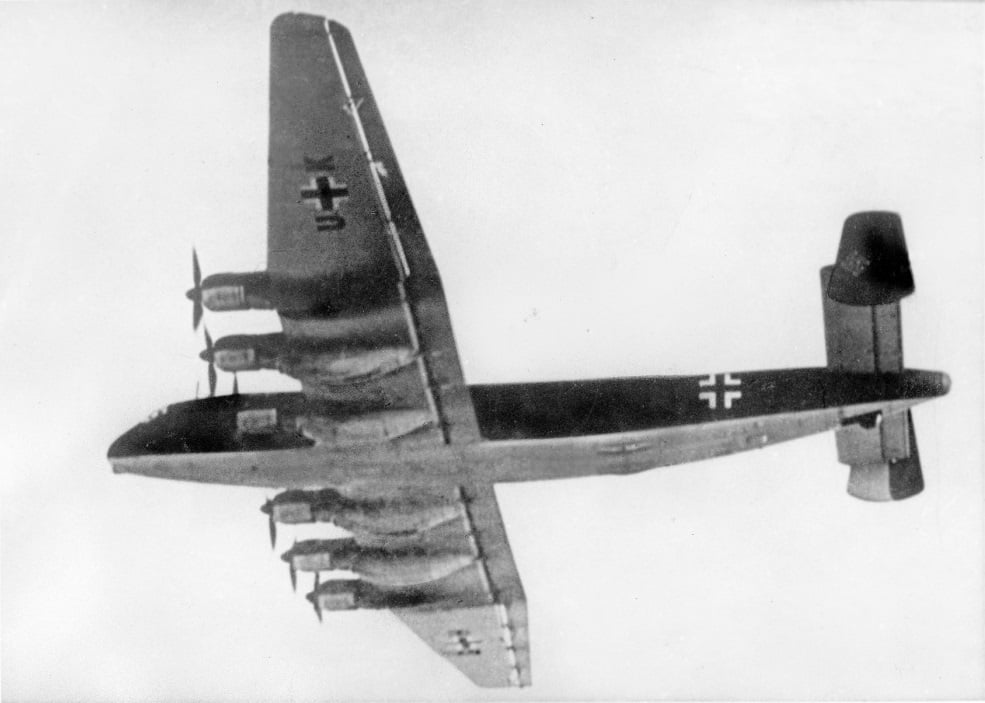
That ambition helped create one of WWII’s most persistent aviation myths. Stories later claimed that a Ju 390 secretly flew close to Long Island. But there is no solid evidence—such as confirmed flight records or photographs—to prove that happened, and historians generally treat the tale with caution.
It is the kind of wartime claim that survives because it is so compelling, even when the evidence is thin.
At least one Ju 390 prototype did fly. But it was never transformed into the transatlantic bomber force Nazi Germany imagined.
- Why it was crazy: It was a six-engine aircraft built around a terrifying idea: taking the war directly to America.
- Did it actually work? It flew as a prototype, but never entered operational service and never bombed the United States.
- Reality check: A plane designed to cross an ocean is useless when you lack the fuel, factories, trained crews, and time to build it in meaningful numbers. The Ju 390 became another late-war promise that looked more powerful on paper than it ever was in the sky.
The Weirdest Dead Ends
By the final years of the war, some German weapons projects had moved far beyond ordinary military thinking. Engineers were experimenting with remote-controlled explosives, guided missiles, and armored machines so strange that historians still debate what some of them were meant to do.
A few pointed toward the future. Most were too fragile, too complicated, or too late to matter.
13. Goliath: The Remote-Controlled Bomb on Tracks
Status: Used in combat
The Goliath looked like a tiny tank—until you realized there was no driver inside.
This small tracked vehicle carried an explosive charge and was controlled remotely by a soldier using a long wire. The operator was supposed to steer it beneath a tank, toward a bunker, or into an obstacle, then detonate it from a safer distance.
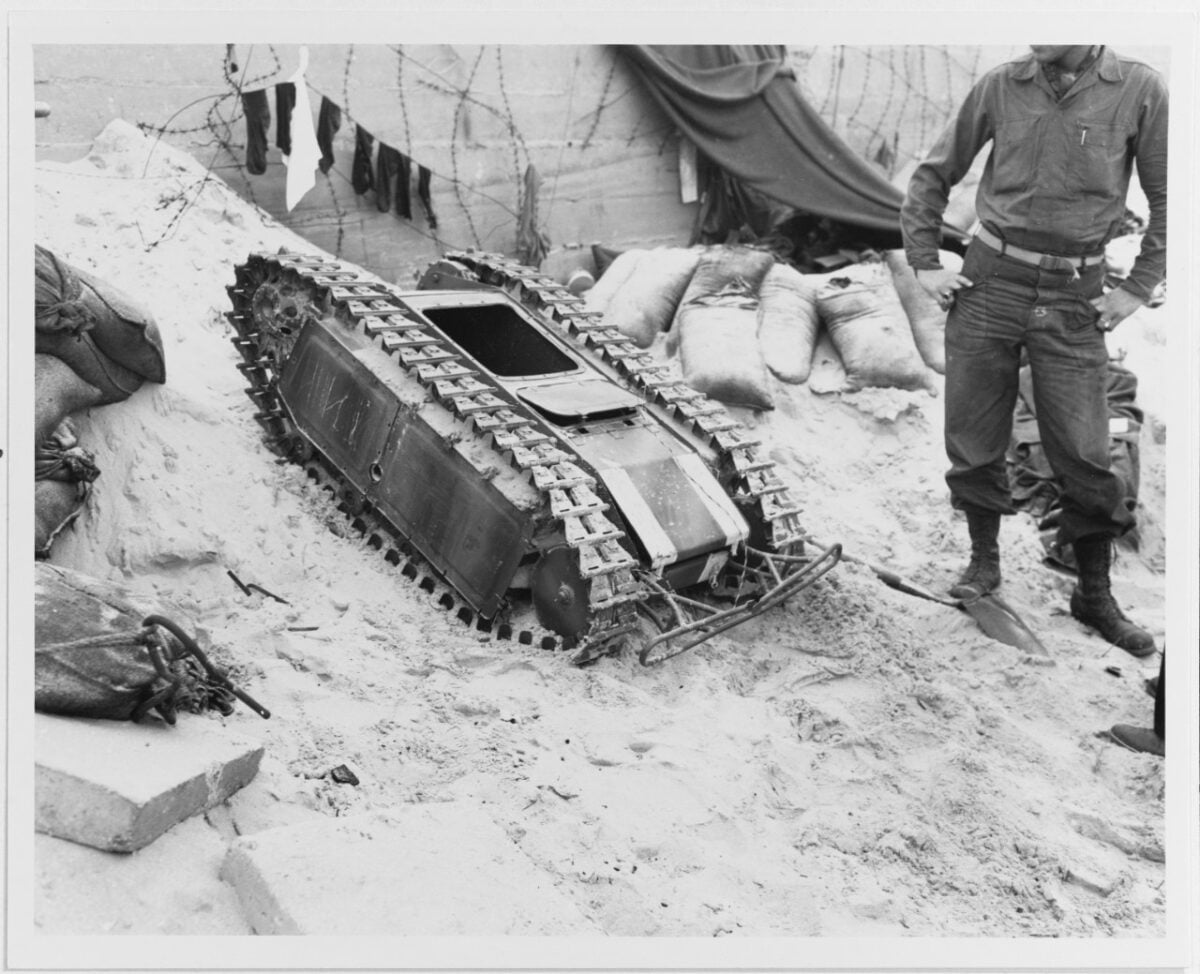
In other words, Germany built a disposable battlefield robot decades before modern drones became common.
The idea was genuinely innovative. The problem was that the Goliath was slow, lightly protected, and not especially good at crossing rough ground.
Its control wire was also a major weakness: once cut or damaged, the vehicle became an expensive lump of metal and explosives. Imperial War Museums describes it as an expendable remote-controlled demolition vehicle, while U.S. military research identifies it as an early example of a battlefield robot.
- Why it was crazy: It was essentially a remote-controlled bomb on tank tracks, crawling toward the target while its operator stood far behind it.
- Did it actually work? Yes. Goliaths were used in combat, including during the Warsaw Uprising and in Western Europe.
- Reality check: It was ahead of its time in concept, but too fragile for the battlefield it was built for. A weapon that can be stopped by terrain, enemy fire, or a severed cable is not much use once the shooting starts.
14. Ruhrstahl X-4: The Wire-Guided Missile Ahead of Its Time
- Status: Prototype
The Ruhrstahl X-4 asked fighter pilots to do something almost impossible: fly their own aircraft while steering a missile into a bomber formation.
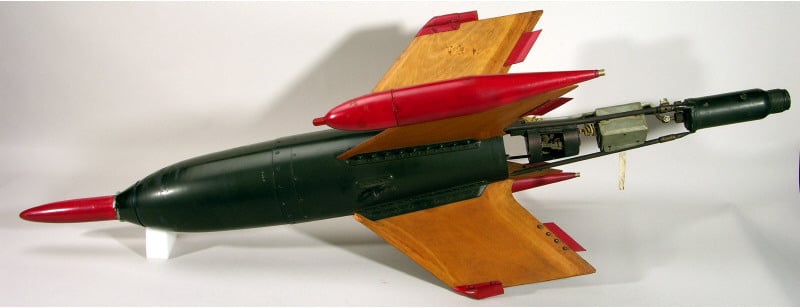
The X-4 was an early air-to-air missile designed to let German fighters attack heavily armed Allied bombers from farther away. Instead of radio guidance, the pilot controlled it with a small joystick while thin wires unspooled behind the missile—nearly four miles of wire in some versions.
That sounds futuristic because it was. The missile was meant to explode near a bomber rather than score a direct hit, using a warhead designed to react to the vibration of aircraft engines.
But the X-4 arrived during the final collapse of Germany’s war industry. Test launches took place, yet the missile never became an operational weapon in meaningful numbers. Allied bombing destroyed BMW engine production and badly disrupted the program.
- Why it was crazy: A pilot had to guide a rocket by hand while also flying through combat—a bit like trying to steer a firework with a video-game controller from a moving car.
- Did it actually work? It was test-fired, and around 1,000 to 1,300 airframes were produced, but it never entered real operational service.
- Reality check: The X-4 pointed toward the future of air combat, but it was far too complicated for a pilot already trying to survive enemy fighters, anti-aircraft fire, and a collapsing war.
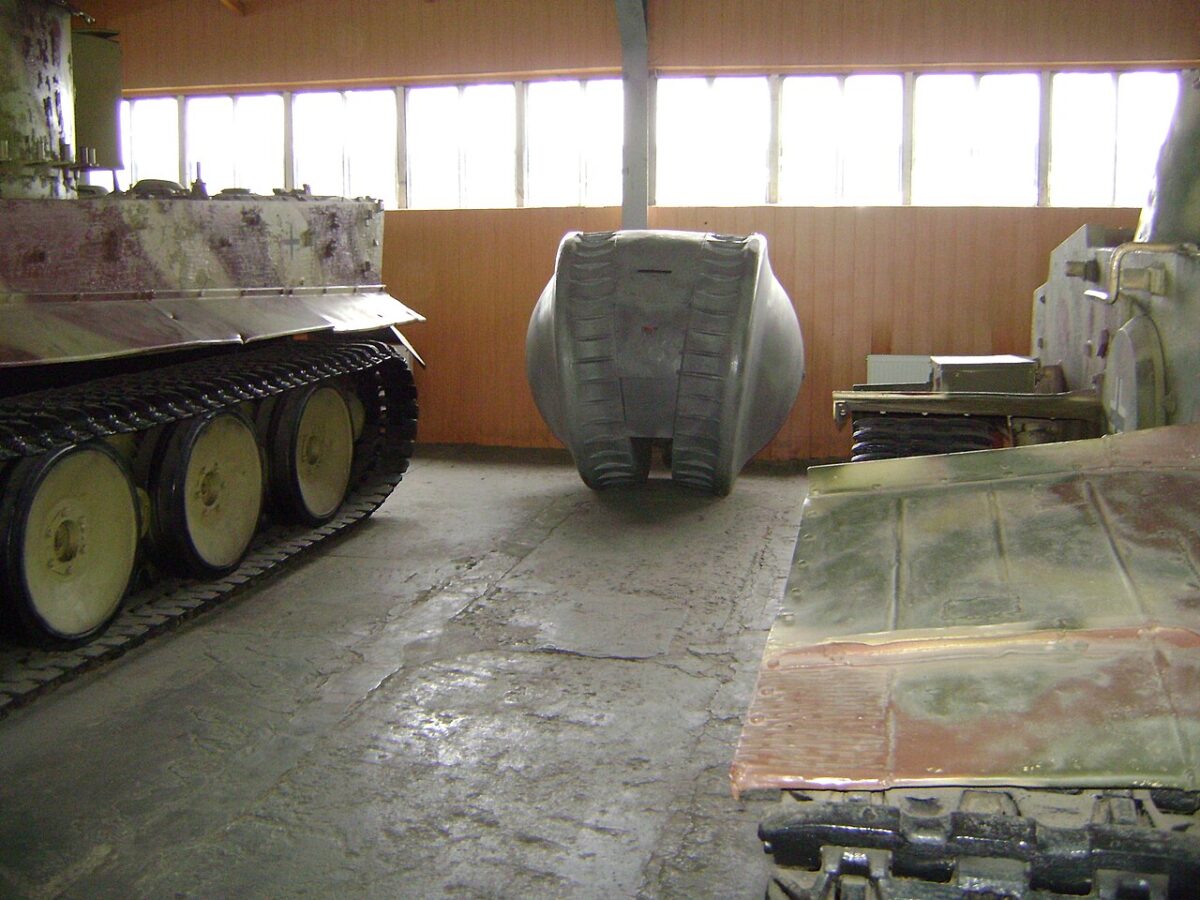
15. Kugelpanzer: The Mysterious One-Man Ball Tank
Status: Unknown
Germany’s strangest armored vehicle may have been a steel ball with room for just one person inside.
Known as the Kugelpanzer—literally “ball tank”—this tiny, drum-shaped vehicle had two huge rolling wheels and a small rear wheel for steering. It looks less like a normal tank than something built for a dystopian parade.
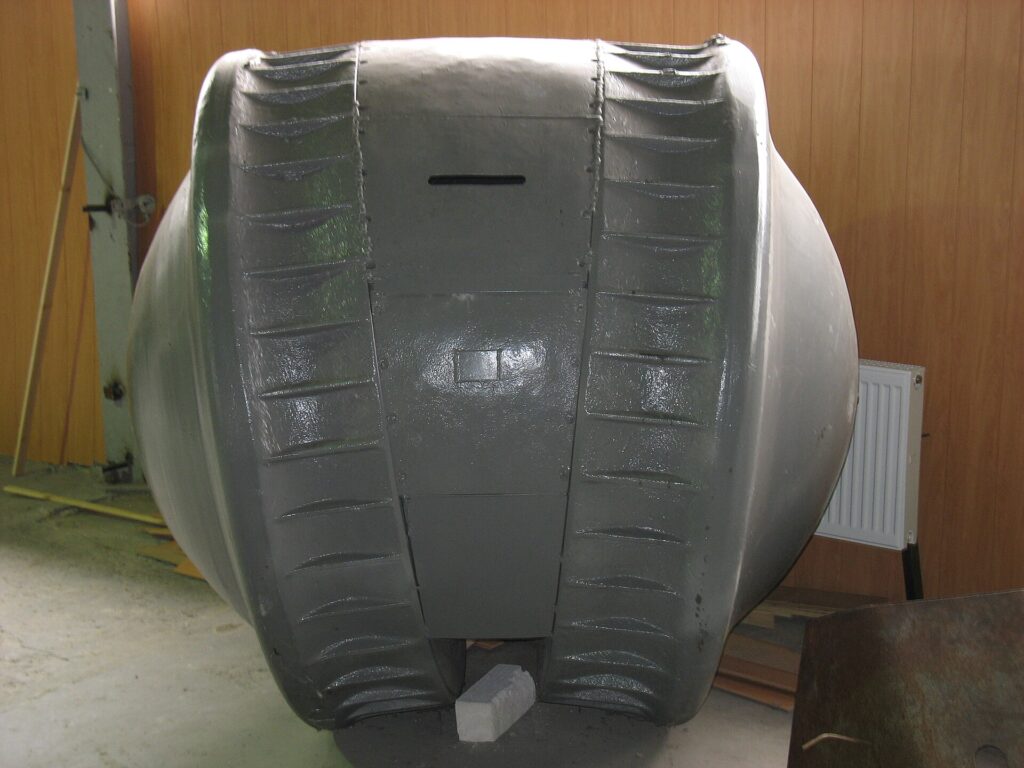
Only one is known to survive, and it is held at the Kubinka tank collection near Moscow. The vehicle is usually identified as German, but its intended purpose remains a mystery. Some historians think it may have been meant for reconnaissance or artillery observation. Others have suggested it could have been sent to Japan. None of those explanations has been proven beyond doubt.
- Why it was crazy: It put a single person inside a lightly armored metal sphere and apparently expected them to roll across a battlefield.
- Did it actually work? No one knows. There is no confirmed combat record, no proven operational role, and no clear explanation of how it was meant to be used.
- Reality check: The Kugelpanzer is the perfect ending to this list because the mystery is real. It was probably too lightly armored and too awkward to be useful in combat—but with so little reliable documentation, its true story may never be known.
Bonus: 5 Other Notable German WWII “Wonder Weapons”
These projects did not make the main list, but they still show how far Germany was willing to push the boundaries of military technology.
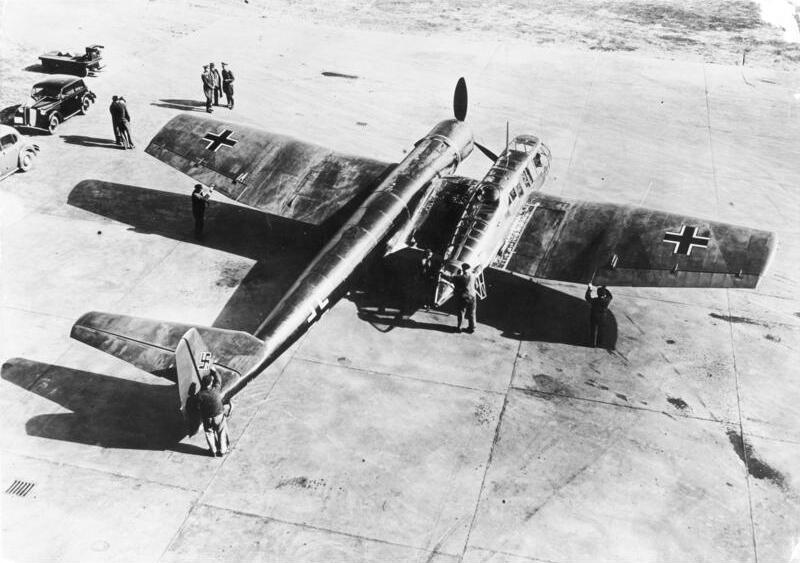
Blohm & Voss BV 141: The Plane That Looked Built Wrong
A reconnaissance plane with its cockpit hanging off one side. Surprisingly, it could fly normally and gave its crew an excellent view of the ground.
- Reality check: It worked, but lost out to more conventional aircraft and never entered full production.
Sturer Emil: The Tank Destroyer With a Gun Too Big for Its Chassis
Germany put a huge 128 mm gun on a modified tank chassis and sent just two into combat on the Eastern Front.
- Reality check: It could destroy enemy armor, but it was slow, mechanically troublesome, and far too rare to matter.
Fa 223 Drache: The Helicopter Ahead of Its Time
The Fa 223 was one of the world’s first production helicopters and could lift heavy loads that normal aircraft could not.
- Reality check: It flew and worked, but Allied bombing kept production numbers extremely low.
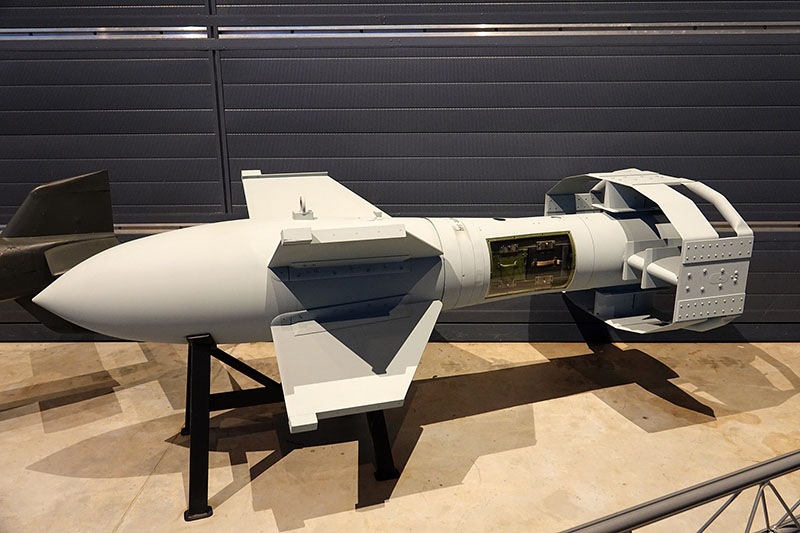
Fritz X: The Guided Bomb That Actually Worked
This radio-guided glide bomb allowed German crews to steer an attack toward heavily armored warships after release.
- Reality check: Unlike most Wunderwaffe projects, Fritz X was used successfully in combat—but Allied countermeasures soon reduced its effectiveness.
Panzer VIII Maus: The Tank Too Heavy for Its Own War
The Maus was the heaviest fully enclosed armored vehicle ever built, weighing nearly 190 tons.
- Reality check: Its gun and armor were terrifying, but it was too slow, too heavy for most bridges, and too difficult to deploy. Only prototypes were completed.
The Real Legacy of the Wunderwaffe: Why Germany’s “Wonder Weapons” Could Not Save the War
Germany’s WWII “wonder weapons” ranged from genuinely groundbreaking ideas to spectacular dead ends. Some pointed toward the future of rockets, guided missiles, helicopters, and remotely controlled weapons. But most were too costly, too complicated, too dangerous, or simply too late to change the war.
In the end, no single superweapon could overcome Germany’s collapsing industry, fuel shortages, military defeats, and the sheer scale of the Allied war effort. The strangest part is not that these machines existed—it is how much hope Nazi Germany placed in them.
More War History for History Buffs
The Wunderwaffe story is only one chapter in history’s long record of strange weapons, secret plans, and battlefield mysteries. For more unusual military inventions, explore the weird weapons of the medieval age. For the soldiers behind history’s most feared fighting forces, read about the most deadly elite soldiers in history.
World War II readers may also want to explore the enduring debate over whether Hiroshima actually saved lives or the surprising story of War Plan Red, America’s once-secret strategy for a possible conflict with Britain and Canada. And for an older military mystery, discover the unanswered questions surrounding Rome’s lost Ninth Legion.
History is full of ideas that sound unbelievable… until you discover they were real.
Join the Conversation
What do you think? Which of these “wonder weapons” was the strangest, and which one, if any, do you think had the best chance of changing the war? Share your thoughts, theories, or any lesser-known WWII weapons in the comments below.