A book no one can read. Giant drawings etched into a desert. A stone monument built with rocks hauled across extraordinary distances.
The ancient world left behind plenty of ruins, artifacts, and written records—but it also left us questions that refuse to go away.
Table of Contents
In some cases, archaeologists have figured out far more than popular legends suggest. The builders of the Great Pyramid are known. Nazca’s giant geoglyphs can be explained in terms of how they were made. Even the origins of many of Stonehenge’s enormous stones have been traced.
But knowing how something was created doesn’t always tell us why. Sometimes, solving one piece of the puzzle only makes the remaining mystery stranger.
Here are five ancient mysteries with plenty of clues… but still no final answer.
What Makes an Ancient Mystery Truly Unsolved?
An ancient mystery doesn’t have to be completely unexplained. Often, we know what happened, who was involved, or how something was created—but one crucial piece of the story is still missing.
The five mysteries below all have evidence, competing theories, and tantalizing clues. What they don’t have is a final answer everyone can agree on.
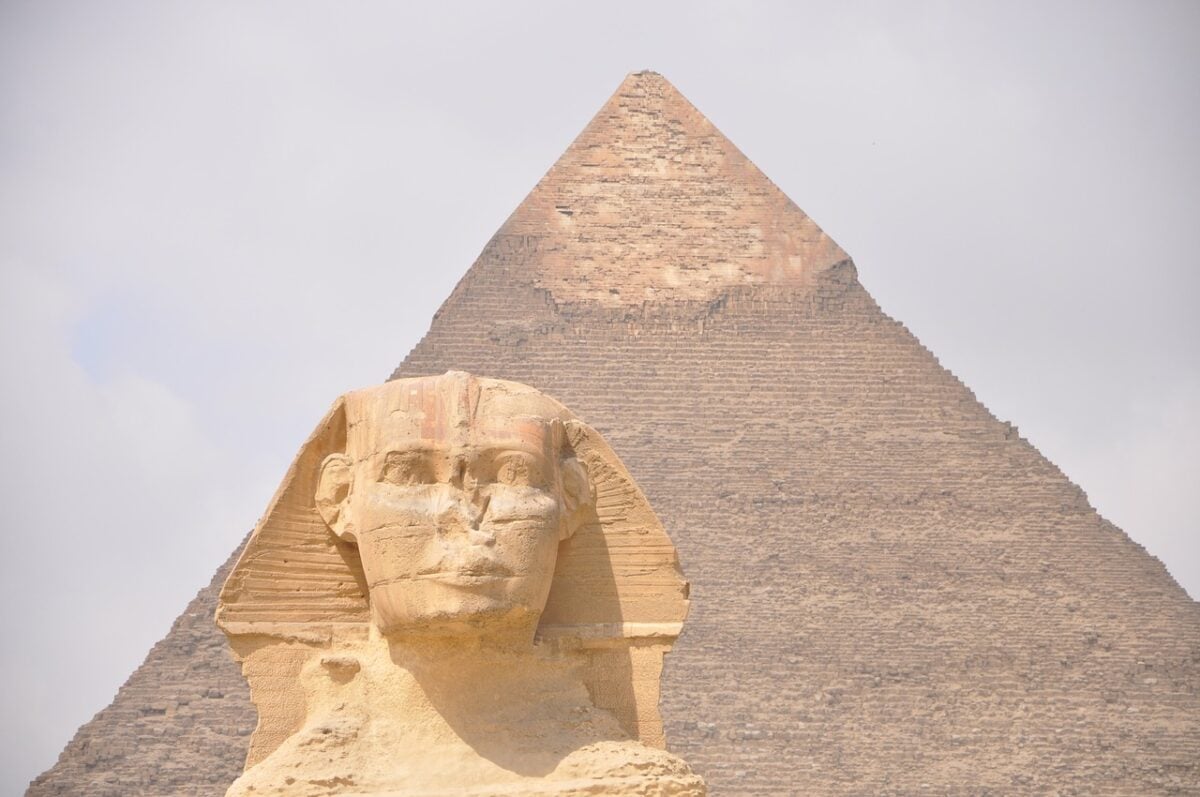
1. The Great Pyramid of Giza: How Did They Build It?
More than 4,500 years ago, ancient Egyptian builders created a monument so enormous and precise that we are still debating exactly how they pulled it off.
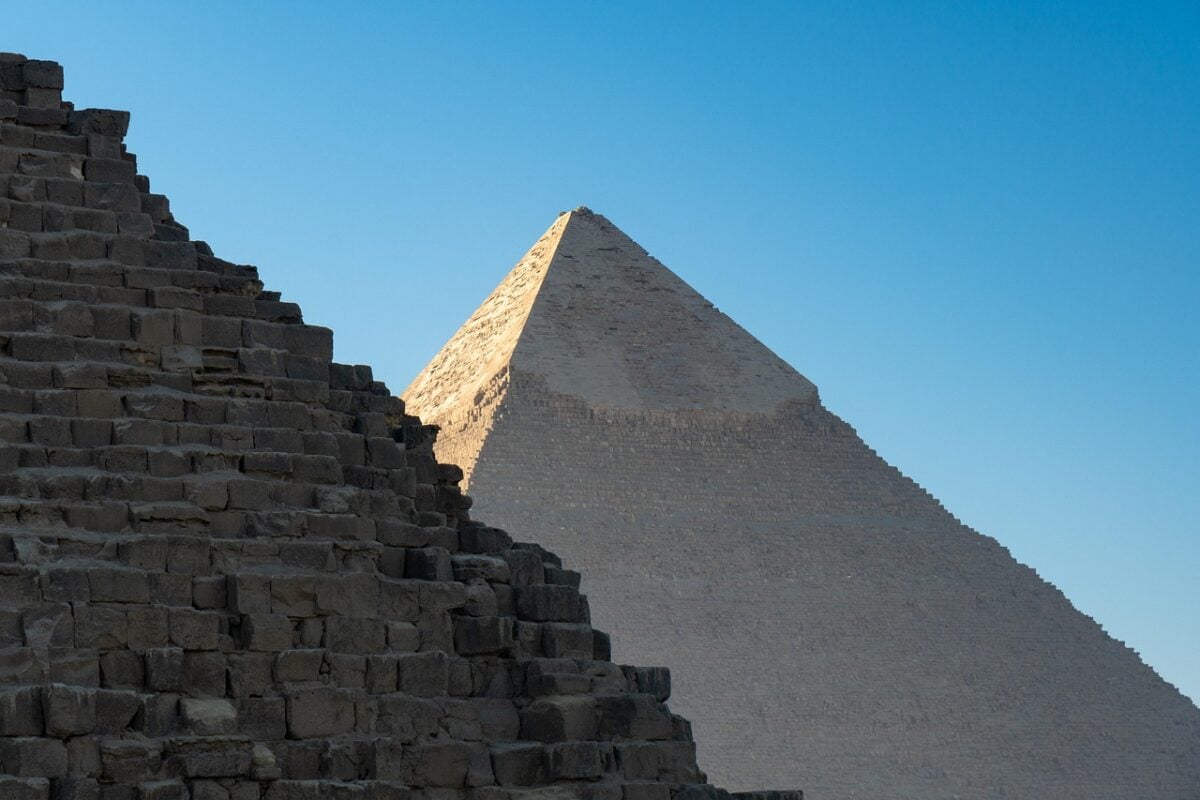
The Great Pyramid of Giza was built for Pharaoh Khufu and originally stood about 481 feet tall. Its vast structure contains millions of stone blocks, many weighing several tons.
That much isn’t particularly mysterious. The strange part is what happened next.
Those blocks had to be quarried, transported, lifted, positioned, and fitted together on a scale that would challenge even an enormous workforce. The builders did it without modern cranes, engines, or steel machinery.
And they left us no surviving step-by-step construction manual explaining exactly how it was done.
What We Know
The Great Pyramid was constructed during Egypt’s Old Kingdom as part of the funerary complex of Pharaoh Khufu.
Its blocks weigh more than two tons on average, with some of the largest reaching roughly 15 tons. Yet the structure was built with remarkable precision and carefully oriented toward the cardinal directions.
Egyptologists also know that pyramid construction was not some sudden technological miracle. Egyptian builders had been experimenting with increasingly ambitious pyramid designs for generations before Khufu’s monument was built.
The Great Pyramid was the result of accumulated knowledge.
But the exact construction process remains debated.
The Leading Theories
- Straight or external ramps: Workers may have dragged stone blocks up ramps that grew higher as construction progressed.
- Zigzagging or wrapping ramps: Rather than one enormous straight ramp, smaller ramps may have wound around parts of the pyramid.
- A combination of methods: Ramps, ropes, sledges, levers, and different lifting techniques may have been used at different stages.
None of these ideas requires lost technology or mysterious machinery. The problem is determining exactly which combination the builders actually used.
What We Still Don’t Know
We still don’t have a complete reconstruction of the building process that explains every stage of the Great Pyramid’s construction.
How were the highest blocks raised efficiently? How were massive quantities of stone coordinated and positioned? And how did surveyors achieve such precise orientation?
The Egyptians clearly knew the answers.
They just didn’t leave us enough evidence to recreate the entire operation with certainty.
Why We’re Still Obsessed
The Great Pyramid isn’t mysterious because ancient Egyptians should have been incapable of building it.
It’s mysterious because they were capable.
Every new discovery reveals a civilization with sophisticated engineering, organization, mathematics, and practical knowledge—and reminds us how much of that knowledge can disappear when the people who possessed it are gone.
2. Stonehenge: Why Were These Stones Brought Here?
Imagine deciding that a particular spot in southern England was so important that enormous stones needed to be transported there from miles—or even hundreds of miles—away.
Then imagine that the project continued across generations.
That’s the puzzle at the heart of Stonehenge. We increasingly understand where its stones came from and how the monument developed.
What we don’t completely understand is why prehistoric communities went to so much trouble to build it.
What We Know
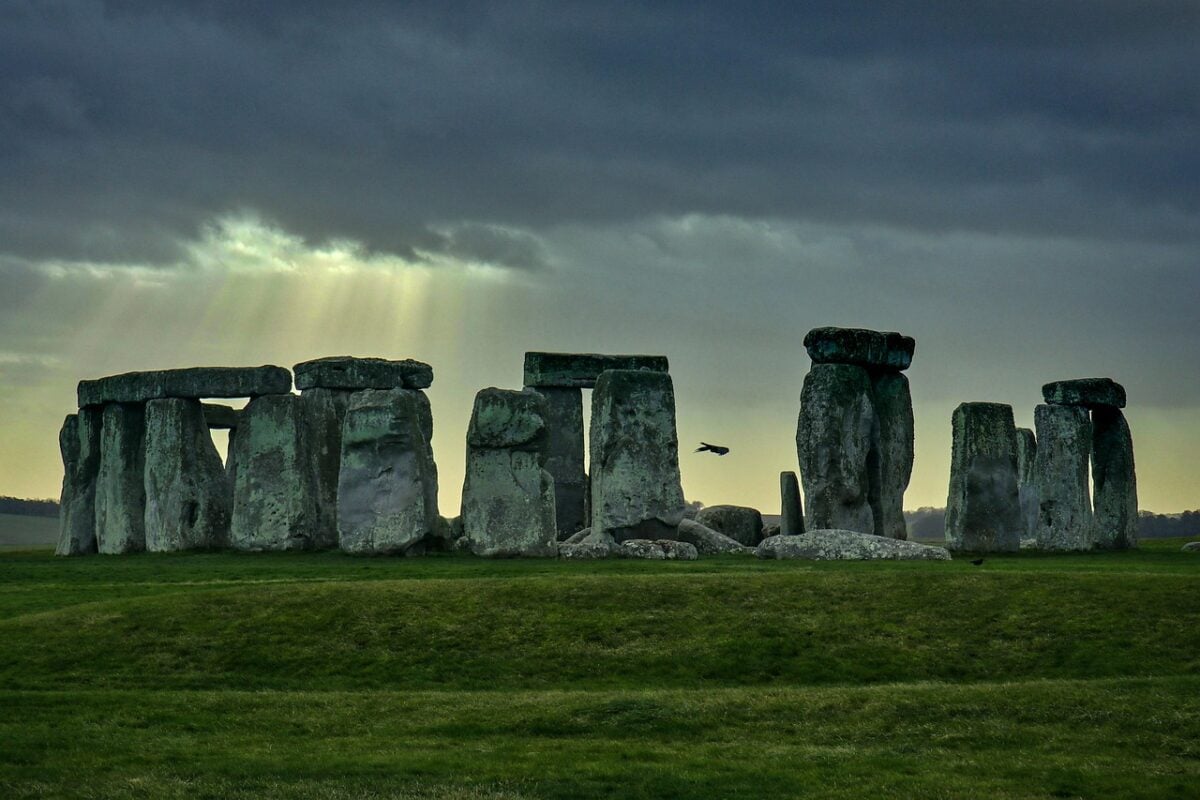
Stonehenge wasn’t constructed all at once. The site changed over many centuries, with the famous stone settings appearing during later phases of its development.
- Its largest stones, known as sarsens, came from the Marlborough Downs area roughly 15 miles away.
- The smaller bluestones traveled considerably farther. Geological evidence connects them to the Preseli Hills of southwest Wales, more than 150 miles from Stonehenge.
- Transporting stones over those distances without modern vehicles would have required extraordinary planning and effort.
The monument’s relationship with the sun is also clear.
Stonehenge was deliberately arranged around the movement of the sun, including the solstices. From the center of the monument, the midsummer sunrise appears near the Heel Stone, while the opposite direction relates to the midwinter sunset.
So the mystery isn’t whether Stonehenge has an astronomical connection. It does. The mystery is what that connection meant to the people who built it.
Stonehenge also wasn’t an isolated achievement. Other Neolithic communities across Britain were building surprisingly sophisticated settlements and monuments during this period. Scotland’s lost village of Skara Brae, for example, was already occupied centuries before Stonehenge took its familiar form.
The Leading Theories
- A ceremonial gathering place: Large groups may have gathered at Stonehenge for important seasonal rituals.
- A monument connected with the dead: Burials and cremated remains found around the wider site suggest death and ancestry were important parts of its story.
- A place tied to the solar year: Its solstice alignment may have helped structure ceremonies connected to changing seasons and the passage of time.
These ideas aren’t necessarily mutually exclusive.
Stonehenge may have served several purposes over its long history.
What We Still Don’t Know
Why did particular communities choose this exact landscape? Why bring bluestones all the way from Wales? Were there different ceremonies that happened among the stones?
And what did people believe would happen there that couldn’t happen anywhere else?
We can map the monument. We can date its construction and can trace its stones. But the thoughts of the people standing inside it thousands of years ago are much harder to recover.
Why We’re Still Obsessed
Stonehenge feels tantalizingly close to giving up its secret.
The stones survive. The landscape survives. Archaeological traces of the people survive.
What is missing is the story that connected all of them. And without written records from its builders, that missing story may always remain just out of reach.
3. The Nazca Lines: Who Were These Giant Designs For?
Stand in the desert of southern Peru, and some of the strangest works of ancient art can be surprisingly difficult to understand.
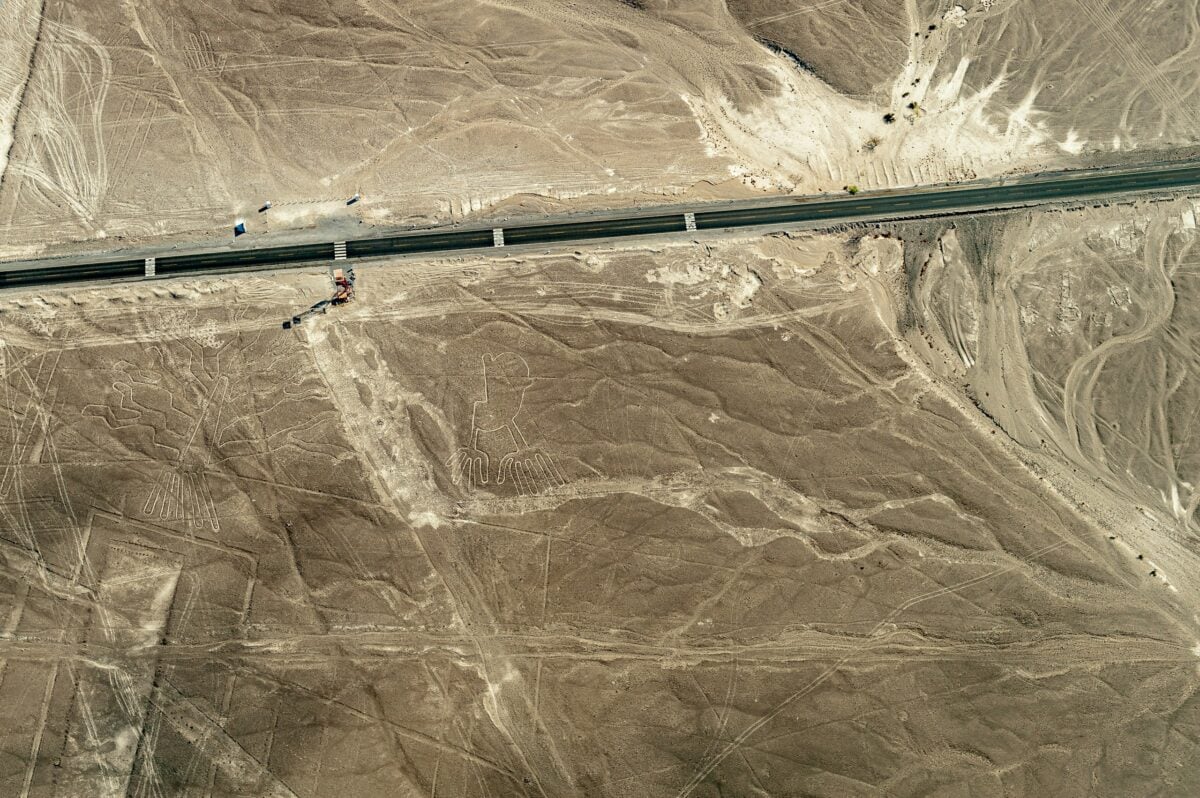
Stretching across the dry landscape are enormous lines, geometric shapes, animals, plants, and other figures. Some extend across astonishing distances. There are birds. A monkey. A spider. Long straight lines disappearing across the desert.
The people who created them knew exactly what they were doing.
What we don’t know is exactly why they did it.
What We Know
The Nazca Lines are geoglyphs—designs created directly on the ground.
Their makers didn’t need advanced machinery to produce them. They removed darker surface stones and exposed the lighter-colored ground underneath.
The extremely dry environment helped preserve the designs for centuries. And this wasn’t one artist completing one giant project.
The wider Nazca and Palpa landscape contains thousands of lines and figures created over a long period, turning a huge stretch of desert into what UNESCO describes as a symbolic, ritual, and social landscape.
That makes one popular claim misleading: the lines weren’t simply giant pictures created because they could only be seen from airplanes.
Some designs are easier to recognize from above or from nearby high ground, but the lines also existed at human level. People could approach them, cross them, and in some cases potentially move along them.
So the real question is much more interesting.
What were people doing out there?
The Leading Theories
- Ritual pathways: Some lines may have guided ceremonies, processions, or movement through sacred areas.
- Water and fertility: In one of the driest places on Earth, rituals connected with water would have had enormous significance.
- Astronomical meaning: Certain lines or figures may have had connections with celestial events, although attempts to explain the entire landscape as one giant astronomical calendar have not settled the mystery.
It’s possible that different geoglyphs had different purposes.
A landscape created over generations doesn’t necessarily need one single explanation.
What We Still Don’t Know
Why were particular animals chosen? Why do some lines stretch for such enormous distances? Were the designs intended for gods, communities, ancestors—or some combination of them?
And were people meant primarily to look at the lines, or was moving through the landscape part of their purpose?
We know how the Nazca people altered the desert. We still don’t completely understand the world of beliefs that made doing so meaningful.
Why We’re Still Obsessed
The Nazca Lines are a reminder that understanding the mechanics of an ancient achievement isn’t the same as understanding its meaning.
You could recreate one of the designs with relatively simple tools.
But that wouldn’t tell you why generations of people considered these enormous desert markings important enough to keep making them.
That’s the mystery.
4. Atlantis: Lost City or Plato’s Greatest Invention?
Atlantis has been “found” almost everywhere. The Mediterranean. Spain. North Africa. The Atlantic Ocean. Even Antarctica.
There is just one enormous problem. Before asking where Atlantis was, we have to ask whether it ever existed at all.
What Plato Actually Said
The famous story comes from the ancient Greek philosopher Plato, who described Atlantis in his dialogues Timaeus and Critias. His Atlantis was a powerful island civilization beyond the “Pillars of Heracles,” generally associated with the Strait of Gibraltar. It was wealthy, militarily powerful, and eventually morally corrupted.
According to Plato’s story, Atlantis attempted to conquer other lands before being defeated. Then, in a dramatic catastrophe, the island disappeared beneath the sea. The story has inspired searches ever since.
But Plato wasn’t writing a modern history book. His dialogues explored philosophical questions, politics, morality, ideal societies, and the dangers of corruption and power.
That leaves Atlantis balanced between history and storytelling.
It’s a problem historians encounter surprisingly often. Even figures such as the real Ragnar Lothbrok are difficult to separate from the legends that grew around them centuries later.
The Leading Theories
- Plato invented it: Atlantis may have been a fictional civilization created to serve Plato’s philosophical argument.
- A real disaster inspired it: Memories of earthquakes, tsunamis, volcanic eruptions, or destroyed settlements may have helped shape the story.
- The Minoan world influenced it: The eruption of Thera—modern Santorini—and the sophisticated Bronze Age societies of the Aegean are often compared with elements of the Atlantis tradition.
But resemblance isn’t proof. There is no accepted archaeological discovery of Plato’s Atlantis.
And increasingly exotic claims about hidden continents or civilizations beneath Antarctic ice require evidence that simply isn’t there.
What We Still Don’t Know
- Did Plato invent Atlantis entirely?
- Did he borrow elements from genuine traditions about ancient catastrophes?
- Or did a real event become so heavily transformed through storytelling that finding its original source is now impossible?
That distinction matters. Atlantis might be an archaeological mystery.
But it might instead be a mystery about how stories are created, remembered, and turned into history.
Why We’re Still Obsessed
Atlantis offers something irresistible: the possibility that an entire chapter of human history is still waiting to be discovered. Every unexplored seabed, unusual ruin, or ancient catastrophe can become another candidate.
Perhaps Atlantis has survived for more than two thousand years precisely because nobody can prove where it was. A city you can find eventually becomes archaeology. A city you can never quite find becomes legend.
5. The Voynich Manuscript: Why Can’t Anyone Read It?
Open the Voynich Manuscript, and almost everything looks as though it should make sense.
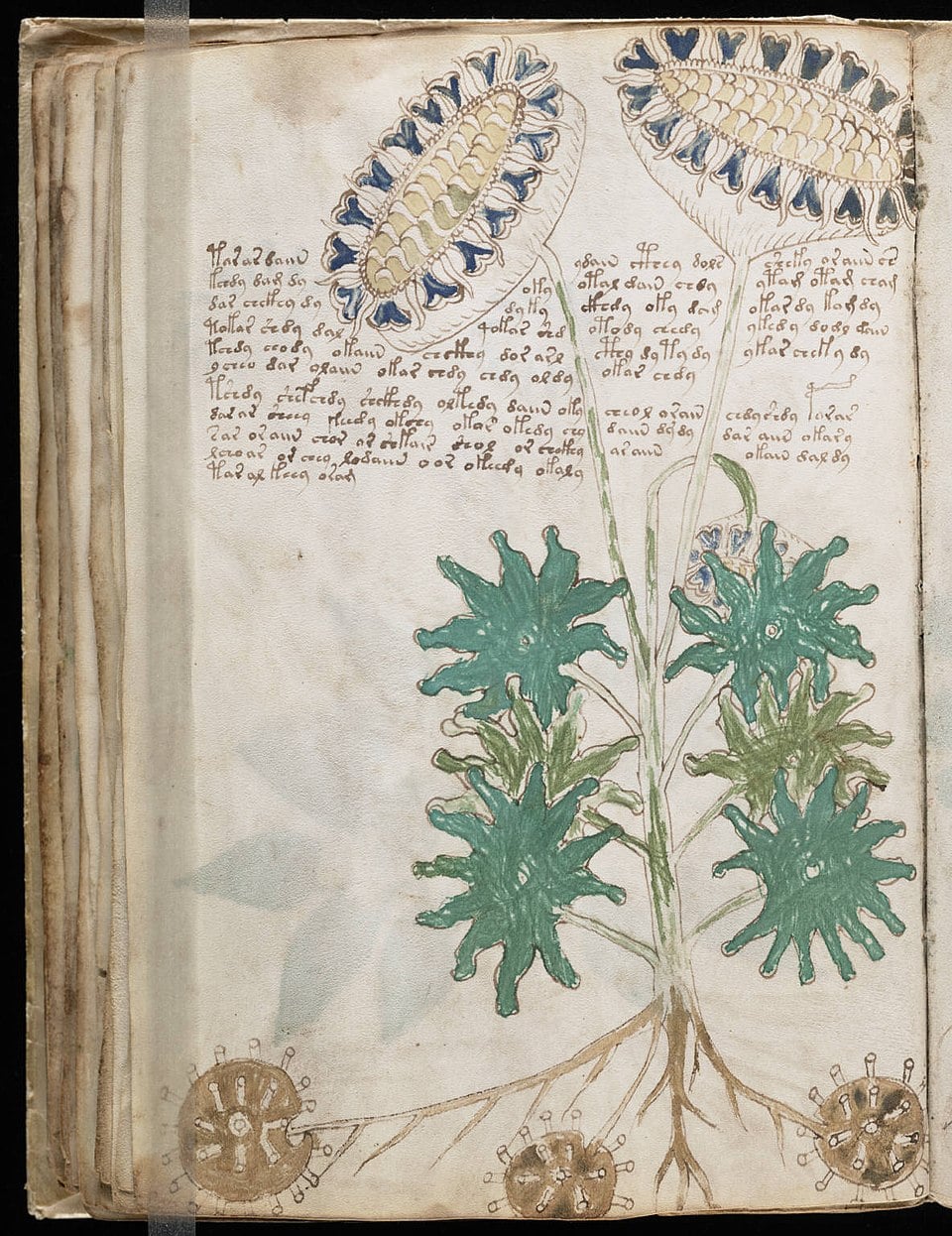
There are carefully written lines of text. There are illustrations of plants. Circular diagrams that seem astronomical or astrological. Human figures, containers, stars, strange structures, and what appear to be recipes or instructions.
It looks organized, deliberate, and readable.
There’s just one problem.
Nobody has convincingly demonstrated what it says.
What We Know
The manuscript is now held by Yale University’s Beinecke Rare Book and Manuscript Library.
Scientific testing places its materials firmly within the world of 15th-century manuscript production, while its author remains unknown. Yale describes its script as unidentified and notes that cryptographic approaches have still failed to produce an accepted decipherment.
The manuscript is also remarkably structured.
Certain illustrations cluster into recognizable types: plants, astronomical or astrological diagrams, human figures shown in unusual bathing scenes, pharmaceutical-looking containers, and dense pages of text.
The writing isn’t simply a handful of mysterious symbols repeated randomly.
It has patterns.
And that has kept generations of codebreakers coming back.
The Leading Theories
- It’s an encoded text: The writing could conceal an ordinary language using an unusually complicated cipher or system.
- It’s an unknown or constructed language: The script may represent a language or writing system that hasn’t been identified.
- It’s an elaborate fabrication: Perhaps the manuscript was designed to appear meaningful without containing a conventional readable message at all.
Each possibility has problems. If it’s a cipher, nobody has cracked it. If it’s a language, nobody has identified it. And, if it’s meaningless, explaining the manuscript’s elaborate internal patterns becomes part of the puzzle.
What We Still Don’t Know
Who wrote it? What language—if any—is hiding behind the symbols? Why are so many of the plants difficult to identify? What are the strange diagrams supposed to represent?
And perhaps most importantly:
Does the manuscript contain a message that can actually be recovered?
More than a century after Wilfrid Voynich brought the manuscript to wider attention, proposed solutions continue to appear.
None has won general acceptance.
Why We’re Still Obsessed
Most ancient mysteries are damaged by time. A ruined building loses its roof. A buried settlement loses its wooden structures. An inscription breaks apart.
The Voynich Manuscript is different.
The mystery is sitting right in front of us. We can see the symbols. We can count them and study their patterns, and we can examine the illustrations.
The answer may already be there on the page—and we still can’t read it.
The manuscript is now held by Yale University’s Beinecke Rare Book and Manuscript Library, where its unidentified script continues to resist an accepted decipherment.
Why Ancient Mysteries Still Matter
The most interesting ancient mysteries aren’t interesting because ancient people possessed magical technology or knowledge we’ve somehow become incapable of understanding. They’re interesting for almost the opposite reason.
They show us just how much human knowledge can disappear.
The Egyptians knew how they organized the construction of the Great Pyramid. The builders of Stonehenge knew why those stones mattered. The people who created the Nazca Lines understood the landscape they were shaping. Plato knew what he intended Atlantis to represent. Whoever produced the Voynich Manuscript knew what its strange pages meant.
We are the ones left trying to reconstruct those answers.
Archaeology, new technology, and scientific analysis keep filling in pieces of these puzzles. Sometimes they even solve mysteries that once seemed impossible. Researchers have made remarkable progress, for example, in unlocking the lost secrets of Roman concrete and explaining why some Roman structures have survived for thousands of years.
But every answer also reminds us of how much remains missing. And that may be the real reason these mysteries have survived for so long. They leave us with the tantalizing possibility that the next clue—the one that changes everything—is still out there.
More Historical Mysteries That Still Leave Questions
Ancient history doesn’t have a monopoly on unsolved puzzles. Move a little closer to the present and the historical record is still full of disappearances, bizarre events, and unanswered questions.
- What happened to Rome’s Ninth Legion after it vanished from the historical record? Theories range from a disastrous military defeat to relocation somewhere else in the Roman Empire, but its final fate remains uncertain.
- Then there’s the Lost Colony of Roanoke, where more than 100 English colonists disappeared before a supply ship returned to the settlement—leaving behind one of the most famous mysteries in early American history.
- Some mysteries are stranger still. In Strasbourg in 1518, people reportedly began dancing uncontrollably for days, creating an episode now remembered as the Dancing Plague. Historians have proposed explanations, but exactly what triggered the outbreak is still debated.
- And if that isn’t bizarre enough, there’s the Kentucky Meat Shower of 1876, when pieces of flesh reportedly fell from the sky over a Kentucky farm. A remarkably mundane explanation involving vultures may solve much of the puzzle—but the event remains one of American history’s strangest recorded episodes.
History rarely gives us every piece of the puzzle. Sometimes what survives is just enough evidence to tell us that something happened—and not quite enough to tell us exactly why.
Which Mystery Fascinates You Most?
Do you have a theory about one of these mysteries—or know of another historical puzzle we should explore next? Share your ideas in the comments below. We’d love to hear which mysteries still keep you wondering.